| 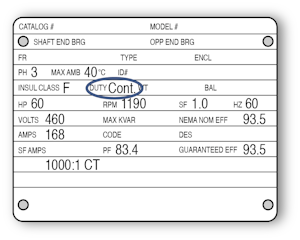 Before putting an AC machine into service, make sure its duty rating matches the application requirements. Otherwise, there’s a good chance excessive heat will degrade the machine’s windings. Applications are not all created equal. For example, a crane motor doesn’t require the same duty rating as a punch press motor of equal horsepower that runs continuously. Likewise, a chop saw motor wouldn’t need the same duty rating as a pump motor that operates 24-7-365. |
|
Advertisement |  Design & Construction in Hazardous Areas This eBook includes a compilation of articles that demonstrate design and construction requirements for hazardous locations, offering best practices for ensuring safe installations and maintenance even in the harshest environments. Click here to learn more | | |
|
|  Traditionally, preventive maintenance actions are scheduled to coincide with downtime, or downtime is schedule to perform them. This necessarily limits how often they can be performed. In the electrical world, downtime will probably always be necessary to properly maintain equipment such as circuit breakers. But many other types of testing don’t require downtime. They can be done more frequently, and, in many cases, done continually, with a monitoring system. |
|
Advertisement |  Your Free Registration to this Month’s Facilities Expo! With a special focus on electrical products, the Facilities Expo has solutions for any facility challenge you might face. Here you will learn from industry experts, network, and explore our solution packed exhibitor floor—all for free! Click here to learn more | | |
|
|  Your firm got a call from a commercial building manager. Throughout much of the winter, tenants complained that the parking lot lights were often so covered with ice that hardly any light came out. Now that the weather is warmer and the lot is safer to work in due to the absence of winter ice, they want your firm to determine the cause and provide a price quote on fixing it. Your boss assigned you to look into it and try to make that determination. What are some issues you need to investigate? |
|
| 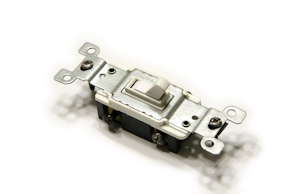 It’s good to keep an understanding of switches in mind when working on industrial or commercial systems and equipment. Just because you flip a control switch off doesn’t mean the circuit is dead or an enclosure is de-energized. Lockout/tagout procedures for utilization equipment always take you back to the branch or feeder supply, which is a fuse or breaker. A similar concept applies to service equipment. |
|
|  Check out real photos of electrical, telecom, and cable wiring installations gone wrong around the world. |
|
| 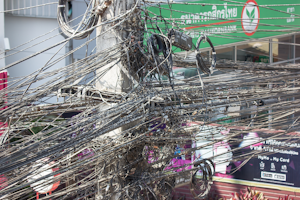 Check out real photos of electrical, telecom, and cable wiring installations gone wrong around the world. |
|
| 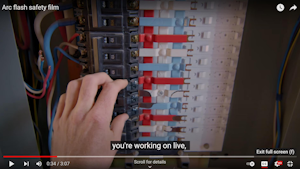 To remind the more than 58,000 electrical workers and 12,000 electrical contractors in Queensland, a northeastern state in Australia, the film’s story is told from the point of view of an electrical worker on a job site. Arc flash incidents are common in the state’s electrical industry. |
|
|  Do you know an up-and-coming young electrical professional who has shown extraordinary results on the job? If so, nominate him or her for consideration as an EC&M Under 30 All-Star. The deadline is April 29. |
|
| 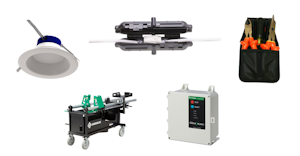 Don't miss the latest product innovations, chosen by the editors of EC&M with the goal of keeping readers informed of the most recent, groundbreaking gear. These products are intended to keep users safe and allow for more efficient work. |
|
|  Repeated or prolonged exposure to common solvent components such as toluene, benzene, and trichloroethane can have profoundly bad effects on your health. To protect your lungs, you might wear a charcoal canister respirator or an air-supplied one; this won’t, however, protect your skin or eliminate an explosion hazard. Ventilation is your first defense. |
|
|  Fill in the blank. After the completion of permanently installed swimming pools, the authority having jurisdiction shall be permitted to require _____ inspection and testing. |
|
Members Only |  Larger industrial and manufacturing facilities as well as campus-style facilities often distribute power at voltages up to 15,000V (15kV) within the facilities. No matter the voltage level, the basic electrical safety rules found in the NFPA 70E, Standard for Electrical Safety in the Workplace, still apply. Depending on the voltage level, the changes include certain shock boundary distances and the tools necessary to verify an electrically safe work condition. |
|
Members Only |  FREE PREMIUM CONTENT: In this episode of EC&M Code Conversations, Editor-in-Chief Ellen Parson and Code Consultant Russ LeBlanc discuss Sec. 200.6 and why the Code doesn't specify which method of identification must be used for any particular voltage class or system type. |
|
| 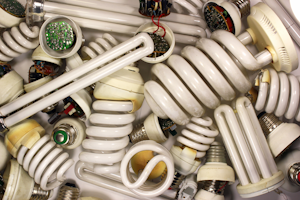 Sometimes it is perceived to be necessary for a maintenance person to replace a lamp or two. The traditional fluorescent lamp used in factories and offices is the one you are most likely to have waste disposal issues with because this lamp is so common. Fluorescent lamps contain mercury, so simply tossing old ones in the dumpster is not an option. So how do you dispose of them safely? |
|
Members Only |  |
|
| In this episode of “EC&M On Air,” Editor-in-Chief Ellen Parson speaks with Gene Kent, director of In-Tech, and Vickie Svoboda, a fourth-year apprentice in the program, about how the organization is preparing a workforce to meet the need for skilled union labor with expertise in renewable energy. They discuss In-Tech's state-of-the-art 25-ace renewable energy training facility, located outside of Chicago; what skills it offers its apprentices; and the impact of the federal infrastructure plan. |
|
|
|