Key Takeaways
- Early exposure to electrical trades can ignite student interest and build confidence, leading to a more prepared future workforce.
- Partnerships between industry and schools, such as site visits and hands-on projects, are essential for meaningful career awareness.
- Integrating technical education throughout K-12 fosters problem-solving, teamwork, and practical skills aligned with industry needs.
- Addressing systemic barriers like funding, staffing, and facilities is crucial to expanding access to trade education.
- Active industry participation in education can help bridge the workforce gap and ensure a steady pipeline of skilled electricians.
Every electrical contractor I speak with eventually asks the same question: Where is the next generation of electricians coming from? The answer may be simpler than we think. They are already here; they are sitting in classrooms. From my unique perspective as a master electrician, electrical contractor, and high school counselor, I believe the issue is not a lack of talent or motivation — it’s exposure.
Across the electrical industry, demand remains strong. Projects continue moving forward. Contractors are busy. Experienced electricians are retiring. Companies are searching for apprentices and future leaders. Yet thousands of capable students move through school systems every year without ever seeing the electrical trade in a meaningful way.
According to the U.S. Bureau of Labor Statistics, employment of electricians is projected to grow 11% from 2023 to 2033 — faster than the average for all occupations, with 80,000 openings expected annually due to growth and replacement needs.
National workforce projections continue to show strong demand for electricians, driven by new construction, infrastructure investment, electrification, renewable energy projects, and replacement needs as experienced workers retire. The challenge facing many contractors is not a lack of work. It is developing the workforce needed to perform it, and students cannot pursue what they never experience.
A perspective from both sides
I have lived this issue from two worlds. I began my career in the electrical trade, working job sites, running work, solving problems, and later operating an electrical business. I later transitioned into education and have spent nearly three decades as a high school counselor.
That perspective changed how I think about workforce development. In construction we ask: Can they solve problems? Can they adapt? Can they work safely? Can they finish? Schools ask similar questions.
The difference is that many students never discover they are builders, electricians, technicians, estimators, or problem-solvers because those pathways were never visible to them. During a statewide professional development presentation for school counselors, many participants openly acknowledged that entire career pathways — including the trades — were not highly visible to them as students.
That matters because the experiences adults encountered can influence the opportunities and pathways they emphasize for students.
That realization led me to one simple conclusion: the issue is not a lack of motivated students. It’s a lack of exposure. Students often hear about college pathways early and often. Trades are frequently introduced later — sometimes too late. Exposure should not begin in 11th grade. It should begin much earlier.
Imagine an elementary student wiring a simple battery circuit. They connect a switch. A light turns on. Their eyes light up too. That experience matters.
Middle school becomes exploration. High school becomes direction. Exposure compounds over time. A student who learns how electricity powers a home in elementary school may become the apprentice, electrician, engineer, estimator, or contractor of tomorrow.
Education is evolving
Education itself is evolving. New York State is expanding financial literacy instruction involving budgeting, investing, credit, money management, and practical decision-making. Schools are also exploring portfolios and capstone projects — collections of student work and real-world demonstrations that show learning beyond traditional tests.
Many districts are discussing Portrait of a Graduate frameworks, which are education models identifying the skills students should demonstrate before graduation, including communication, collaboration, problem-solving, adaptability, and career readiness. These shifts recognize something important: students learn by doing. The same principle applies to the skilled trades.
Those changes also raise a larger question: Are we giving students enough opportunities to discover technical careers before they graduate?
Traditional liberal arts disciplines including English, history, social studies, science, arts, and related fields remain essential and foundational. This article is not an argument against them but rather a discussion of representation and exposure.
Across many states, exposure to technology education, skilled trades, and hands-on technical learning varies significantly based on local priorities, staffing, facilities, funding, and graduation structures. Some students experience construction systems, residential construction, carpentry, metalworking, electricity, electronics, manufacturing, engineering design, drafting/CAD, automation, small engines, and related technical fields throughout their education. Others may graduate with little or no exposure.
In New York State, the only statewide technology education requirement occurs at the middle school, where students complete a limited course of study by the end of Grade 8. Beyond that, there is no requirement that all high school students take technology education. As a result, students can complete four years of high school without any meaningful exposure to construction, manufacturing, engineering, electrical systems, or the skilled trades.
Modern society depends on both liberal arts and technical education. Without liberal arts, we lose communication, history, culture, and human understanding. Without the trades and technical workforce, there are no homes, electrical systems, infrastructure, manufacturing facilities, transportation networks, or functioning communities. The issue is not student ability. It is access, visibility, and opportunity.
The challenges schools face
Schools continue facing shortages of technology educators and Career and Technical Education professionals. Career and Technical Education, often called CTE, refers to career-focused programs connecting students to workforce pathways through hands-on learning experiences.
Technology education programs require instructors with deep practical experience. In many states, schools compete directly with private industry for that talent. The same workforce demand creating opportunities in the trades also pulls experienced professionals away from classrooms.
Technology programs also require space, equipment, storage, safety systems, consumable materials, transportation coordination, and ongoing investment. Public schools balance mandates, testing requirements, transportation systems, staffing realities, facilities limitations, and budgets. This is not a reflection of educators. It is a reflection of system capacity. Reduced access can lead to reduced exposure. Reduced exposure reduces visibility. Lower visibility can reduce enrollment. Programs then become harder
to sustain.
One example is New York’s BOCES (Boards of Cooperative Educational Services) system. BOCES is a regional shared model where multiple school districts use common facilities, equipment, and technical programs that many individual districts could not support alone.
Programs may include electrical construction, HVAC, automotive technology, welding, cosmetology, and other workforce pathways. The model works and continues to evolve as schools, industry, and communities look for ways to expand access and exposure opportunities.
Students often attend CTE programs for part of the school day while returning to their home schools for academics. That structure expands access, but transportation schedules and split-day models can also limit internships, capstones, work-based learning opportunities, and extended field experiences. Despite those limitations, meaningful partnerships between schools and industry can give students transformative real-world experiences.
When exposure becomes real
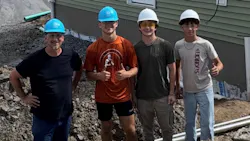
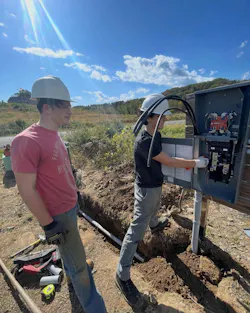
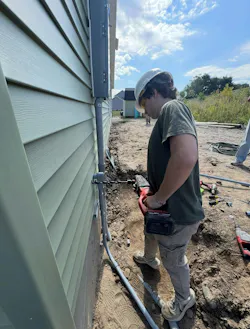
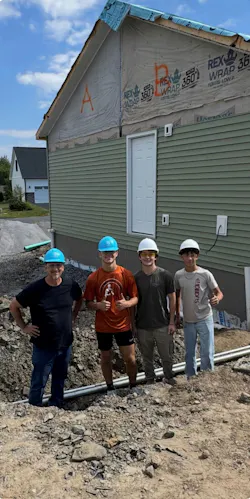
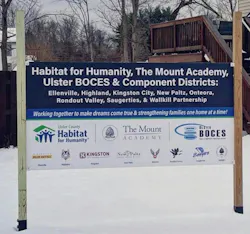
When students are given authentic, hands-on experiences, the impact can be transformative. I’ve seen that firsthand. Over the last six years, more than 250 students have participated in wiring 11 Habitat for Humanity homes through partnerships involving Ulster County Habitat for Humanity, Ulster BOCES, and The Mount Academy.
Habitat for Humanity is a nonprofit organization that builds affordable housing through volunteer and community partnerships. Ulster BOCES serves multiple districts across Ulster County. The Mount Academy, a Hudson Valley private high school participating in modular home construction projects connected to workforce learning, builds on campus and later donates and transports homes to final sites.
These projects were not simulations. They were real homes, real inspections, real deadlines, and real families waiting to move in.
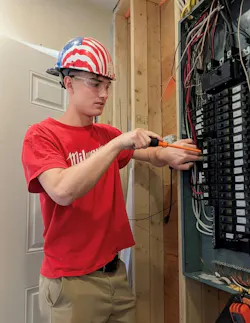
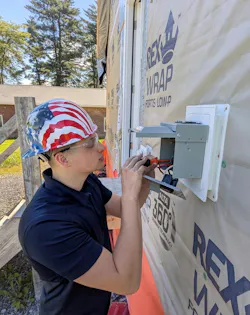
Students did far more than run circuits. They installed primary and secondary service entrance conductors, worked with 200A load centers and overcurrent devices, completed grounding and bonding systems, installed branch circuits, switches, receptacles, lighting systems, doorbell wiring, panel labeling, device terminations, rough-ins, trim-out work, and coordination activities alongside inspectors, utility representatives, educators, and other trades. Students experienced sequencing, accountability, inspections, and the realities of construction schedules. This was authentic learning. This was industry exposure.
I remember students standing in unfinished homes looking at systems they installed. Some struggled academically. Some lacked confidence. Some doubted themselves. Then the lights came on.
Students pointed toward panels, circuits, receptacles, switches, and rooms and quietly said, “I did that.” The project no longer belonged to the school. It became theirs.
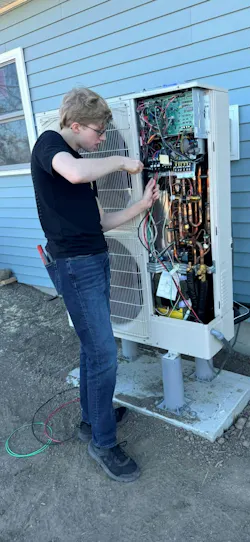
Many students who struggled in traditional environments demonstrated leadership, communication, teamwork, troubleshooting, and persistence once placed in authentic settings. Exposure changed how adults viewed those students. More importantly, exposure changed how students viewed themselves.
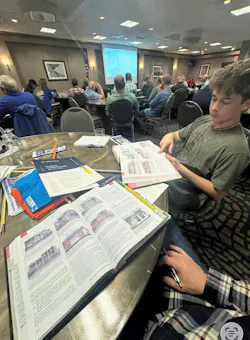
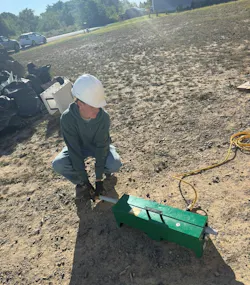
Exposure can extend beyond job sites and classrooms. Some students also participated in professional learning experiences through the Independent Alliance of the Electrical Industry (IAEI), attending workshops and industry events focused on electrical safety, Code-related learning, continuing education, and workforce development. These experiences allowed students to see that learning continues throughout a career in the electrical industry.
Building the next generation
The electrical industry offers strong earnings, meaningful work, job security, entrepreneurship, visible results, and service to communities. Students should know that.
They should meet electricians. They should walk job sites. They should see apprenticeships. They should understand that success has many forms. College is a pathway. The trades are also a pathway. Both deserve equal visibility.
The next generation of electricians is not missing. They are already here. They are sitting in classrooms right now, waiting for exposure and waiting to see what is possible.
When we connect hearts to hands, we do more than build houses. We build confidence. We build purpose. We build futures. If the electrical industry wants the next generation of electricians, it cannot wait until graduation to find them. We must help create the exposure that allows students to discover the path in the first place.
About the Author
 Michael Catalano, Ed.D.
Michael Catalano, Ed.D.
Michael Catalano, Ed.D., is owner of Catalano Electric, Secretary of the Ulster County Electrical Licensing Board, High School Counselor at Saugerties Central Schools, member of the Board of Directors for the New York State School Counselors Association (NYSSCA) and the 2025 New York State School Counselor of the Year. His work focuses on workforce development, Career and Technical Education, and real-world partnerships connecting education, industry, and community