Designing and Powering the Future Grid
Key Takeaways
- The DOE's Grid Modernization Initiative aims to upgrade the electrical grid with nearly $1.9 billion in funding, emphasizing advanced conductors, transmission technologies, and regional upgrades.
- Utilities are investing in infrastructure projects like transmission line upgrades and substation improvements to improve reliability, resiliency, and support increasing electricity loads from data centers and electrification efforts.
- Supply chain constraints, especially in transformer manufacturing, pose significant delays; domestic production and early supplier engagement are critical to meeting project timelines.
- Grid modernization efforts include deploying advanced technologies such as static synchronous compensators, ACSS conductors, and digital substations to enhance system stability and capacity.
- Future developments will focus on integrating AI, DER management systems, and grid-enhancing technologies to optimize operations, improve flexibility, and accommodate growing demand.
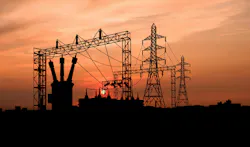
While the electric grid may have fueled America’s growth from the early 1900s to today, it must be upgraded to meet the demands of the 21st century and beyond, according to the U.S. Department of Energy (DOE), which launched the Grid Modernization Initiative (GMI).
To build the grid of the future, the DOE also announced a nearly $1.9-billion funding opportunity in March 2026 to accelerate critical grid upgrades, meet rising demand, and lower electricity costs through the Speed to Power through Accelerated Reconductoring and other Key Advanced Transmission Technology Upgrades (SPARK) program.
This program focuses on three areas — reconductoring with advanced conductors; advanced transmission technologies; and large-scale, cross-regional transmission upgrades and coordinated planning. Through the SPARK funding opportunity, the DOE hopes to stabilize and optimize grid operations to strengthen it for rapid growth and ensure that it provides reliable power day in and day out, said Katie Jereza, assistant secretary for the DOE Office of Electricity, in the announcement.
As utilities address growing electricity needs and modernize aging infrastructure, electrical contractors and engineers should expect sustained demand across the power industry, said Frank Johnson, vice president, Energy, at ISG in Cleveland.
“Increasing power consumption from data centers, electrification initiatives, manufacturing growth, and population expansion is creating a significant backlog of work that will require continued investment in transmission, distribution, substations, and grid reliability projects,” he said.
From coast to coast, electric utilities are investing in grid modernization projects to improve energy reliability and resiliency. For example, Ameren Transmission and Ameren Illinois are working to build about 380 miles of new or upgraded transmission lines and making significant substation improvements across central Illinois.
“The Central Illinois Grid Transformation Program is one of the largest transmission investments underway in our region,” said Thomas Pauk, program manager, Ameren. “As we move through the next phases of engineering and construction, our focus is on strengthening the grid’s backbone so it can deliver electricity more reliably, withstand extreme weather, and provide the transmission capacity needed to support Illinois’ growing energy needs.”
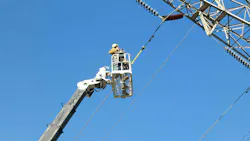

Keeping pace with surging demand
While electric utilities are dealing with major load growth, they are also dealing with increasing customer expectations for reliability and resiliency, aging assets, and increasingly damaging severe weather — all of which are driving major spending — said Cody Davis, an associate technical director of grid modernization for Electric Power Engineers in Champaign, Ill.
Compounding the challenge for electric utilities based in the West, Davis said, wildfire risk management investments make up a major portion of capital investment.
“These generally don’t add much, if any, new load-serving capacity,” said Davis, a power systems engineer who has worked directly with electric utilities on change management, process optimization, and regulatory compliance.
Energy efficiency improvements, such as LED lighting, may have helped moderate demand growth in recent years, but the recent rise of AI-driven data centers has dramatically increased electricity needs, Johnson said. At the same time, the growth in electric vehicles and general increases in electricity consumption are placing further strain on the grid, he said.
As a result, grid modernization cannot keep pace with today’s growth in electricity demand, Johnson said. For example, as data centers rapidly expand, particularly in major metropolitan areas, the existing infrastructure is not designed to support such a large electrical load.
“Many of these facilities do not have the level of backup generation needed to offset their impact on the grid, placing additional pressure on already constrained utility systems,” he said.
While grid modernization tries to keep up with load growth, electric utilities are struggling with the capital and capacity needs to execute their plans in an efficient and timely manner, said Martin Shalhoub, senior managing director, Power and Utilities, PwC, a utility consulting and technology implementation firm.
He said electric utilities pressured by affordability concerns are investing in operational efficiency by using AI across grid operations, field service, asset management, and customer service. They are also focusing on reconductoring transmission lines and repowering generating units to serve large loads, including data centers.
Robert “Robbie” Rugg, president and CEO of Rugg’s Construction Company in Upland, Calif., said the focus today is on infrastructure that delivers electricity, along with reliability and resilience improvements. For example, the Energy Information Administration (EIA)’s November 2024 report, based on 2023 spending data, identifies distribution investment as the largest driver of increased capital spending over the preceding two decades.
While this is historical evidence — not a current nationwide spending ranking — in Southern California, one of the electric utility’s recent updates highlights infrastructure replacement, electrification, and wildfire resilience, including covered conductor, targeted undergrounding, and transmission hardening. He said the mix varies by utility.
“For contractors, the useful question is which funded upgrades affect the specific service territory and project,” Rugg said.
From his experience in construction operations, electrical systems, solar, storage, and project delivery, Rugg has discovered that the pace and progress of grid modernization depend on location.
“The question is not simply whether enough generation is being proposed, but whether usable power can reach a particular site when it’s needed,” he said. “Transmission, local distribution capacity, equipment availability, and connection approvals all have to align.”
Case in point: Berkeley Lab’s 2026 “Queued Up” report shows persistent delays for transmission-connected generation, but, in his view, those figures should not be treated as timelines for individual customer service upgrades.
“I would judge progress by dependable capacity delivered and credible energization dates — not investment announcements alone,”
he said.

Roadblocks to grid modernization
As far as infrastructure bottlenecks, Rugg separates them into three areas — physical capacity, equipment, and execution. First, physical constraints include transmission access, substation and transformer capacity, and the local feeder serving a project. Secondly, equipment constraints encompass transformers, switchgear, and associated protection and controls, with availability varying by specification and supplier. Finally, execution constraints consist of studies, permitting, easements, utility design, qualified crews, and outage windows, he said.
“These constraints interact because an incomplete load forecast or late design change can reopen decisions and delay procurement,” he said. “My first step would be to identify the actual limiting dependency for that site and assign an owner and a decision date to it.”
Rugg said infrastructure constraints make power availability an early design and commercial issue, not a final construction milestone.
“A late utility requirement can change service voltage, equipment layout, civil work, protection, cost, and the occupancy sequence,” he said. “I would build one integrated schedule covering owner decisions, utility studies and design, equipment approvals and releases, installation, inspection, testing, and energization.”
Long-lead purchases need explicit approval of the assumptions and risks behind them, Rugg said. While phased construction can help, temporary power or partial energization must be technically feasible, permitted, and economically justified, and contracts should identify responsibility for utility interfaces and how externally driven delays will be handled, he said.
For Johnson, one of the biggest infrastructure bottlenecks in today’s electric utility industry is the availability of critical electrical equipment, particularly transformers.
“Every electrical system relies on transformers, and demand is significantly outpacing manufacturing capacity,” he said. “Lead times for power transformers have stretched, with some units taking three to four years
to be delivered.”
Essential equipment such as breakers and other grid components commonly has lead times approaching two years, he added. A major contributor to this challenge is the limited domestic production of electrical-grade steel, a key material used in transformer manufacturing. He said much of the available supply is sourced internationally, creating additional supply chain constraints and increasing reliance on overseas manufacturers.
“These extended procurement schedules are slowing project delivery, delaying capacity additions, and making it increasingly difficult for utilities to keep pace with growing electricity demand from data centers, industrial facilities, electrification initiatives, and population growth,” Johnson said. “As a result, utilities and developers are struggling to secure the equipment needed to support grid expansion and modernization efforts.”
Davis agreed that sourcing materials and equipment is becoming more challenging, without facing higher costs and longer timelines. As more electric utilities upgrade their infrastructure to accommodate growth in their service territories, transformer shortages and lead times have exacerbated grid upgrade timelines, especially as major new loads, like EV charging hubs, are deployed much faster, Davis said.
Kiran Thammineni, director, integrated system planning for Ameren, said electric utilities are building critical infrastructure at a time when the entire industry is pursuing large-scale grid investments.
“Demand for specialized equipment, components and materials, and specialized labor remains high,” he said. “At the same time, projects are becoming more complex because utilities must account for changing load patterns, evolving generation resources, cybersecurity requirements, and an increasingly interconnected transmission network. Successfully delivering these projects requires coordination across engineering, construction, permitting, and supply chain teams.”
Today’s infrastructure bottlenecks reinforce the importance of long-range and integrated system planning, he said. Because equipment lead times for major transmission assets can influence project schedules years in advance, utilities are engaging suppliers earlier and incorporating greater flexibility into project development. From a planning perspective, Ameren is placing an increased emphasis on scenario-based analysis to account for uncertainties around future load growth, generation additions, and transmission needs, he said.
“This proactive planning looking at various scenarios has positioned us to manage risks and maintain reliable service,” Thammineni said.
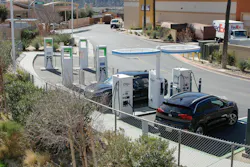
Supplying power for projects
Davis said the timeline to build new distribution system capacity is a major barrier to growth in both load and distributed energy resources (DER) connections.
“With major project lead times on the order of several years or longer, in congested urban areas, customers want to connect much faster than utilities can respond,” he said. “Loading constraints are now increasing the visibility of construction timelines to customers and regulators because they are now much more often a limiting factor to how fast customers can connect.”
Oftentimes, major expansions, data centers, and new substations require significantly more planning than most people expect, Johnson said.
“A common misconception is that power can simply be brought to a site when needed,” he said. “Adequate electrical service depends on utility capacity, the availability of nearby transmission infrastructure, and the ability of the local grid to support the additional load.”
He said the costs, timelines, and complexities associated with new transmission connections or increased electrical capacity can be substantial.
“Many projects are initially proposed without a full understanding of these requirements, and some do not move forward once the true scope, cost, and timeline become clear,” Johnson said. “Early coordination with utilities and experienced electrical engineering professionals can help identify potential challenges, avoid costly surprises, and determine whether a site’s power needs can realistically be supported.”
Davis said that while starting grid investment processes, design, approval, and construction earlier is a natural starting point, it comes with its own set of risks to electric utility customers.
“If anticipated growth doesn’t actually materialize, you don’t want to have wasted several million dollars on an upgrade,” Davis said. “The proactive investment concept is an attempt to execute this type of project successfully, but it includes addressing this risk.”
In the current climate, everyone is looking for ways to shrink wait times or streamline procurement and construction, Davis said. Planning work amid significantly more uncertainty requires more flexible scheduling and business operations, he said.
To accomplish this mission, engineers should establish the operating load profile early — what runs simultaneously, how demand changes over time, which loads are critical, and what future expansion is realistic, Rugg said.
“Engage the utility around that information before locking in the service design,” he said. “Then address available capacity, voltage, fault current, protection coordination, power quality, export limits, and any intended islanded operation.”
He also advises engineers and contractors to bring constructability into the same discussion — equipment access, replacement routes, working space, easements, maintainability, and commissioning requirements.
“Controls, communications, and cybersecurity should have defined ownership,” he said. “A design is stronger when the utility, engineer, contractor, owner, and equipment suppliers resolve their interfaces before procurement.”
In the world of contracting, engineering, and construction, time is money, Shalhoub said.
“If permitting or procurement of equipment and/or labor will cause a delay for an extensive period of time, developers will change project and solution designs to begin construction earlier,” he said.
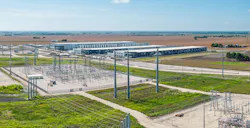
Prioritizing projects
In the past, Davis said grid modernization didn’t focus as much on increasing available grid capacity, which was seen as more of a distribution planning function. Instead, it zoned in on optimizing existing resources, acquiring and responding to new data sources, and increasing visibility and control of equipment.
“With the shifted focus on meeting increasing demand, it is using that tool set for a new objective and taking a lot of the lessons learned from previous deployments and DER-related elements,” he said.
Today, the ability to control power — through importing or exporting — is having the biggest impact, Davis said. This includes both customer on-site power control systems and electric utility DER management systems.
“Having visibility and control allows for conservative sizing assumptions to be replaced with actual, enforced limits,” he said. “This can be effective for customer on-site electric upgrades, avoiding the need for panel upgrades using power control system (PCS) technology or similar innovations.”
On the grid side, Davis said the same concept applies, allowing electric utility assumptions about demand factor to be replaced with enforceable limits. This can be a single value, a schedule aligned to not trigger grid needs, or utility management to maximize capacity access while still avoiding the need for upgrades. Over the next five years, Davis expects DER management systems, which enable flexible interconnections for load and DER, as well as locational distribution capacity services, to play a major role.
“They will be essential tools to enable faster customer connection times by providing runway for traditional upgrades to be constructed without delaying customers,” he said. “They can also de-risk utility investments driven by less certain growth through forecasting or individual customer large load decision-making.”
In the near future, Rugg suggests prioritizing upgrades that unlock usable capacity while improving reliability. For example, these projects include targeted transformer, substation, and feeder improvements; appropriate reconductoring of existing transmission corridors; and better sensing, protection, and distribution automation.
At the customer level, efficiency, managed loads, and properly designed solar-plus-storage can complement those investments, but the sequence matters, he said.
“Improving visibility does not eliminate a physical capacity limit, and adding capacity without the right protection and controls creates another problem,” Rugg said. “I would measure success through capacity made available, reduced outage exposure, connection time, and life-cycle cost — not simply miles of wire or equipment installed.”
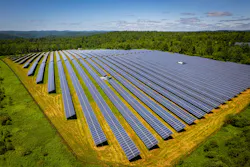
Investing in the future grid
Going forward, Thammineni said investments in transmission capacity, substation modernization, and grid-enhancing technologies (GETs) will help electric utilities operate the system more efficiently while creating flexibility for future needs.
“GETs are like tools in a toolbox, with each one helpful in a different situation,” he said. “We look at where they strategically fit within our transmission system and find the right use cases for each,” he said. “We will continue to evaluate new technologies to ensure we are meeting our customers’ needs while focusing on keeping costs low.”
For example, Ameren is one of the first companies in the Midcontinent Independent System Operator (MISO) region to install static synchronous compensators (STATCOMs), which are a type of GET to provide voltage stability to the grid.
“We see significant value from advanced grid analytics, system monitoring, and technologies such as dynamic line ratings that provide operators with greater visibility into grid conditions,” he said. “As utilities manage increasingly dynamic power flows, access to better system data and analytical tools help our transmission operations team manage the grid more efficiently. Better data supports more informed planning and investment decisions.”
Advanced conductors are also a normal part of Ameren’s system, and the utility significantly expanded its installation of aluminum conductor steel supported (ACSS) lines on its transmission system around 2010. Since then, Thammineni said ACSS has become a go-to solution that reduces sag, offers higher capacity, and enables other benefits over traditional Aluminum Conductor Steel Reinforced (ACSR) lines.
“Our Line Design group analyzes every project thoroughly and makes the best design and technology application decision that results in the best value and highest reliability for our system,” he said. “We see the need for a stronger backbone for the energy grid that can move large amounts of power across the region and support a more balanced generation portfolio. Transmission investments will deliver some of the greatest value for customers and communities as they address multiple challenges at once: reliability, resiliency, and growing electricity demand.”
Down the line, Rugg expects more two-way power flow, inverter-based resources, active load management, and closer integration of electrical equipment with software and communications. He forecasted that the pace would vary by region, regulation, economics, and utility capacity.
As far as which technologies will have the biggest impact, Shalhoub said it will be the ones that can increase capacity and come online quickly. For example, he has seen electric utilities adopt advanced conductors, aggregated DER (virtual power plants), and battery energy storage systems (BESS) — less from an efficiency standpoint, but more to serve load growth.
Rugg said the right technology depends on the constraint being solved. For example, advanced conductors can increase transfer capability on suitable existing corridors, subject to engineering and terminal-equipment limits. At the same time, digital substations, automation, and advanced protection improve visibility and fault response when communications, settings, cybersecurity, and commissioning are sound, he added. Solar, BESS, and managed loads can also offer flexibility closer to the customer.
“Storage can shift energy and reduce peaks, but it does not generate energy or automatically remove the need for a service upgrade,” he said. “For me, the important distinction is installed technology versus verified system performance: the controls, equipment, and operating sequence must work together under the conditions the owner actually expects.”
In the next decade, Davis expects new control options for load and DER — whether on-site customer controls or utility-sided management — to continue to grow in value and utilization as the technologies and processes mature and integrate with existing hardware. He also anticipates that everything in the power and electric utility industry will get more complicated.
“As new technologies are added and new capabilities emerge, it takes more effort to evaluate all the options and analyze their impacts,” he said. “There are more design standards to learn and apply, more data available for more complex studies, and more risks to consider.”
During this time, Rugg said electrical professionals will need stronger coordination across power systems, controls, cybersecurity, commissioning, and maintenance — not just installation. Owners will also expect clearer lifecycle costs and evidence that systems perform as promised.
“I see an opportunity for contractors who can turn a complex set of requirements into a safe, buildable, maintainable project and transfer that knowledge to the operating team,” he said. “Workforce development and disciplined documentation will remain as important as new hardware.”
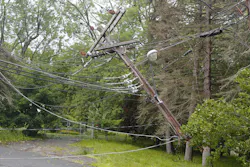
In the future, Johnson expects AI to play a larger role in design and engineering workflows. While it may help generate schematics, automate routine design tasks, and improve efficiency, he said it is unlikely to replace the need for experienced engineers.
“Registered professional engineers will continue to be responsible for reviewing, validating, and approving designs to ensure they are safe, reliable, and meet regulatory requirements,” he said. “The industry will continue to rely on the human element to apply engineering judgment, evaluate unique project conditions, and identify issues that automated tools may overlook.”
In his view, Shalhoub said individuals who are experienced with these newer technologies, along with digital substations, grid automation, and advanced protection, will be in greatest demand.
“For electrical contractors and engineers, it’s a great time for job demand and an opportunity for wage increases due to sustained need in the power and utilities industry for labor,” Shalhoub said.
Thammineni said to expect continued growth in transmission development, grid hardening, and infrastructure modernization across
the industry.
“Utilities are planning for increased electricity demand, greater electrification, and continued economic development, all of which will require significant investments in both transmission and distribution systems,” he said. “For engineers and contractors, that means growing opportunities in transmission design, substation engineering, protection and controls, grid automation, and the integration of grid enhancing technologies that improve system performance and resilience.”
Projects like Ameren’s grid modernization program are long-term investments that strengthen the transmission network, improve resilience and help ensure communities have access to the energy they need for decades to come, Pauk said.
“Grid modernization is really about preparing for the future while continuing to provide safe and reliable service today,” Pauk said. “Grid modernization is not solved by a single project or technology — it’s an ongoing effort to build a stronger and more adaptable energy grid.”
Best Praces for Facility Owners Planning an Upgrade
In today’s environment, facility owners should know that costly timeline delays exist, said Martin Shalhoub. He advised owners to have contingency plans in place if new projects aren’t completed on time. “It’s best to have alternatives already in place to increase the likelihood of success,” he said.
Here are some other tips for major upgrades.
- Reach out to the utility as soon as you have the concept of a plan. Ask whether any upgrades will be necessary and if so, how long they will take. “The earlier you can be prepared with a site plan and other documentation to start the upgrade process, the better,” Cody Davis said.
- Look into or ask whether the utility has flexible connection options. These can reduce timelines significantly for both service transformer and larger grid reinforcement upgrade projects, Davis added.
- Confirm power feasibility before committing to an expansion budget or opening date. “Space in a panel — or power lines near the property — is not proof that the utility can serve the proposed load,” said Robbie Rugg. “Owners should obtain a utility assessment, understand required upgrades and cost responsibilities, and distinguish estimated dates from committed milestones.”
- Define critical loads, acceptable downtime, future growth, and operating costs early.
- Compare efficiency, load management, service upgrades, and on-site resources as a coordinated plan. “Batteries have finite energy and need a charging source; solar alone is not an outage solution,” Rugg said.
- Include permitting, maintenance, replacement, and staff training in the business case.
Six Ways to Adapt to Longer Lead Times and Schedules
While engineers and contractors can’t make power suddenly appear for a project, they can take steps to minimize risk, identify project delays, and stay ahead of any challenges.
- Consider the availability of equipment and labor earlier in the design process, advised Martin Shalhoub.
- Negotiate flexibility into your contracts to adapt to longer utility timelines. “Given how dynamic the start and stopping of projects have been, contractors are looking for flexibility and incentives to accept longer timelines,” he added.
- Start important steps early to minimize construction timeline risk. “Things like securing land and right-of-way and starting long-lead procurement of materials that can be used elsewhere if needed, like transformers, can significantly improve timelines without adding much risk of incurring unneeded costs,” Cody Davis said.
- Manage the utility work as part of the critical path rather than as an external date on the schedule. “I would establish regular coordination, maintain a shared list of open decisions, confirm equipment requirements early, and distinguish preliminary dates from firm commitments,” Rugg said. “Work can be resequenced where it genuinely protects progress, but finishing the building earlier does not solve an unavailable electrical service.”
- Make sure procurement contingencies are technically reviewed, not based solely on what is in stock, he added.
- Focus on transparent communication with owners about remobilization, storage, temporary systems, and the cost of waiting, Rugg said.
Inside the Grid Modernization Initiative
The U.S. Department of Energy (DOE) is working with both public and private partners to implement its Grid Modernization Initiative. The DOE has also partnered with national laboratories to bring together experts, technologies, and resources to modernize the grid through its Grid Modernization Laboratory Consortium (GMLC).
According to the DOE, here are some of the program’s major goals.
- Develop the concepts, tools, and technologies to measure, analyze, predict, protect, and control the grid of the future.
- Improve the integration of all sources of electricity, solve challenges of energy storage and distributed generation, provide a platform for U.S. competitiveness and innovation in a global energy economy, and secure the nation’s grid.
- Deliver resilient, reliable, flexible, secure, sustainable, and affordable electricity.
About the Author
Amy Fischbach
Amy Fischbach is a freelance writer, editor, and host of the Line Life Podcast based in Overland Park, Kan. Contact her at [email protected].