Safe Load Management for Electrified Homes
Key Highlights
- Electrification is a significant trend in the electrical industyr, and intelligent load management technology is offering a safer, more efficient, and cost-effective solution.
- Changes in recent NEC editions support safe load management practices. The 2023 edition offered crucial updates, and the upcoming 2026 edition will continue to do so.
- Home energy infrastructure and electric utilities will continue to impact load management, and integrated load management solutions will create more opportunities.
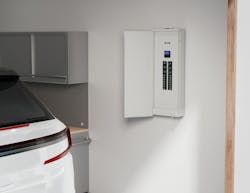
Electrification is one of the most significant trends impacting new and existing homes. As homeowners embrace electric appliances and adopt electric vehicles (EVs), electrical capacity constraints are a major obstacle. Traditionally, overcoming this barrier required costly service or panel upgrades. However, intelligent load management technology now offers a more efficient and cost-effective solution.
Load management technology has long been utilized in industrial settings, helping organizations optimize processes, control costs, and protect electrical systems. Now, this same concept is revolutionizing home energy systems, allowing households to stretch the capabilities of existing energy infrastructure. With recent advancements in smart circuit breakers, homeowners can now add intelligent load management capabilities directly into new and existing load centers to safely meet growing power demands without the cost of replacing their panel.
What is intelligent load management?
At its core, intelligent load management enables more efficient power distribution across a home’s electrical system. For example, this technology can now help ensure that critical functions such as heating, cooling, and refrigeration receive priority during peak demand periods while temporarily reducing power to non-essential devices like EV chargers. The result is a system that works harder to optimize energy consumption without tripping breakers, overloading circuits, or requiring panel upgrades.
Load management can also play a crucial role in integrating distributed energy resources (DERs), such as solar and energy storage, by balancing supply and demand. Although the intermittent nature of renewable generation presents challenges, load management can help to mitigate these challenges by optimizing energy production, storage, and consumption.
Additionally, advancements in smart circuit breaker technology now allow nearly any load center to function as a modular smart panel. These load management techniques provide a flexible solution that offers homeowners, builders, and contractors more options to put existing energy infrastructure to work in new ways:
- Avoiding costly panel upgrades while accommodating increasing electrical loads.
- Enhancing energy flexibility and scalability, reducing installation complexity.
- Supporting the integration of solar energy and energy storage for improved resilience.
- Optimizing energy use, lowering electricity bills, and extending backup power duration during outages.
The NEC continues to support safe load management
With the rise in adoption of intelligent load management technology, the 2023 National Electrical Code (NEC) introduced crucial updates to guide the safe and effective application of power control systems (PCSs) and energy management mystems (EMSs).
The addition of a new informational note in Sec. 705.13, Energy Management Systems, was a major milestone, marking the first time the NEC explicitly referenced PCS within the broader context of energy management. Although a standard was not available at the time, the NEC acknowledged that a PCS is a type of EMS that is capable of monitoring multiple power sources and controlling the current on busbars and conductors to prevent overload. This is a safety function and sets the stage for future editions of the Code to address the proper use of these systems.
In our opinion, one of the most critical aspects of this Code evolution is ensuring that the implementation and use of load management technology remains safe. The NEC has started to address this concern by requiring set points that ensure electrical systems stay within safe operational limits, even if communication systems or networks fail.
The 2026 NEC and the future of load management
The 2026 NEC cycle offers more refinement and clarity for load management applications. Some of the updates include:
- The introduction of a new Art. 130, with contents relocated from Art. 750, and the important addition of a new Part II titled Power Control Systems that governs the installation of a PCS.
- Refinements in PCS application for interconnected energy sources like solar and storage in Sec. 705.13. This update changed the section title from Energy Management Systems to Power Control Systems to properly identify the type of EMS that can be used.
- New guidance for EV charging in Sec. 625.42(A), titled Power Control Systems, specifying when and how a PCS should be used to manage electrical loads safely.
- Addition of Art. 624, which focuses on self-propelled vehicle power transfer systems, and specifies when and how a PCS should be used to manage electrical loads safely..
- Further clarification on optional standby systems in Sec. 702.4(A2), ensuring that a PCS integrates effectively into backup power configurations.
- Modification to Sec. 705.28(A), Power Source Output Maximum Current, recognizes that maximum current could be a PCS control setting.
As the industry moves toward broader adoption, it is imperative that electrical professionals, contractors, and inspectors stay informed and actively educate themselves on the latest NEC guidelines for safe application.
The impact of load management on home energy infrastructure and electric utilities
Electric utilities have used intelligent load management for demand-side response programs for years, using components like smart thermostats or advanced meters to remotely control customer loads to maintain grid stability. Now, the ability to integrate load management directly into home electrical systems is creating even more opportunities for demand response programs.
Here are some of the key impacts of electrical load management in the home:
- Improved grid resilience: Distributed load management can help balance local and regional energy demand, reducing the strain on infrastructure.
- Better energy management: Homeowners gain more control over their energy use, making it easier to manage bills and optimize onsite generation.
- A bi-directional ecosystem: A more interactive energy ecosystem could emerge, where homeowners and utilities work together to enhance grid reliability.
Support a safer future for electrified homes
As with any new technology, the proper application of intelligent load management is critical. Electrical professionals must understand how to size electrical systems based on load management capabilities, rather than simply relying on full-load calculations.
Key considerations include:
- Using properly calibrated set points to ensure safe and effective energy distribution.
- Understanding the implications of residential load management on electrical panel sizing and system design.
- Ensuring proper integration of multiple energy sources, including solar, battery storage, and EV charging.
- Leveraging energy storage as a buffer to prevent overloading and improve system resilience during outages.
The electrification of everything is at a tipping point for home energy systems. As home energy consumption continues to grow, intelligent load management will become a cornerstone of safe and efficient electrification. As the NEC evolves to reflect these advancements, staying informed and engaged is critical for all electrical professionals. By embracing intelligent load management and proactively adopting the latest NEC updates, we can ensure a safer, more affordable, and resilient energy future for electrified homes.
About the Author
Rebecca Bitter
Rebecca Bitter is Product Line Manager — Home Energy Management at Eaton.
Tom Domitrovich
Tom Domitrovich is Director, Codes and Standards at Eaton.