A New Model for Increasing Data Center Build Speed
Key Takeaways
- Modular, scalable power infrastructure and construction-ready supply chains enable faster, more predictable data center builds.
- Proactive power planning and collaboration with trusted partners mitigate risks associated with increasing power density and complex infrastructure.
- Building strong supplier relationships and mapping decision trees support rapid pivoting and project flexibility.
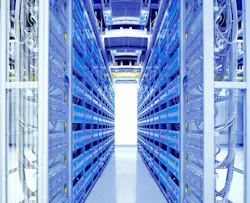
The power needed for computers is expected to rise 3.5 times by 2030, and data center builds are projected to reach $7 trillion worldwide to keep up. That type of demand is a call to work differently to enable growth, speed, and scale. In the U.S. alone, there are an estimated 3,000 data centers under construction today.
There is a shift underway from stick-built to far more modular, scalable power infrastructure. This approach enables coordinated material flow, predictable delivery, and job‑ready power and computer infrastructure to keep builds moving forward. This “construction-ready” approach helps compress timelines and ensure projects are delivered on time and on budget. This is the strategy of shifting supply chain materials management upstream — away from warehouses and toward installation‑ready delivery, so the job site functions as a production environment rather than a storage yard.
Let’s take a closer look at some of the strategies construction‑focused supply chains are using to streamline high‑stakes projects these days.
The key to speed
Given tight project timelines, it is critical to have equipment and materials “job ready” vs. “warehouse ready.” In this new model, a construction site should operate like a factory, structured for installing, not sorting and storing, materials. Materials are expected to be kitted, sequenced, and coordinated into a single workflow in “job-ready” supply chains. The sheer number and massive scale of today’s data center builds hinge on scalable, repeatable builds across diverse geographies.
Key to having essential materials on-site and “job-ready” is having early knowledge of specific project needs to support modular construction. This is important for electrical products, power, and IT infrastructure. At the same time, with complex, large, multi-year data center projects, it is important to understand construction timelines and specific technology needs. Plus, when materials arrive sequenced and installation‑ready, electrical crews spend more time installing and less time searching, sorting, and staging, which is an increasingly critical advantage amid ongoing labor shortages.
Power and the supply chain
Power is a critical success factor in data center projects, as it drives schedule certainty, risk reduction, and long‑term uptime. AI‑driven workloads are significantly increasing power density at the rack level, placing new demands on upstream electrical infrastructure, cooling systems, and equipment availability.
While the fundamentals of bringing power from the grid remain the same, the unprecedented scale of today’s data centers, tighter commissioning windows, and increasingly sophisticated electrical infrastructure demand a more deliberate approach. Electrical contractors who proactively plan power requirements earlier, align equipment and materials with construction milestones, and coordinate closely across utilities, OEMs, and the supply chain can significantly reduce risk and protect performance from day one through steady-state operations. Further, planning for on-site power is likely a must to deliver new data center capacity fast. Simultaneous construction of data centers and onsite power generation with grid interconnection provides customers with new options to help fast-track data center builds.
The GPUs that power AI-ready data centers require massive amounts of power and significant cooling infrastructure. Contractors and other stakeholders need to address power considerations early in the project to minimize the chance of supply-chain-related delays.
Moving this risk earlier in the project flow can make it easier to manage any challenges, should they arise, especially compared to if those challenges were to arise later in the project. From a technical perspective, job-ready supply chains are safer as they allow for early decision making and effective change management.
Trust in partners is paramount
Today’s data center projects are complex enough as they are; there’s no need to add more challenges by not having a comprehensive supply chain strategy in place. To keep projects on schedule, plan for on-site generation and modular IT and power infrastructure.
Bringing partners into the conversation early helps reduce programmatic friction and cut down rework. Given the ongoing skilled labor shortage and the need to maximize productivity, the value of this cannot be overstated. Look for a partner that has a high “say-to-do” ratio — one that not only helps with sourcing, but also provides sound strategy, the ability to model, understands workforce requirements, and adjusts plans as needed. This provides elevated peace of mind and ensures seamless project execution. Trust is one of the key components of a successful partnership, especially on projects where pressure is high and timelines are tight.
Early sourcing is also key to avoiding costly project delays. Working with large, global partners can help with material procurement and create opportunities for staging, kitting, and storage if needed. These strategic relationships provide access to the right manufacturers at the right time and the right place. Having products and materials “job-ready” at the site and ready to go at the right time can help set up contractors for success on these projects.
Another key is mapping those relationships ahead of time and having a decision tree in place at the start of the project so that partners can move quickly if contractors need to pivot on a project.
Building for speed, certainty, and scale
Data center projects are increasing in size, complexity, power demand, and speed‑to‑market expectations. Construction‑ready supply chains move critical decisions earlier in the project lifecycle, aligning power infrastructure, equipment, and material sequencing before crews mobilize on site. When supported by trusted partners and proactive planning, this approach helps contractors reduce risk, maximize labor productivity, and deliver complex megaprojects on time, on budget, and built for long‑term performance.
About the Author
 David Speidelsbach
David Speidelsbach
David is Vice President of Sales and Strategic Initiatives for Wesco’s Electrical & Electronic Solutions business, where he leads the Construction and Data Center Global Accounts and Mega Projects organizations. In this role, David is focused on driving strategic growth across high-impact infrastructure segments and leveraging Wesco’s global capabilities to deliver scalable, resilient and intelligent solutions for the world’s most complex and mission-critical projects. Prior to joining Wesco in 2025, David spent over three decades at Eaton, where he held a series of senior leadership roles across sales, marketing and product management.
 JP Buzzell
JP Buzzell
JP Buzzell is the vice president, data center chief architect at Eaton, where he leads next-generation data center development and solution-based architecture for the data center segment. Prior to Eaton, JP was director of white space design for Oracle Cloud Infrastructure, were he led development of air-cooled and liquid global designs. Before that, he was a regional director for Oracle’s data center operations. He also held project management and critical facility engineer roles at Meta. JP holds a Bachelor of Science in nuclear engineering technology (ABET) from Thomas Edison State University and a Master of Technology Management from Georgetown University.