Key Highlights
- Large-scale infrastructure projects in Chicago require electrical contractors to deliver high-precision, reliable work to support critical facilities.
- Reliability is vital as power interruptions can lead to severe consequences in hospitals, airports, and data centers, emphasizing the need for rigorous safety and maintenance practices.
- Adopting predictive maintenance tools like infrared thermography and power-quality analysis helps identify issues early, reducing downtime and extending equipment lifespan.
- Compliance with standards such as NFPA 70B and NFPA 70E enhances safety, professionalism, and client confidence in mission-critical environments.

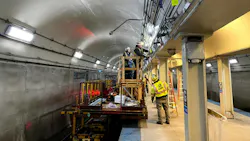
Across Chicago and Cook County, large-scale infrastructure upgrades are reshaping the built environment — from modernized transit networks to data centers supporting the digital economy. Each of these developments brings new demand for mission-critical electrical work that must perform flawlessly under pressure.
For electrical contractors, these projects present both opportunity and responsibility. Mission-critical work requires a higher level of precision, coordination, and technical expertise than traditional construction. As the region invests in modernization and resilience, contractors who can meet these standards are defining what it means to build smarter and safer.
Reliability is non-negotiable
Power interruptions are becoming more frequent and more costly, creating growing concern for clients across every sector. Extreme weather, rising electrical loads, and aging infrastructure have combined to make reliability a top priority.
When a mission-critical facility goes down, the consequences are immediate and costly. Hospitals face jeopardized patient care and potential data loss, airports experience halted operations and stranded passengers, and data centers risk outages that can paralyze entire organizations. Even a brief interruption can cascade into financial losses, reputational damage, and, in health care and transportation environments, threats to safety and critical communication systems.
Even a few seconds of outage can trigger cascading failures, financial losses, and reputational harm that take months to recover from. For electrical contractors, this reality reinforces the importance of skilled labor, rigorous safety programs, and proactive maintenance practices that protect people, property, and the continuity of essential operations.
Raising the standard
Mission-critical environments such as hospitals, airports, water treatment plants, and data centers rely on redundancy, real-time monitoring, and adaptability. In these settings, preventive maintenance and NFPA 70B, Standard for Electrical Equipment Maintenance, compliance are not just regulatory requirements but essential practices for safeguarding uptime and minimizing risk.
Achieving reliability at this level requires precision engineering, disciplined planning, and a workforce capable of anticipating potential issues before they occur. Electricians and project teams must understand system integration, scheduling constraints, and risk management from design through operation. In mission-critical construction, preparation and preventive design are every bit as important as the installation itself.
Actionable insights for contractors
Electrical contractors who excel in mission-critical environments share one common principle: They plan for reliability from the start. The following strategies reflect current best practices that strengthen performance, reduce downtime, and build lasting client trust.
- Integrate predictive maintenance. The transition from reactive to predictive maintenance is central to achieving electrical reliability. Guided by NFPA 70B, contractors are using diagnostic tools such as infrared thermography, insulation resistance testing, and power-quality analysis to identify potential issues before they escalate. Predictive strategies rely on condition-based data gathered from continuous monitoring — often through building management or electrical power monitoring systems — to track voltage, current, harmonics, and temperature. This data-driven approach helps ensure that maintenance is performed when it’s needed most, extending equipment life, improving safety, and maintaining operational uptime.
- Treat compliance as a competitive advantage. Compliance with NFPA 70B and NFPA 70E, Standard for Electrical Safety in the Workplace, is increasingly viewed as a mark of technical rigor and professional accountability. Together, these standards promote structured maintenance programs, documented safety procedures, and the consistent training of qualified personnel. Contractors who integrate these frameworks into their everyday operations demonstrate a proactive commitment to reliability and worker safety, which enhances client confidence and long-term project success.
- Invest in workforce development. Technology is advancing faster than ever, and maintaining reliability depends on keeping the workforce ahead of the curve. Ongoing education in testing methods, diagnostic tools, and updated codes ensures electricians are prepared to manage emerging systems such as smart monitoring, renewable integration, and energy storage. A well-trained workforce is not only safer and more adaptable but also better equipped to deliver the precision and performance that mission-critical projects demand.
Developing an electrical maintenance program (EMP)
Creating an electrical maintenance program (EMP) that aligns with NFPA 70B begins with a structured and well-documented approach designed to enhance safety, reliability, and system performance. The process starts by assigning responsibility to a qualified professional — either an in-house EMP coordinator or an experienced electrical contractor — who understands the facility’s systems and the requirements outlined in NFPA 70, 70B, and 70E. Their technical knowledge ensures every aspect of the program, from documentation to implementation, aligns with current safety and maintenance standards.
Once leadership is in place, the next step is to establish a clear understanding of the facility’s electrical infrastructure. This includes updating one-line diagrams, verifying incident-energy analyses, and compiling a comprehensive inventory of all electrical assets. Reviewing existing maintenance records provides valuable insight into historical performance, helping teams identify trends and areas that may require additional attention.
With this foundation, facilities can begin defining maintenance scopes and intervals that align with both manufacturer recommendations and NFPA 70B guidance. These intervals should reflect each system’s criticality and operating environment to ensure resources are focused where they matter most. Clear, written procedures for each equipment type — such as switchgear, transformers, and motors — further reinforce safety and consistency, outlining required tools, testing methods, and personal protective equipment (PPE) standards.
Finally, a robust recordkeeping system brings the program together. Centralized documentation of inspections, test results, and corrective actions allows teams to track progress, verify compliance, and identify emerging issues before they escalate. Whether maintained digitally or through standardized logs, this documentation ensures accountability and provides measurable proof of an EMP’s effectiveness over time.
Building the future of mission-critical work
As Chicago continues to modernize its infrastructure, mission-critical projects will remain central to the city’s growth. Across health care, transportation, and technology sectors, the need for reliable electrical infrastructure continues to accelerate. Contractors who approach this work with technical precision and a commitment to continuous improvement will not only meet today’s challenges but shape the future of the industry. Mission-critical work represents the highest standard of performance, and for those who can deliver it, the opportunity to build what truly matters.
About the Author
 Elbert Walters III
Elbert Walters III
Elbert Walters III is the Executive Director of Powering Chicago, an electrical industry labor-management partnership between IBEW Local 134 and the Electrical Contractors' Association of City of Chicago that invests in consistently better construction, better careers and better communities within the metro Chicago region. Employing the latest technology, Powering Chicago's members are elevating industry performance through their commitment to safety, level of experience and reliability, while also investing in the future of skilled labor through an innovative, five-year apprenticeship program.
A former business representative for IBEW Local 134, Walters leads Powering Chicago's 100+ philanthropic and community impact initiatives each year and plays a key role in its daily operations. In his previous role at IBEW Local 134, Walters worked with colleagues to represent the interests of more than 13,000 electricians in metro Chicago. Walters began his career in the trades as an electrical apprentice at the IBEW-NECA Technical Institute, where he received the Apprentice of the Year award during his final year in the program before becoming a journeyman electrician. While working in the field, Walters served as a journeyman wireman and foreman at several electrical contracting companies in metropolitan Chicago, including Meade Electric, Divane Brothers Electric and MZI Group, Inc.