The Future of Roadway Electrification: Dynamic Charging Systems and Heavy-Duty Vehicles

Purdue University technology could expand in-motion vehicle charging applications to critical space.
Jan. 21, 2026
4 min read

Key Takeaways

  • Purdue's system successfully delivered 190kW to a moving truck at 65 mph over a quarter-mile stretch, marking a significant advancement in dynamic wireless charging technology.
  • The technology could enable smaller batteries and lower costs for heavy-duty electric trucks by allowing in-motion charging, addressing key practical and economic challenges.
  • Research indicates that roadway-based dynamic charging can reduce detours and charging durations, making EVs more practical and appealing for commercial use.
  • Ongoing projects like ASPIRE and Electreon's initiatives are paving the way for real-world deployment, though widespread adoption remains years away.
  • Dynamic wireless charging is gaining attention as a scalable, efficient alternative to traditional charging stations, especially amid slowing EV sales and infrastructure concerns.
A possible long-term alternative to the fixed-location electric vehicle charging station model – roadways and vehicles paired to accomplish in-motion charging – continues to build a research base.

The latest U.S. entry in the emerging field of dynamic wireless charging research is a recent test of a heavy-duty truck application, an especially knotty problem for the technology.

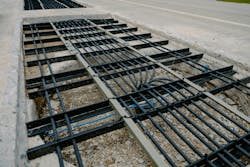
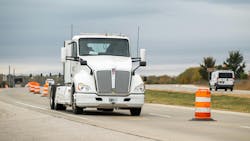
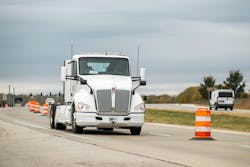
In late 2025, a system designed by engineers at Purdue University delivered 190kW to a battery in a truck traveling 65-mph on a quarter-mile stretch of U.S. Highway 52 in West Lafayette, Ind. A Cummins prototype Class 8 electric semi-tractor was outfitted with a single receiver coil that took the charge from a web of transmitter coils installed below concrete highway pavement by the Indiana Department of Transportation.

The successful test, Purdue says, is a milestone in dynamic charging research because it shows that it is conceivable to deliver the higher power levels required for charging the batteries of heavy-duty trucks as they move down the road. The power delivered by the Purdue system in the test far exceeds that delivered in other dynamic wireless charging tests that have focused on less demanding lighter-duty vehicles, opening the door to a future where heavy-duty trucks could be equipped with a single receiver coil and smaller, lighter batteries capable of being dynamically charged.

In a Dec. 3, 2025 Purdue press release, First highway segment in U.S. wirelessly charges electric heavy-duty truck while driving - News, members of the research team hailed the results of the test, saying it’s preliminary evidence that a critical constituency in the electric vehicle universe that faces significant practical charging challenges could be served.

Quoted in the release, Nadia Gkritza, a Purdue professor of civil and construction engineering and agricultural and biological engineering, said that “with this breakthrough system, Purdue has shown that powering large commercial vehicles wirelessly is not just technically feasible but could be a practical and scalable solution for real-world highway transportation.”

Another researcher, John Haddock, a professor in Purdue’s Lyles School of Civil and Construction Engineering, said the system could address the cost problem complicating the electric heavy-duty truck question. “A lot of that cost in electric vehicles is driven by the size of the battery packs that they have to have in order to get you that 250-to-300-mile range. With this system, you’d be able to drive your vehicle down the road and it would charge the battery.”

Dynamic charging has received more attention as EV sales and questions about the sufficiency of the EV charging infrastructure have grown. A research consortium, Advancing Self-sufficiency through Powered Infrastructure for Roadway Electrification (ASPIRE), has helped lead the way. And some demonstration projects, notably one in Detroit spearheaded by the state of Michigan and General Motors, have been advancing. A commercial leader in the field worldwide, Electreon, is involved in a electrified road project that will be promoted at the 2028 Olympic Games in Los Angeles.

Though the technology and related research is making strides real-world deployments are likely far down the road. But with EV adoption slowing partly because of the halting pace of charging station construction and persistent worries about the feasibility of the model, dynamic charging is seeing an opening. A March 2024 research paper published in Scientific Reports, Dynamic charging as a complementary approach in modern EV charging infrastructure | Scientific Reports, “Dynamic charging as a complementary approach in modern EV charging infrastructure,” argues that road-based charging should have a future: “Dynamic charging roads present a distinctive advantage. They not only markedly diminish the need for detours but also significantly reduce the supplementary charging duration. This highlights their potential superiority over traditional charging stations in terms of operational efficiency and end-user satisfaction.” A large cross-section of stakeholders, the authors say, “should collectively steer the development and deployment of innovative charging solutions, with a notable emphasis on wireless dynamic charging roads.”

About the Author

Tom Zind

Freelance Writer

Zind is a freelance writer based in Lee’s Summit, Mo. He can be reached at [email protected].

Sign up for our eNewsletters
Get the latest news and updates

Voice Your Opinion!

To join the conversation, and become an exclusive member of EC&M, create an account today!