King County Metro Advances Electric Bus Charging with Schunk Smart Technology
Key Takeaways
- King County Metro is installing 123 Schunk inverted pantographs to enable fast, opportunity charging for its electric bus fleet.
- The system allows buses to recharge batteries during brief stops, supporting the city’s goal of a zero-emission transit network by 2026.
- Schunk’s pantographs automatically compensate for vehicle movement and high humidity, ensuring reliable contact and safety during charging.
- The charging infrastructure is designed to accommodate buses of varying heights, with a flexible spring-and-drive system for maximum versatility.
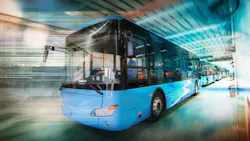
King County Metro, the public transit agency serving the Seattle metropolitan area, is advancing the electrification of its bus fleet with smart charging technology from Schunk Transit Systems. The German manufacturer has supplied 123 inverted pantographs, currently being installed at Metro’s Tukwila Base bus depot. The system enables electric bus batteries to recharge within minutes, according to the company. Full commissioning of the new charging infrastructure equipped with Schunk pantographs is scheduled for spring 2026.
King County Metro operates approximately 1,200 buses in Seattle, 1,100 hybrid (battery-diesel) buses and more than 300 fully electric vehicles. As in many major U.S. cities, battery-electric buses are gradually replacing conventional drivetrains. King County Metro’s goal is to transition to a zero-emission fleet. Fast and reliable battery charging is a critical component of this transition.
During a pilot phase involving six SLS 201 pantographs, “Schunk Smart Charging” demonstrated its performance under real-world conditions. “There were no power interruptions caused by vehicle movement or high humidity. The high reliability of our pantographs convinced King County Metro,” said Timo Staubach, head of SBA battery-driven vehicles at Schunk Transit Systems.
Enabling rapid charging curing route stops
Schunk Smart Charging offers a broad product portfolio. In addition to roof-mounted charging systems installed on the buses that communicate with the charging station, Schunk also offers inverted systems like those used in Seattle. The SLS 201 series pantographs are integrated into the charging infrastructure, whether in depots or at stops along the route.
The system connects to buses via High Power Charge Rails (HPC rails) — charging rails mounted on the buses’ roofs. The pantograph lowers using a top-down mechanism and transfers electricity from the charging infrastructure via the HPC rails to the bus battery. The battery can be recharged during brief stops along the route, a process referred to as opportunity charging.
Designed for flexibility and reliable performance
In combination with the spring-and-drive system built into the SLS 201 pantograph, four separate charging rails on the vehicle roof ensure maximum flexibility in making contact.
“The pantograph automatically compensates for vehicle movements during the charging process. This ensures that every contact point maintains a reliable connection,” explained Staubach. “The distribution of the rails also helps prevent insulation faults during the charging process caused by high humidity or rain.”
Charging is performed using direct current, enabling rapid transmission with almost no energy loss. In addition, the pantograph’s mechanical contact sequence enhances system safety while minimizing wear on both the pantograph and the HPC rails.
Accommodation for various vehicle heights
The SLS 201 pantograph evenly distributes a contact force of up to 110 newton-meters across all four contact points, even in extreme parking positions. This is made possible by the system’s wide operating range. Thanks to its spring-based connection, the pantograph can reach up to 1,600 millimeters (63 inches).
“This versatility is important for operators whose fleets consist of different vehicles with varying heights, as is the case in Seattle,” added Staubach. “Our pantograph can accommodate these differences.”
Schunk Transit Systems meets “Buy America” requirements
King County Metro selected Schunk Transit Systems in part because the manufacturer meets “Buy America” requirements. This means that the pantographs are manufactured at the company’s U.S. facility in Wisconsin and are labeled and certified in accordance with U.S. safety standards, including UL (Underwriters Laboratories) and ETL (Electrical Testing Laboratories).
In addition to supplying the pantographs, Schunk’s contract with King County Metro includes support for their commissioning, maintenance, and technical training. Schunk’s pantographs are already in use in major North American cities, including New York, Boston, Washington, Miami, Chicago, Toronto, and Vancouver. They can also be used to equip electric trucks and port vehicles.
To learn more about Schunk Transit Systems, visit https://www.schunk-group.com/transit-systems/en.