HDOT Commissions New NEVI Fast-Charging Site at Maui Kapalua Airport
Key Takeaways
- Supports Hawaii's goal of expanding reliable EV charging infrastructure across the islands.
- Features four 150 kW DC fast chargers with multiple connector types for broad vehicle compatibility.
- Includes canopy lighting and security cameras to ensure safe, 24-hour operation.
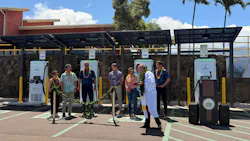
Sustainability Partners (SP), a Public Benefit Company that helps public entities fund, deploy, and maintain sustainable infrastructure through as-a-service delivery models, supported the Hawaii Department of Transportation (HDOT) in the development and commissioning of a new National Electric Vehicle Infrastructure (NEVI) fast-charging site at Maui Kapalua Airport. The new site represents the third NEVI-funded location commissioned by HDOT, and marks another important step in strengthening the state's public EV charging network and expanding access to reliable charging infrastructure across the islands.
HDOT, community leaders and project partners recently participated in a commissioning and blessing ceremony celebrating the opening of the new charging site.
The new site includes four 150 kW DC fast chargers, with both North American Charging Standard (NACS) connectors and Combined Charging System (CCS1) connectors. Open 24 hours a day, the charging site also features canopy lighting and security camera infrastructure to enhance visibility and monitoring, supporting a safe charging experience day and night. Through the NEVI program, projects like this help expand public EV charging, support cleaner transportation, reduce range anxiety and strengthen Hawaiʻi’s energy resilience.
The Kapalua Airport project also reflects the growing role of Electric Vehicles as a Service, an approach that helps public agencies reduce upfront costs, simplify implementation and ensure long-term operational reliability. By supporting deployment with programmatic delivery and built-in long-term maintenance, Sustainability Partners can help states accelerate EV adoption and improve long-term charging accessibility.