How to Avoid Electrical Maintenance Missteps
Key Takeaways
- Develop a comprehensive electrical maintenance program based on critical equipment and NFPA 70B to ensure safety and reliability.
- Leverage modern technology such as CMMS, thermography, and vibration analysis to detect issues early and prevent failures.
- Ensure maintenance technicians are properly trained and qualified for specific tasks, adhering to OSHA and NFPA safety standards.
- Regularly analyze maintenance data to identify root causes of equipment issues and implement corrective actions proactively.
- Implement a continuous review process to update procedures, incorporate new technologies, and improve overall maintenance effectiveness.
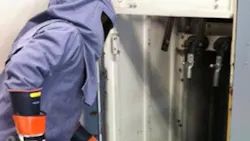
Missteps in electrical maintenance tasks can lead to lost production output, damaged equipment, contract penalties, delayed shipments, and excessive overtime. Such issues can range in cost from hundreds to millions of dollars. And what electrical maintenance department wants to accept that responsibility? The thought of personnel injury is even worse. While injury and fatality costs can be measured, the human effect cannot. To avoid such issues, create an effective electrical maintenance program — one that maintains equipment for safety and reliability. Often, the cost of failure would more than support an electrical maintenance program. Avoiding crucial mistakes within the program will only pay dividends. Following are four solutions for avoiding the most common and costly electrical maintenance missteps.
1. Implement an effective electrical maintenance program (EMP).
Failing to create and maintain an effective electrical maintenance program is the first and most crucial misstep. Without a written program, moving toward the goals of safety and reliability cannot happen. The NFPA 70B, Standard for Electrical Equipment Maintenance, is the one document that can be used to establish or improve an existing electrical maintenance program. The steps outlined in Fig. 1 are not complicated, but they do take commitment to implement and maintain.
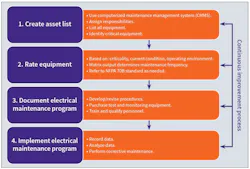
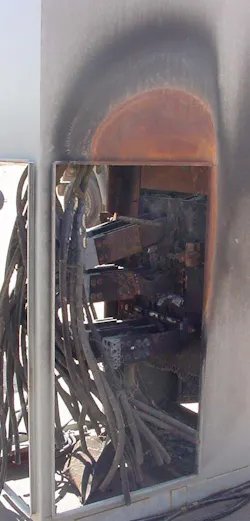
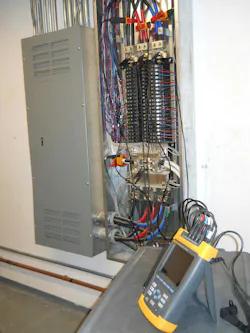
Follow four logical steps to establish and continuously improve a program. First, develop a list of all equipment in the facility. Determine which equipment is most critical to operations and safety. That is the equipment to be included in the maintenance program. The disconnect for a sump pump in a basement may not be deemed critical and require scheduled maintenance. However, a switch used in a 480V power distribution system would be much more critical. Not only could its downtime result in major power disruptions, but failure could also cause potential danger to personnel (Photo 1).
Once the list of critical equipment is established, record the current physical condition of the equipment and its operating environment. NFPA 70B then provides a matrix for all types of electrical equipment in use to determine the frequency of maintenance to be performed.
Use vendor information and NFPA 70B-specific equipment requirements to write procedures ensuring maintenance tasks are complete and consistent. Even the best technician can make human errors, so write it down! A documented program including identification of equipment to maintain, how often that maintenance must be performed, and the use of written procedures to perform and document that maintenance is not only a requirement of NFPA 70B but also is also the only method that creates an effective program. See the sidebar, “Electrical Maintenance Strategies,” for an overview of the different types of maintenance.
2. Embrace technology.
Living in the past when it comes to maintaining electrical equipment can be a giant misstep. Equipment conditions change, new equipment is purchased, and maintenance performed on older equipment will reveal a need to alter the frequency of maintenance. Consider using a computerized maintenance management system (CMMS) to keep track of all required program information and data collected. Such programs can help identify potential equipment issues, assist with scheduling, and increase overall efficiency.
Failing to put existing technologies to work to enhance maintenance is a common misstep. Continuing advancements in test equipment and methods have greatly improved safety and reliability. From hand-crank megohmmeters to modern programmable test instruments that use Bluetooth and software to analyze/identify potential problems, the world of electrical maintenance has progressed just as any other technology-based discipline. However, attempting to keep up with rapidly advancing technology will not work. Determine the most cost-effective test and monitoring methods for the equipment and include them as part of the electrical maintenance program.
Electrical equipment vibrates, heats as current flows through it, and may cause disturbances in the very electrical system that is supplying the equipment. Such conditions may not only cause misoperation of electrical equipment, but also complete equipment failure and, once again, fire and personnel injury can also result. Such failures are not acceptable.
Abnormal motor vibrations can be detected long before a motor bearing fails and damages driven equipment. Overheated terminals can be identified before they become a fire danger. The cause of disturbances within the electrical distribution system can be identified and located, reducing downtime and improving safety. Handheld measurement and test equipment can be used for all such issues, or permanent monitoring systems installed to constantly survey equipment, detect trends, possible abnormalities, and alert operations and maintenance before failure occurs.
Balance the cost of implementing modern technologies. For example, the cost of a thermal imaging camera and basic electrical thermography training for use on certain critical pieces of electrical equipment can be a relatively small and worthwhile investment. Contracting out an annual thermal survey to a third party can be very expensive in the long-term. However, paying for the expertise of a contractor who uses the best equipment and certified thermographers may be a wise financial decision (see Fig. 2).
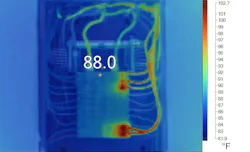
Vibration analysis, infrared thermography, and power quality are three areas that can often be reasonably implemented using the appropriate test equipment and qualified personnel to avoid the misstep of failing to embrace technology (Photo 2).
3. Staff qualify maintenance technicians.
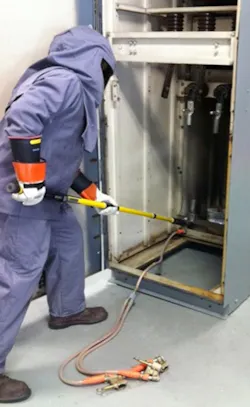
Only qualified personnel are allowed to perform electrical maintenance. OSHA and various NFPA standards define a “qualified person” as one who has the necessary skills and knowledge to perform the job and knows how to recognize and protect themselves from the hazards. Both OSHA and the NFPA 70E, Standard for Electrical Safety in the Workplace, require the worker to “demonstrate” their skills and knowledge (Photo 3). In addition, qualification is by task — not a general job classification. Conducting and analyzing results for a partial discharge test on medium-voltage switchgear takes a different skill set than conducting an insulation resistance test on a low-voltage motor and analyzing the results.
The test technician must also accurately record the data. With today’s modern test equipment, that may require the use of the test equipment manufacturer’s proprietary software to download data into a CMMS for later analysis.
OSHA regulations specify training may be a combination of classroom and on-the-job training. The employer must document the training and qualification process with the specific requirements found in the company’s administrative procedures.
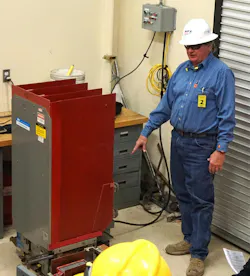
Create a written training and qualification program based on the skills and knowledge needed to perform required maintenance tasks. Include initial electrical safety training and annual safety refresher training as part of the electrical maintenance program. Vendor training is often used due to its cost-effectiveness (Photo 4). Failure to train and qualify electrical maintenance personnel is an electrical program mistake that can be avoided through commitment to an effective program. Avoid the worker qualification misstep — a robust training program must be used to train and qualify workers.
4. Analyze data and act!
Failing to analyze data is a common misstep in electrical maintenance. Data is collected, but then it takes time to download results from test equipment and enter data from paper procedures. Soon, other pressing maintenance items begin to take precedence. For all the work that has been done, not analyzing the data in order to make smart decisions and implement necessary corrective actions is a misstep that will bring the electrical maintenance program to a complete stop.
Effective asset management requires staff trained to analyze maintenance data, find the root cause of equipment failures, and assist in developing/ maintaining all aspects of the program. This may or may not be the technician performing the maintenance. Reliability engineering organizations often exist within a facility to improve safety, increase uptime, improve overall plant performance, and help manage lifecycle cost — all by preventing failures before they occur! Smaller organizations must rely heavily on the electrical maintenance team to recognize and correct potential problems before they develop.
Equipment downtime can often be predicted. Abnormal vibrations, excessive temperature variations between similar terminals operating at the same load, and decreasing insulation resistance values are examples of issues that should be recognized and corrected before equipment failure, fire, or personnel injuries occur. Technicians can use the best test equipment to capture the most accurate data, but if that data is not analyzed, decisions are not made, and actions are not taken, so the electrical maintenance program is ineffective. All too often, the misstep of failing to review and analyze maintenance records occurs as maintenance management and technicians find themselves too busy fighting brush fires to stop and review what work has been done.
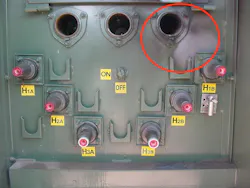
The requirements stated in NFPA 70B are clear: A “process to prescribe, implement, and document corrective measures based on collected data” and a “program review and revision process that considers failures and findings for continuous improvement” must be implemented. Analyzing data and taking action is a logical step in ensuring the effectiveness of any maintenance program (Photo 5).
The big picture
All too often, certain missteps cripple the electrical maintenance program. To avoid them, use information in the NFPA 70B standard, equipment manufacturers’ information, and related codes and standards to establish and maintain the program. Make smart decisions to embrace the best technology for the organization. Commit to training and qualifying personnel, analyze maintenance data, and take corrective maintenance actions when needed. Avoid the missteps that prevent implementing an effective electrical maintenance program, which will increase safety and improve equipment reliability.
Electrical Maintenance Strategies
An effective electrical maintenance program will employ a variety of strategies to ensure the most cost-effective means are used to improve reliability and safety, including the following:
Reactive maintenance. Maintenance performed only after equipment fails to perform its intended function.
Corrective maintenance. Planned or unplanned maintenance performed to restore equipment after a fault or deficiency is discovered — ideally before the equipment fails.
Preventive maintenance (PM). Scheduled maintenance performed at predetermined times or usage intervals to reduce the likelihood of failure.
Predictive maintenance (PdM). Maintenance based on monitoring the actual condition of equipment to predict when maintenance should be performed.
Condition-based maintenance. Often considered a subset of predictive maintenance, this is initiated when measured equipment conditions indicate performance is deteriorating.
Proactive maintenance. Maintenance that identifies and eliminates the root causes of equipment failures rather than simply repairing the failures.
Shutdown, turnaround, or outage. Major maintenance activities performed during a scheduled shutdown of equipment or an entire facility.
Reliability-centered maintenance (RCM). A structured process used to determine the most effective maintenance strategy for each asset based on its functions, failure modes, and consequences.
About the Author
 Randy Barnett
Randy Barnett
CESCP
Randy Barnett, electrical code and safety specialist, is a master electrician, ICC commercial electrical inspector, NFPA-certified electrical safety compliance professional and has worked as an electrician and technician in nuclear and coal-fired power plants, and in industrial maintenance and construction for 40 years. He is the author of Commercial and Industrial Wiring – American Technical Publishers, numerous articles, and is seen monthly on the EC&M Tech Talk video series for EC&M magazine. Randy conducts both online and in-person classes for NTT Training where he served as program manager for over 20 years. Randy’s resources can be found at www.randybarnett.net. His email is [email protected].