AI and the Future of Electrical Maintenance Compliance
Key Takeaways
- Next-generation EMP platforms integrate training, task management, and device data into a unified proficiency matrix, enhancing compliance documentation.
- AI-driven systems enable continuous monitoring, predictive maintenance, and real-time visibility into overdue tasks and compliance status.
- Modern platforms support seamless data exchange for system studies, reducing manual effort and improving accuracy in asset management.
- Open systems allow facility managers to control work order assignments and data updates, increasing flexibility and reducing reliance on external contractors.
- Implementing AI-enabled EMP solutions transforms maintenance from reactive to proactive, minimizing risks and ensuring audit-ready compliance.

NFPA 70B, Standard for Electrical Equipment Maintenance, has established many new compliance challenges. Additionally, the explosive development of AI-based capabilities has created the opportunity to restructure significant portions of an Electrical Maintenance Program (EMP) as outlined in this standard.
The blending of NFPA 70B compliance challenges and the trends within AI-developed EMP platforms creates a scenario where facility management will need to evaluate whether legacy systems can be enhanced to deliver a compliance result, or whether facilities should consider the adoption of a next-generation, AI-driven EMP tool set? Next-generation EMP platforms can offer a more complete compliance result and efficiencies in overall program management.
A facility’s overall EMP is based upon the documentation of various inspection, condition of maintenance, and critical operational assessments as inputs to establish the EMP tasks for each electrical asset. Compliance is verified by establishing tasking intervals, tasking reporting, and documented records. A key requirement is not the software platform(s); it is the ability to demonstrate compliance systematically and consistently.
In many cases, facilities today use several software platforms that become data silos and are not integrated. For example, documentation of qualified individual training has been entered into safety training tracking software. The basic inventory of the electrical system and work order tasking might be in a CMMS platform (not specific to electrical assets), and outside of this platform is the various engineering study data. As a result, facilities are confronted with a decision point to either continue to enhance these legacy systems for newer/more advanced compliance challenges or consider the adoption of an upgraded EMP-AI-driven platform.
A review of several of the newer and more complex compliance requirements of NFPA 70B will create enhancement requirements for legacy systems as well as provide credibility to the decision to migrate to a new-generation AI-driven EMP platform. This article will review the following compliance topics for evaluation.
- Qualified person
- Maintenance interval tracking
- System study integration
- Open system to assign work orders
- Continuous efficiency with AI tools
Compliance tracking for the qualified person
NFPA 70E, Standard for Electrical Safety in the Workplace, outlines the basic electrical safety training requirement to be considered a qualified person. NFPA 70E training focuses on the awareness of electrical hazards, the use of PPE in an energized environment, and the procedures for moving an electrical asset into an electrically safe work condition.
NFPA 70B now creates a broader definition: the qualified person establishes a link between the qualified individual and the completion of specific tasking within the EMP. Examples of these references include:
- [NFPA 70B 4.3.2] Personnel assigned to EMP duties shall be qualified for the assigned tasks.
- [NFPA 70B 4.8.1.1] Electrical equipment cleaning shall be performed by personnel trained in the use of cleaning materials and methodologies.
- [NFPA 70B 5.1.1] Electrical maintenance shall be performed only by qualified persons.
- [NFPA 70B Chapter 7] These fundamental test procedures require an understanding of the procedures and equipment to complete the tasking.
- [NFPA 70B 8.4] Qualifications of Testing Personnel addresses the advanced training needed to work with testing equipment, and document and interpret test results.
In summary, NFPA 70B has extended the compliance documentation of the qualified person from basic electrical safety training to documented training on specific maintenance tasks. A data structure for compliance may be described as a tasking matrix indicating the proficiency status of an individual to perform specific tasks.
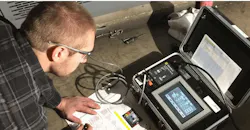
Infrared testing (IR) is a testing task that builds out this compliance challenge. The maintenance interval table [NFPA 70B 9.2.2] specifies that IR testing is performed on all electrical assets with a frequency not to exceed 12 months. It is appropriate that the qualified person performing these IR tests be trained/certified in the use of IR testing equipment and procedures. The qualified person must also stay current with electrical safety basic training, as the removal of protective equipment covers is a core requirement of this testing [NFPA 70B 7.4.2].
Next-generation EMP solutions have structured a proficiency matrix, which brings together the tasks, the training, and the device service records as compliance documentation.
Maintenance interval tracking
NFPA 70B Chapter 9 outlines a complete electrical maintenance program by asset type, listing various tasking and tasking intervals based upon the equipment condition assessment [NFPA 70B table 9.2.2].
Newer EMP platforms will have this entire structure built and ready for overall program management. Many legacy system tools simply have not addressed these compliance metrics. Additionally, the data and manual procedures to build a compliance protocol will be a significant implementation effort and remain more cumbersome to use daily. Additional EMP features, such as total hours estimates for maintenance tasking and labor rates, can create an overall five-year EMP plan.
System study integration
NFPA 70B Chapter 6 outlines various electrical system studies, including:
- Short-circuit study
- Coordination study
- Load flow study
- Reliability study
- Incident energy analysis
Currently, many legacy platforms have electrical asset information in a CMMS or similar asset tracking system. The detailed asset attributes needed for the study are documented in the engineering software. Updates to sync this data rely on a manual process. Next-generation EMP platforms support complete data exchange, which eliminates many hours of engineering services simply doing these updates.
Open systems for task management and task assignment
Many facilities have relied on EMP service provided by electrical contractors who make use of various proprietary software platforms. The facility being serviced has little or no ability to update data, relying solely upon the servicing contractor. The EMP platform tools have shifted this data update constraint, allowing facility managers to control/manage their EMP data, while having the option of continuing to use the expertise of the existing contractors. In the newer EMP platforms, work orders and update capabilities can be extended to other resources, including internal staff and more local contractors.
For corporate facility directors, the newer EMP platforms allow them to standardize the EMP systems, while offering local management the capability of having multiple options of servicing resources.
Continuous efficiency with AI tools
The next generation of AI-driven EMP platforms is poised for continuous development of new features and functions. AI requests, such as asset-specific maintenance tasking forms and testing forms with documented ranges of test results, are examples of these capabilities. Additional functions such as interrogating the existing asset data for missing arc flash attributes and then building work orders to document these missing attributes are capabilities that would be difficult for even enhanced legacy systems to achieve.
EMP checklist
Regardless of the platforms used, compliance within the EMP program documentation should include:
- Qualified individuals are clearly defined and task-specific.
- Safety training, maintenance tasking training, and, if applicable, instrument proficiency training is current and verifiable.
- Every asset is inventoried and labeled.
- System studies [NFPA 70B, Chapter 6] are current and documented.
- Maintenance intervals by device are planned, with deviations from 70B guidelines documented [70B, 9.2.2.3].
- Tasks are defined and documented.
- Test results are retained and trended.
- Overdue items are visible and controlled.
- Documentation is audit-ready.
Closing perspective
With NFPA 70B now enforceable as a standard, organizations must move from maintenance as an activity to maintenance as a managed system. Legacy tools can partially document compliance, but modern AI-enabled EMP platforms create continuous compliance visibility, reduce risk, and transform maintenance from reactive to predictive.
About the Author
Chuck Fox, CESCP
Owner
Chuck Fox is the president and founder of PowerSafe Consulting. He’s been an NFPA Certified Electrical Safety Compliance Professional since 2014. He can be reached at [email protected].