Why the Inspection Should Not Be Your First Quality-Control Program
Key Takeaways
- A job is inspection ready when basic items like covers, labels, and support are complete — not necessarily perfect.
- Calling for an inspection too early often results in identifying simple, preventable issues that could have been caught with internal quality control.
- Inspectors remember contractor habits; organized, prepared work fosters credibility and smoother inspections.
- Pre-inspection walk throughs help identify and fix minor issues, preventing them from becoming major obstacles during official inspections.
- Internal quality control should be an ongoing process, not a last-minute activity before the inspector arrives.
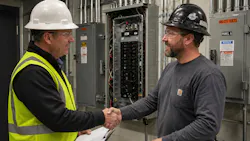
So you think you’re ready for inspection? There is a very real difference between a job that is ready for inspection and a job where everyone is hoping the inspector will tell them what still needs to be fixed. Any experienced electrical inspector can usually tell which one they are walking into within the first few minutes of arriving on site. It is not always because of one major Code violation or some complicated design issue. Many times, it is because the overall condition of the installation makes it clear that no one has performed a serious internal quality-control review before the inspection was requested (Photo 1).
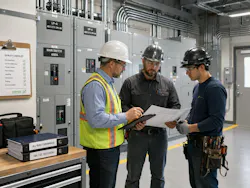
My perspective on this issue comes from both sides of the inspection process. Over the years, I have served as an electrical inspector, electrical supervisor, and Engineer II for the City of Richmond, Va. and the City of Alexandria, Va. with responsibilities involving electrical inspections, electrical plan review, and inspection oversight. I have also spent nearly 40 years as a working master electrician in Virginia and Texas, in addition to teaching electricians, electrical contractors, engineers, and electrical inspectors. That combination has shaped how I view inspection readiness, contractor preparation, and the role of internal quality control.
What I have learned from those years is that many failed inspections are not caused by obscure Code rules buried deep in the National Electrical Code (NEC). More often, they are caused by basic items that were missed, assumed, rushed, ignored, or left for someone else to catch. This is where many projects get into trouble. The electrical inspection becomes less about verifying a completed installation and more about discovering all the unfinished details that should have been addressed before the authority having jurisdiction was ever asked to show up.
The electrical inspection should not be the electrical contractor’s first quality-control program. The inspector is there to verify compliance with the adopted Code, approved plans, installation requirements, product listings, and the applicable rules of the authority having jurisdiction (AHJ). The inspector is not there to create the contractor’s punch list, finish the foreman’s walk through, or serve as the last line of defense for every incomplete item on the job. This may sound blunt, but in the real world of construction, it is an important distinction. When a contractor calls for inspection, there should be a reasonable expectation that the installation is complete enough to inspect.
This does not mean perfection, and it certainly does not mean an inspector will never find an issue. Electrical work can be complex, and legitimate questions can arise regarding Code interpretation, equipment listings, engineered designs, or field conditions. However, there is a big difference between an inspector identifying a legitimate compliance concern and an inspector walking into a job where basic completion items are scattered throughout the project. One reflects the normal inspection process; the other reflects a breakdown in internal quality control.
Calling too soon comes at a cost
Every contractor understands schedule pressure. Owners want occupancy. General contractors want the next phase released. Other trades may be waiting on walls, ceilings, equipment startup, or final energization. Facility personnel may be trying to bring production equipment online, and project managers may be trying to hold together a schedule that has already been stretched by material delays, labor shortages, change-orders, or design revisions. None of this is unusual in construction. However, schedule pressure does not change the condition of the electrical installation.
A job is either ready for inspection or it is not. One of the worst habits in the industry is calling for an inspection because the project schedule says inspection is due, even though the installation itself tells a different story. The inspector arrives and immediately sees missing covers, open knockouts, incomplete panel directories, unsupported wiring methods, missing labels, blocked electrical equipment, unfinished grounding or bonding connections, or raceways that were never properly secured. At this point, the inspection has already moved in the wrong direction.
The issue is not that the inspector is being difficult. It’s that basic completion items were not handled before the inspection request was made. When that happens, the inspector must spend time identifying things that should have been caught during the contractor’s own quality-control process. This affects more than one inspection. It affects credibility. Inspectors remember which contractors are prepared and which ones routinely call for inspections too early. They remember which foremen have the approved plans ready, which electricians understand the installation, and which jobs are consistently organized. They also remember the jobs where the inspection request feels more like a request for free troubleshooting.
This does not mean an inspector should prejudge a contractor, and it does not mean a contractor who has one rough inspection should be labeled forever. What it does mean is that professionalism in the field matters. A contractor who consistently presents work that is organized, accessible, substantially complete, and supported by proper documentation will usually have a more productive inspection process than one who repeatedly asks the AHJ to sort through unfinished work.
Walk the job before the inspector does
There is a practical difference between an inspector finding a legitimate Code issue and an inspector discovering that the installation was never really walked through before the inspection. For example, an inspector may question whether a specific wiring method is suitable for a particular environment, a conductor has been properly sized, equipment is being installed within the limits of its listing, or the installation matches the approved plans. These are legitimate inspection discussions that may require Code review, product documentation, manufacturer instructions, or clarification from the designer or AHJ.
That situation is very different from an inspector finding open boxes, missing dead fronts, incomplete labels, unsupported raceways, or electrical equipment buried behind stored materials. These items are not complex interpretive issues. They are indicators that nobody took the time to look at the installation through the eyes of an inspector before calling for inspection. A good contractor should have someone on the project who can walk the installation before the AHJ arrives and ask a simple question: If I were inspecting this job, what would I write up?
That one question can prevent many failed inspections (Photo 2). The person performing that walk does not have to approach the work as an adversary, and they should not treat the crew as if the purpose is to assign blame. The purpose is to protect the contractor, protect the schedule, protect the owner, and protect the reputation of the company by catching correctable items early. A contractor’s internal walkthrough should be part of the installation process, not a desperate activity performed after the inspector has already arrived.
On many jobs, the problem is not one major violation. It is the accumulation of small unfinished items (e.g., the panel directory is incomplete, the disconnect is not identified, the required working space is being used for material storage, and the foreman is still trying to locate the latest plan revision). None of these items may seem unusual by themselves, but together they tell the inspector the job was not truly ready. If the inspector finds the first five obvious problems within the first five minutes, the inspection has already started in a hole.
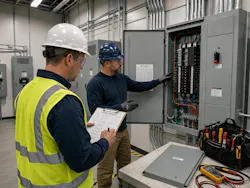
The internal review should begin with the obvious items because those are the things that most often create unnecessary corrections (Photo 3). Are covers installed? Are unused openings closed? Are raceways and cables secured and supported? Are panel directories complete and specific enough to be useful? Are disconnects labeled? Is the required working space maintained? Are grounding and bonding connections complete? Are boxes accessible? Are required GFCI and AFCI protections installed where applicable? Are equipment instructions being followed? Are the approved plans and revisions available on site? These are not exotic questions. They are basic inspection-readiness questions, and they should be answered before the inspection is requested.
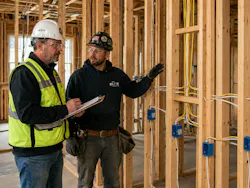
Before an inspector ever arrives on site, the bottom line is you should already know what condition the installation is in. The purpose of the inspection is to verify compliance, not to discover unfinished work that should have been identified during an internal review. That’s why it’s so important to remember that the inspection should never be your first attempt at quality control — instead, it should confirm your quality-control program is already working.
About the Author
 Paul Abernathy
Paul Abernathy
Paul Abernathy is the Director of Technical Services at Prysmian, and the CEO, president, and chairman of Electrical Code Academy, Inc., and serves as executive director and founding member of the Certified Master Electrical Code Professional® (CMECP®) program. Since entering the electrical industry in 1986, Paul has served as a licensed electrician, electrical contractor, electrical inspector, electrical plans examiner, electrical engineer, code consultant, and educator. He has served on NFPA 70 National Electrical Code Code-Making Panels 5 and 17 and has extensive experience in code development, enforcement, and technical education. Paul’s public-sector experience includes serving as Electrical Engineer II for the City of Richmond, Virginia, overseeing electrical inspectors and inspection operations, and as Manager of Codes for the City of Alexandria, Virginia. He also served as a Southern Field Expert for the National Electrical Manufacturers Association (NEMA). Paul previously owned and operated electrical contracting and electrical design/code consulting firms, including Abernathy Electrical Services in McKinney, Texas, which he closed in 2021. Today, he continues to support the electrical industry through technical leadership, NEC education, professional certification, and training for electricians, inspectors, engineers, contractors, and code professionals."