Practically Speaking: AFCI Protection and Circuit Modifications
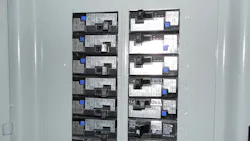
One of my students recently approached me regarding a “problem” he was having with a wire inspector about some modifications that he made to an existing dwelling unit branch circuit that was not required to have AFCI protection when originally installed. The wire inspector was insisting that AFCI protection was now required since the branch circuit wiring was replaced. My student did not agree with the inspector’s interpretation, so he asked me for help. Let’s examine the requirements in Sec. 210.12(E) and try to figure out whether AFCI protection is required or not.
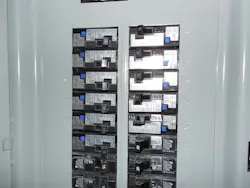
The general rule in Sec. 210.12(E) requires AFCI protection when branch-circuit wiring for any area specified in Secs. 210.12(B), (C), or (D) is “modified, replaced, or extended.” In this situation, the electrician replaced approximately 5 ft of 12/2 NM cable that was damaged during the replacement of some kitchen cabinets. The damaged wiring was for a switch serving a 120V garbage disposal. The electrician replaced the damaged wiring but did not replace the standard circuit breaker with an AFCI circuit breaker because he thought the Exception for Sec. 210.12(E) would allow the wiring to be replaced without needing to provide AFCI protection. The inspector disagreed. A close look at the wording of the Exception reveals that it addresses only “extensions” of branch circuit conductors and not “replacement” or other “modifications” to branch circuit conductors.
I tend to agree with the wire inspector’s interpretation on this one. In fact, the argument could be made that AFCI protection would be required for that same circuit if 5 ft of NM cable were removed from the existing branch circuit too. The Exception does not apply to modifications that include the removal of some existing branch-circuit wiring. The Exception only applies to “extensions” of branch-circuit wiring and does not apply to any other kind of “modifications.”
Would removal of a luminaire, appliance, or receptacle be considered a “modification” to the branch circuit wiring if any of those items were removed and the circuit wires capped off or spliced through? I think it certainly could be, but I am not so sure these rules intend to require AFCI protection in these circumstances.
As always, a discussion with your AHJ might be an excellent idea to try and decipher any Code requirements that can sometimes be a little more difficult to understand or interpret than they might first seem.
About the Author
 Russ LeBlanc
Owner
Russ started in the electrical trade as an apprentice in 1985. He worked his way up to become a Journeyman Electrician and then eventually became a Master Electrician and Licensed Construction Supervisor. In 1999 Russ become an Electrical Instructor for The Peterson School of Engineering in Massachusetts where he developed his passion for teaching, and quickly became Department Head of Electrical Instruction. Russ has taught thousands of apprentices, electricians, engineers, inspectors, and other electrical professionals during his career as an instructor. He continues to provide electrical professionals with Electrical Code seminars, Arc-Flash Awareness training seminars and educational material through his LeBlanc Consulting Services in North Reading, MA whose specialty is educating electricians. He has been an active member of the NFPA Electrical Section and has authored hundreds of National Electrical Code proposals and comments which have become Code rules to improve the safety for the electrical industry. Russ is also an IAEI certified Electrical Inspector.
Please visit www.russleblanc.net for more information.