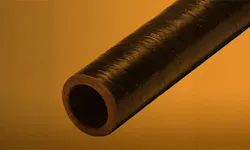
Phenolic Conduit The ideal conduit for transit tunnels and stations; two-hour fire rated. Product Overview Champion Flame Shield Fiberglass Phenolic Conduit System, is a 2-hour fire rated electrical conduit system that holds its own in a number of environments, whether damp or dry, hot or cold. Featuring a high temperature 2-hour fire rating that meets UL2196 (2 hours@1850°F), excellent corrosion resistance, a low coefficient of thermal expansion and low-smoke characteristics, this 2- hour fire rated conduit is the No. 1 choice for surface-mounted 2-hour fire-rated electrical conduit systems for transit and passenger rail systems. The Flame Shield® fiberglass raceway system provides for enhanced fire safety, life-safety circuit integrity (when coupled with the correct fire-rated cables), improved system longevity and relief from stray eddy current issues common with some transit systems. Champion Flame Shield Phenolic Conduit Advantages ENHANCED PERFORMANCE OVER OTHER PHENOLIC CONDUIT SYSTEMS Light weight contributes to installation ease, savings and safety Corrosion resistance to many chemicals No burn-through on elbows One of the lowest coefficients of friction of any in-market product Fire rated conduit is able to retain its shape after impact or compression Fire rated conduit withstands extreme conditions and temperatures UL 2196 2-hour fire rated conduit will withstand fire for 2 hours @ 1850°F UL2196 application maximum support spans not to exceed 4 feet. A leader in safety Fire resistant conduit can be exposed to temperatures up to 1,850°F for two (2) hours Conforms to NFPA 130 requirements Does not emit toxic halogens when burning Low coefficient of thermal expansion Wide resistance to industrial chemicals Lower Installation Costs The lowest man-hour installation rates for most diameters of electrical duct according to the National Electrical Contractors Association (NECA) Manual of Labor Units DATA SHEETS Engineering Champion Flame Shield® Phenolic Conduit meets the following specifications and requirements: UL and Other Listings ASTM E136 UL 2515-A Listed for Phenolic XW Conduit Fiberglass conduit is listed in Article 12-1200-1220 of the CEC (Canadian Electrical Code) as Rigid RTRC Conduit. You’ll find it listed in the NEC (National Electrical Code) in Article 355 as Reinforced Thermosetting Resin Conduit. A 100% DIGITAL FACILITY THAT STRIVES TO MEET ENVIRONMENTAL AND SYSTEM MANAGEMENT REQUIREMENTS ISO 9001 – Certified in quality management systems for over a decade ISO 14001 – World’s premier environmental management certification ISO 45001 – Certified occupational health and safety management systems Champion Flame Shield Phenolic Conduit Installation & Estimation Catalog and Info These resources will help you compare Champion Fiberglass Flame Shield® Phenolic Conduit to other in-market conduit materials; the catalog is available for download or to review online. FAQ What kinds of phenolic joints are available, and how many will I need? The Phenolic Joining System includes the Adhesive Joint, which is the straight socket joint combined with the appropriate adhesive. The adhesive is applied to the spigot end of the conduit. To estimate the number of joints and adhesive cartridges necessary for your project, see our Epoxy Adhesive Calculator . Various straight socket expansion joints are also available; expansion fittings should be provided to compensate for thermal expansion and contraction. You can find more information on the Phenolic Joining System in our Champion Flame Shield® catalog. What are the main differences between epoxy and phenolic RTRC conduits? The main difference is fire resistance. Epoxy RTRC conduit has an operating range of -60°F to 250°F whereas phenolic (Flame Shield®) RTRC can be exposed to temperatures up to 1,850°F for two (2) hours. Phenolic conduit also meets the elevated temperatures requirements for exposed conduits of both the National Fire Protection Association (NFPA 130) & NFPA 502. What diameters and lengths are available? With standard sizes of 3/4” x 10’ to 12” x 20’, you can find a full listing of available diameters and lengths in our catalogs: Champion Duct® Catalog . What kinds of joints are available, and how many will I need? Champion Fiberglass offers joints for Champion Duct® , Champion Flame Shield® and Champion Haz Duct® XW type conduit. Find out what joints are available by product line to suit your project needs and get more details. The Champion Duct® Joining System includes the Interference Joint, Straight Socket, Gasket Joint (Triple Seal), And Tight Lock Joint plus various sleeve couplings and adapters. For information on which joints to use by application, and National Electrical Code (NEC) guidelines, visit our catalog. Champion Fiberglass can advise you on your joint purchase in relation to your project specs. The Joining System for Champion Haz Duct® XW Type conduit includes the adhesive joint (the straight socket joint combined with epoxy adhesive), Straight Socket, and various alignment/expansion joint types, as well as various adapters and couplings. To estimate the number of joints and adhesive cartridges necessary for your project, see our Epoxy Adhesive Calculator . The Phenolic Joining System includes the Adhesive Joint, which is the straight socket joint combined with the appropriate adhesive. The adhesive is applied to the spigot end of the conduit. To estimate the number of joints and adhesive cartridges necessary for your project, see our Epoxy Adhesive Calculator . Various straight socket expansion joints are also available; expansion fittings should be provided to compensate for thermal expansion and contraction. You can find more information on the Phenolic Joining System in our Champion Flame Shield® catalog . What kind of Champion Duct® SW, MW and HW joints are available, and how many will I need? The Champion Duct® Joining System includes the interference joint, straight socket, gasket joint (triple seal), and tight lock joint plus adhesive and various sleeve couplings and adapters. To estimate the number of joints and adhesive cartridges necessary for your project, see our Epoxy Adhesive Calculator. For information on which joints to use by application and National Electrical Code (NEC) guidelines, visit our catalog . Champion Fiberglass can advise you on your joint purchase in relation to your project specs. What kinds of XW type joints are available, and how many will I need? The Joining System for Champion Haz Duct® XW Type conduit includes the adhesive joint (the straight socket joint combined with epoxy adhesive), Straight Socket, and various alignment/expansion joint types, as well as various adapters and couplings. To estimate the number of joints and adhesive cartridges necessary for your project, see our Epoxy Adhesive Calculator . For information on which joints to use by application, and National Electrical Code (NEC) guidelines, visit our catalog. Contact us for assistance with your joint purchase in relation to your project specs. What is the UL 2196 test? The UL 2196 test is designed to evaluate the performance of electrical circuit protective systems in severe fire events. UL 2196 is designed to evaluate the functionality of electrical circuit systems when exposed to fire for 2 hours followed by the mechanical shock of a fire hose stream. RSCC and Champion Fiberglass partnered to develop a cost-effective solution that would continue to function while being exposed to the severe fire requirements of UL 2196. Testing concluded that the system as described and installed continued to function throughout the entire test. For a copy of the test report, please contact Champion Fiberglass. LinkedIn This field is for validation purposes and should be left unchanged. First Name(Required) Last Name(Required) I would like information on Yes, I'd like to receive periodic updates about new products and applications. Yes, I’d like to receive periodic updates about new products and applications. CAPTCHA