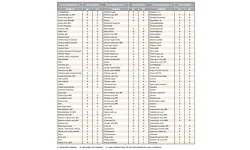
6400 Spring Stuebner Rd // Spring, TX 77389 P 281.655.8900 // F 281.257.2523 [email protected] // championfiberglass.com Corrosion Resistance Guide The corrosion guidelines tests were performed by immersing epoxy coupons for 30 days in the chemical at the temperatures shown. This is a very severe test. It has been shown that Champion Duct® can often be used for chemicals listed as “Not Recommended” (NR) as real cases often are limited to fumes, vapors and occasional splashes at the temperatures indicated. This information is provided solely as a guide since it is impossible to anticipate all individual site conditions. For specific applications which are not covered in this guide, and may require screening tests to evaluate resin system suitability, consultation with Champion Fiberglass is recommended. UP TO TEMPERATURE, °F EPOXY CONDUIT UP TO TEMPERATURE, °F EPOXY CONDUIT UP TO TEMPERATURE, °F EPOXY CONDUIT CHEMICAL 120° 210° CHEMICAL 120° 210° CHEMICAL 120° 210° Acetaldehyde N N Bromine, liquid N N Dioxane – 1,4 – – Acetaldehyde, aq. 40% N N Bromine, gas, 25% N N Dimethylamine N N Acetic Acid, glacial N N Bromine, aq. N N Dimethyl formamide N N Acetic Acid, 20% (25) R C Butane R R Detergents, aq. R R Acetic Acid, 80% N N Butanterol (erythriol) – – Disbutylphthalate R N Acetic Anhydride N N Butanediol – – Dibutyl sebacate R N Acetone, 10% N N Butyl Acetate N N Dichlorobenzene N N Adipic Acid C N Butyl phenol N N Dichlorethylene N N Alcohol, allyl N N Butyric acid <50% R R Ether (diethyl) N N Alcohol, benzyl N N Calcium salts, aq. R R Ethyl halides N N Alcohol, butyl (n-butanol) C N Calcium hypochlorite C N Ethylene halides N N Alcohol, butyl (2-butanol) N N Calcium hydroxide, 100% R R Ethylene glycol R R Alcohol, ethyl C N Cane sugar liquors R N Ethylene oxide N N Alcohol, hexyl R C Carbon disulfide N N Fatty acids C R Alcohol, isopropyl (2-propanol) C N Carbon dioxide C C Ferric salts R R Alcohol, methyl N N Carbon dioxide, aq. C C Fluorine, gas, dry N N Alcohol, propy (1-propanol) R N Carbon monoxide R C Fluorine. gas, wet N N Allyl chloride N N Carbon tetrachloride R N Fluoroboric acid, 25% R R Alum R C Casein R R Fluoroboric acid, 10% C N Ammonia, gas C N Castor oil R N Formaldehyde C N Ammonia, liquid N N Caustic potash (KOH) C N Formic acid C N Ammonia, aq. 20% – – Caustic soda (NaOH) C N Freon, F11, F12, 113, 114 N N Ammonia salts, except fluoride R C Chlorine, gas, dry R C Freon, F21, F22 N N Ammonia fluoride, 25% R N Chlorine, gas, wet N N Fruit Juices and pulps N N Amyl acetate N N Chlorine, liquid N N Fuel oil R C Amyl chloride R N Chlorine, water C N Furfural N N Aniline N N Chlorocetic acid R N Gas, natural, methane R N Aniline hydrochloride R N Chlorobenzene N N Gasoline N N Antimony trichloride – – Chloroform N N Gelatin R N Aqua regia – – Chlorosulfonic acid, 10% N N Glycerine (glycerol) R R Arsenic Acid, 80% C N Chromic acid, 10% N N Glycols R C Aryl-sulfonic acid R R Chromic acid, 30% N N Glycolic acid C N Barium salts R C Chromic acid, 40% N N Green Liquor–paper R N Beer C N Chromic acid, 50% N N Heptane R R Beet sugar liquor R N Citric acid R R Hexane R N Benzaldehyde, 10% – – Coconut oil R N Hydrobromic acid, 25% C N Benzaldehyde, 10–100% N N Copper salts, aq. R R Hydrobromic acid C N Benzene (benzoil) C N Corn oil R C Hydrofluoric acid, 10% R N Benzene sulfonic acid, 10% R R Corn syrup R R Hydrofluoric acid, 60% N N Benzene sulfonic acid, 50% C N Cottonseed oil R R Hydrofluoric acid, 100% N N Benzoic acid R R Cresylic acid, 50% N N Hydrocyanic acid – – Black liquor–paper R C Crude oil R R Hydrogen peroxide, 50% N N Bleach, 12.5% active chlorine C N Cyclohexane R N Hydrogen peroxide, 90% N N Bleach, 5.5% active chlorine C N Cyclohexanol R N Hydrogen sulfide, dry R R Borax R R Cyclohexanone – – Hydrazine N N Boric acid R R Diesel fuels R N Hypochlorous acid, 10% N N Brine R N Diethyl amine N N Jet fuels, JP 4 and JP5 R N Bromic acid, <50% N N Dioctyl phthalate R C Kerosene R N R = Generally resistant N = Generally not resistant C = Less resistant than "R" but still suitable for some conditions 6400 Spring Stuebner Rd // Spring, TX 77389 P 281.655.8900 // F 281.257.2523 [email protected] // championfiberglass.com • Temperatures represent standard test conditions and are not minimums or maximums. Champion Duct products may be acceptable at other temperatures for some chemicals, but should be tested to determine specific suitability. • The recommendations or suggestions contained in this table are made without guarantee or representation as to results. We suggest that you evaluate these recommendations and suggestions in your own laboratory or field trial prior to use. UP TO TEMPERATURE, °F EPOXY CONDUIT UP TO TEMPERATURE, °F EPOXY CONDUIT UP TO TEMPERATURE, °F EPOXY CONDUIT CHEMICAL 120° 210° CHEMICAL 120° 210° CHEMICAL 120° 210° Lauric acid R R Perchloric acid, 10% R C Tannic acid R R Lauryl chloride R R Perchloric acid, 70% R C Tartaric acid R R Lauryl sulfate R R Perchloroethylene R C Tetrachloroethane C N Lead salts R R Petroleum, sour R R Tetrahydrofuran N N Linoleic acid R N Petroleum, refined R R Thionyl chloride N N Linseed oil R R Phenol, 88% N N Thread cutting oil R N Lithium salts R R Phenylcarbinol N N Terpineol R R Lubricating oils R N Phenylhydrazine N N Toluene C N Machine oil R N Phosphoric acid C R Tributyl phosphate R N Magnesium salts R R Phosphorous, yellow N N Tricresyl phosphate R N Maleic acid R R Phosphorous, red N N Trichloracetic acid C C Manganese sulfate R R Phosphorous trichloride N N Trichloroethylene N N Mercuric salts R R Phthalic acid R R Triethanolamine R N Mercury R R Potassium salts, aq. R R Triethylamine C N Methane R R Potassium permanganate, 25% C C Turpentine R N Methyl acetate N N Propane R R Urea, 50% R N Methyl bromide (gas) N N Propylene dichloride N N Urine R N Methyl cellosolve – – Propylene glycol R R Vaseline R R Methyl chloride N N Propylene oxide N N Vegetable oils R R Methyl chloroform N N Pyridine N N Vinegar R R Methyl cyclohexanone N N Rayon coagulating bath R N Vinyl acetate N N Methyl methacrylate N N Sea water R R Water, distilled C N Methylene bromide N N Salicylic acid R N Water, fresh R N Methylene chloride N N Sewage, residential C N Water, mine R N Methylene iodide N N Silicic acid R R Water, salt R N Milk R R Silicone oil R R Water, tap R N Mineral oil R R Silver salts R R Whiskey R N Molasses R N Soaps R R Wines R C Monochlorozenzene N N Sodium hydroxide N N Xylene C N Monoethanolamine N N Sodium salts, aq. Except R C Zinc salts R R Motor oil R R Sodium chlorite, 10% R N Naphtha R N Sodium chlorate R R Naphthalene R R Sodium dichromate, acid R R Nickel salts R R Stannic chloride R R Nitric acid, 0 to 20% N N Stannous chloride R R Nitric acid, 21 to 100% N N Stearic acid R R Nitric acid, fuming N N Sulfite liquor R C Nitrobenzene N N Sulfur R N Nitrous acid R N Sugars, aq. R R Oleic acid R R Sulfur dioxide, dry R R Oleum N N Sulfur dioxide, wet C C Olive oil R R Sulfur trioxide, gas, dry R R Oxalic acid R R Sulfur trioxide, gas, wet N N Ozone, gas, 5% C N Sulfuric acid, < 26% R N Palmitic acid, 10% R R Sulfuric acid, 26 to 80% C N Palmitic acid, 70% R R Sulfuric acid, 81 to 100% N N Paraffin R R Sulfuric acid, 10% R N R = Generally resistant N = Generally not resistant C = Less resistant than "R" but still suitable for some conditions