Planning and Preparing a Power Quality Survey
Key Highlights
- Begin by collecting evidence of power issues, interviewing staff, and understanding the problem's context to set clear survey objectives.
- Choose IEC 61000-4-30 Class A compliant portable PQ instruments with transient measurement capabilities for accurate diagnostics.
- Conduct thorough site inspections both outside and inside the facility to identify wiring issues, loose connections, and other potential causes before monitoring.
- Follow safety protocols such as NFPA 70E, ensure qualified personnel perform testing, and document inspection findings and quick fixes.
- Plan measurement points based on the problem scope, capturing voltage, current, harmonics, and other relevant parameters with appropriate thresholds and sampling intervals.
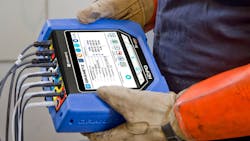
A power quality (PQ) survey is a structured method for identifying the cause of power problems, providing the fix, and ruling in or out other power problems. Oftentimes, PQ surveys are a process of elimination. It may not be a clear-cut situation, so it may take several iterations to get to the root cause of the problem. Taking the time to plan the survey ensures you are addressing the power problem with the right tools and safety procedures in place. This enables you to quickly identify the source of the problem and apply solutions safely and efficiently.
In this second PQ Survey article, we cover planning and preparing for an effective survey. In case you missed it, read “How to Get Started with Power Quality Surveys.”
Set the survey objectives
Begin by collecting evidence of issues experienced, such as breaker trips, UPS transfers, equipment misoperation, downtime, etc. Interview employees and equipment operators to understand the context of the problem and document what and when issues occur. Answer the following:
- Is this a recurring issue, and at what time of day does it take place?
- Is the problem localized to individual loads, a section of the facility, or the entire facility?
- Does the problem coincide with the startup or operation of other processes or equipment?
- Have there been any recent changes to the system, such as new or relocated loads, wiring modifications, new protection equipment, and lighting or HVAC retrofits?
- Are you investigating a single piece of equipment or the whole site? If the issue is localized, monitor the equipment power supply and work backward, if needed. If the concern is facility-wide — or you are establishing a utility supply quality baseline — start at the point of common coupling (PCC) with the electric utility, which is at (or near) the revenue meter. Move downstream through feeders.
Next, review what you have learned above and set your survey objectives, specifying where to monitor, which specific loads, and for how long.
Define the survey parameters and appropriate tools
It may seem obvious, but a power quality instrument is the most appropriate tool to identify PQ problems and their sources. They are dedicated to the task and include a range of parameters to capture most, if not all, potential PQ issues. General-purpose tools such as multimeters, oscilloscopes, energy meters, and the like may be helpful, but are generally not appropriate for the task. Portable PQ instruments offer an advantage over fixed installed meters because they can be moved from point to point with relative ease.
Select a PQ instrument that is IEC 61000-4-30 Class A Edition 3 compliant, which means it comes from a reputable manufacturer and offers reliable and repeatable measurements. Note that IEC 61000-4-30 compliance does not require transient measurements. Transients may be harmful PQ problems that require microsecond and millisecond recordings. A PQ instrument with transient measurement capabilities is highly recommended, especially if you don’t know the details of the suspected problem.
What to measure and the actual recommended survey parameters can be site and problem-specific. If you suspect a specific problem, such as voltage regulation, harmonics, etc., then you can limit the instruments' triggering and recording to only those parameters. However, in many cases, a full PQ survey is required to record and trigger on voltage, current, harmonics, transients, and other parameters. Read the Sidebar below for a checklist of best practices when you're planning and preparing a PQ survey.
Inspecting the site
A thorough inspection narrows down likely causes and often uncovers fixes you can make before monitoring.
Outside the facility. Look around the service area and note the electrical service type, the presence of electric utility power factor capacitors, neighboring facilities that may share feeders, and nearby substations or other conditions that could create disturbances.
Inside the facility. Inspect for power distribution issues, including loose connections, broken or corroded wires, and hot or noisy transformers. An infrared camera may be helpful.
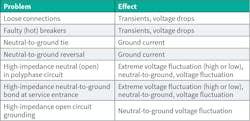
Follow the wiring path from the affected load back to the electrical service entrance and correct any obvious defects, such as loose connections, before monitoring begins. Pay particular attention to equipment power cords and plugs, receptacles, under-carpet wiring, electrical panelboards, electrical conduits, transformers, and the electrical service entrance. As the Table below shows, common wiring problems are a frequent cause of power quality problems.
Safety. Observe facility safety rules such as those outlined in NFPA 70E, Standard for Electrical Safety in the Workplace, comply with company and local policies, and ensure only qualified personnel perform testing and use appropriate PPE equipment.
Documentation. Record what you inspected and why, and add photos and location notes. Track any quick fixes made during the walkthrough so your monitoring plan reflects the as-found and as-left conditions.
Maintain a simple inspection log you can reference when correlating PQ events later with equipment behavior and site observations. During analysis, you will compare inspection records and site data with equipment event logs and performance specs, then classify and group the key events you extract.
Plan the measurement approach
Select your initial monitoring points based on what you know: PCC for overall health, the load, or the nearest upstream panel for local issues. Define the quantities and methods you will use. Always capture voltage and current, then add items like harmonics, flicker, and unbalance if they are relevant. Set event thresholds, logging intervals, and sampling rates to see background trends and capture disturbances as they occur.
Document the safety and access plan before you start any monitoring. Confirm personal protective equipment (PPE) needs, arc flash requirements, and permitting in line with facility and local requirements. Only qualified personnel should perform testing and maintenance work.
Next in the series
Look for the final article in this series (coming soon), in which we’ll cover best practices for conducting the PQ survey and taking corrective action.
Planning and preparation checklist
- Map the timeline of problems. What, where, and when do problems occur. This will help you to identify where to monitor and for how long.
- Confirm the scope of the survey: monitor one load/section or the whole site.
- Build the site history with times, durations, symptoms, changes, and operating cycles.
- Plan your inspection path outside and inside, and list any quick fixes to complete before you monitor.
- Choose monitoring quantities and methods: definitely include voltage and current, then add others as needed. Set thresholds, intervals, and sampling.
- Document the safety and access plan and confirm qualified personnel will perform the work.
About the Author
 Ross Ignall
Ross Ignall
Ross Ignall is the Director of Business Development and Marketing at Dranetz Technologies, a GMC Instruments company, where he has more than two decades of experience in power monitoring and analysis. With a background in engineering and product management and a career focused on instrumentation, power quality and energy solutions, Ross has been instrumental in building the GMC Instruments brand Dranetz. He works closely with engineers, utilities, and facility teams to align technology with real-world needs. A published author, IEEE and IEC committee member, and speaker in the fields of instrumentation, power quality, and demand/energy, he is a trusted resource in helping organizations take a smarter, data-driven approach to power system reliability. Ross can be reached at [email protected].