Essential Safety Practices for Material Handling Operations
Key Takeaways
- Always understand the purpose and operation of material handling equipment before use, and ask for demonstrations if unfamiliar.
- Never assume equipment is automatically safe, since all equipment is prone to regular wear and tear even when used correctly and safely.
- Get permission from the operations department before doing any work on stationary material handling equipment.
- Watch where you are walking. For example, never walk on or step over a convey or palletizing platfrom, under a crane or hoist load, or directly behind a lift truck.
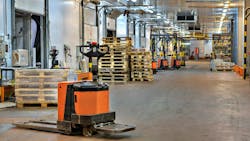
Material handling equipment can unfortunately become people "mangling" equipment when used incorrectly and unsafely. Understand these protection concepts so that this type of equipment poses no danger to you.
- Understand the equipment. What is its purpose? How does it do what it does? If you are unfamiliar with its operation and danger points, ask someone to show you. The equipment operator is usually a good choice.
- Don’t assume it’s safe. It may look safe, but like anything else, it is subject to abuse and normal wear and tear. It may be missing a guard or have some other issue.
- Never walk on or step over a conveyer or palletizing platform. It’s inherently a slipping hazard. Step over one only if the system is powered down and locked out.
- Before working on any stationary material handling equipment, get permission from the operations department. Ensure that includes a start and stop time for your work. Otherwise, you risk (among other things) the flow of material into the section of equipment you are working on.
- Don’t reach into an area where mechanical arms are present. These machines, such as picking and sorting systems, are not usually set up to detect things like your fingers, and may take them right off.
- Protect your eyes from high-intensity light sources. Don’t look at laser scanner lights or into the ends of fiber optic cables. Avoid directly looking at high-intensity light reflected from stainless steel or other very reflective surfaces.
- When approaching large storage bins or racks, do a visual scan. Determine if anything looks out of balance. If it does, contact the area manager or area operator immediately.
- Never walk under a crane or hoist load. Guess what it will hit if it falls at that particular moment? Where practical, walk completely around the area where a crane or hoist is operating.
- Never walk directly behind a lift truck. The driver may or should have the automatic backup alert, but the time it would take you to react to it may be insufficient. Being hit by the counterweights of a lift truck is likely to cause severe injury or even death.