Mastering Level One Thinking for Safer Electrical Work Environments
Key Highlights
- Level One thinking focuses on eliminating hazards entirely rather than just managing or coping with them.
- Innovative technologies like remote sensors and zero-emission tools exemplify hazard elimination strategies.
- Prioritizing hazard elimination can reduce or eliminate the need for PPE, administrative controls, and other safety measures.
- Thinking backwards from PPE or administrative controls helps identify opportunities for true hazard elimination.
- Implementing Level One solutions often involves redesigning processes or environments to remove hazards at their source.
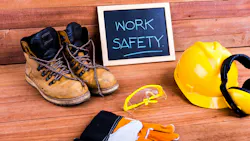
Do you engage in Level One thinking when it comes to creating a safe work environment? The goal of Level One thinking is not to come up with better safety procedures, but to come up with a way to eliminate a hazard entirely, according to the hierachy of controls.
It was obvious for a long time that you can’t use elimination for things like racking out a circuit breaker, reading a connected DMM, performing a thermographic scan, or checking the vibration signature of a motor. Then someone invented remote racking and displays, thermographic windows, and vibration sensors just for motors. And just like that, these obvious limitations were no longer obvious or even true.
Level One thinking is not typically the first choice. It is more typical to develop ways to cope with the hazard rather than eliminate it. Consider two approaches to protecting a crew from silica dust while they are boring into a concrete wall. One approach is to ensure they use plenty of water for dust control (protect at the hazard source). Another approach is to ensure they wear dust masks (PPE, which protects at the user end).
Would you choose between these or use both? You would likely use both. This is a way to implement hazard protection. Use a control method at the source, AND use PPE at the other end.
It’s even better to use an elimination method. In this example, you could change the raceway routing such that the hole isn’t needed or you could use a zero-emission boring tool. Because it puts out zero silica dust, you don’t need dust control or PPE to bore with it.
One good way to start the Level One thought process is to assume none of the other five levels of the hierarchy of protection will be available. Set up this condition in your mind temporarily: You can’t fall back on the PPE to make up for lack of a solution in the previous five levels, you need a win with the first one. How can you get that win? Is a win even possible?
There aren’t always ways to eliminate a particular hazard. And in many situations, you can eliminate only one of several hazards. The others can’t be eliminated, so you work your way down the hierarchy. That doesn’t mean skip straight to PPE.
Perhaps working backwards from PPE (the opposite of what you should do) will help illustrate the superiority of Level One thinking. The situation is two brand new HVAC compressors are sitting on a small 12-ft mezzanine that has three walls and an open face to the factory floor. The compressors haven’t yet been installed and connected, so the electrical work has yet to be done. You’re in charge of making this installation safe for the maintenance people.
- Level Six (PPE). You realize the importance of fall protection, so you have Larry weld some fall protection anchors to an I-beam.
- Level Five (Administrative controls). You realize that hermitically sealed motors have different PM requirements from other motors. You update the maintenance procedure accordingly, and this reduces the time of exposure.
- Level Four (Awareness). You post signs on the mezzanine, warning of a fall hazard and admonishing people to use the correct fall protection PPE.
- Level Three (Engineering controls). You install a removable guard rail across the open face. You also have a permanent ladder installed, thus avoiding ladder tipping and other issues from using portable ladders.
- Level Two (Substitution). You relocate the compressors to a nearby 5 ft mezzanine. There’s still a fall hazard, but you get past the OSHA 6 ft rule.
- Level One (Elimination). You install vibration sensors and temperature sensors, connecting them wirelessly to a remote monitoring system. This eliminates the need to go up there to perform scheduled maintenance. Now it will be condition-based maintenance that will likely not have to be done for many years.
This means the only reason someone would need to go up onto the mezzanine — other than to replace these compressors — is to open the disconnects after the cooling season. So you change the drawing such that the disconnects are at ground level. Each disconnect will be in sight of anyone working on a given compressor.
Now with Level One thinking, you have eliminated the need for PPE, procedure changes, signs, a guard rail, a ladder, and relocation to a lower mezzanine. At least for scheduled maintenance.
Someday, one of those compressors will need to be replaced. You’ve already made that safer by having the disconnects out of the way of the crane boom that will have to be extended into that space. You could allow for that eventuality by installing fall protection bolts at the correct distance from the edge and then painting the floor of the “clip in required” area a warning color, such as yellow or red, and maybe post a sign.
You can see how the lower levels reduced risk, but only Level One eliminated it. When you reduce risk, there is still a chance you can get hurt. When you eliminate risk, there is zero chance you can get hurt. But isn’t it a little bold to say “zero chance”?
Solve this multiple choice safety problem, to see if that’s true. Bob likes to walk under the crane load as the crane moves along its rails. How can you protect Bob from being killed by this particular hazard?
- Level Six. Give him a really good hard hat.
- Level Five. Don’t let the crane operate right after lunch. Bob always has a huge lunch and is drowsy then.
- Level Four. Post a sign, “Keep your eyes peeled if under the crane”.
- Level Three. Use extra webbing to secure the load.
- Level Two. Have Bill operate the crane, he’s got reflexes like a cat.
- Level One. Teach Bob the “don’t be there” principle and ensure he understands that if he stays outside the red rope crane operation area, there is zero chance the load will fall on him and you require him to maintain that 0% chance 100% of the time.
Which is the correct answer? Simply getting people to stay away from dangers in the first place is not always possible. Often, you can get the same effect by using Level One thinking to get the dangers away from the people.
About the Author
 Mark Lamendola
Mark Lamendola
Mark is an expert in maintenance management, having racked up an impressive track record during his time working in the field. He also has extensive knowledge of, and practical expertise with, the National Electrical Code (NEC). Through his consulting business, he provides articles and training materials on electrical topics, specializing in making difficult subjects easy to understand and focusing on the practical aspects of electrical work.
Prior to starting his own business, Mark served as the Technical Editor on EC&M for six years, worked three years in nuclear maintenance, six years as a contract project engineer/project manager, three years as a systems engineer, and three years in plant maintenance management.
Mark earned an AAS degree from Rock Valley College, a BSEET from Columbia Pacific University, and an MBA from Lake Erie College. He’s also completed several related certifications over the years and even was formerly licensed as a Master Electrician. He is a Senior Member of the IEEE and past Chairman of the Kansas City Chapters of both the IEEE and the IEEE Computer Society. Mark also served as the program director for, a board member of, and webmaster of, the Midwest Chapter of the 7x24 Exchange. He has also held memberships with the following organizations: NETA, NFPA, International Association of Webmasters, and Institute of Certified Professional Managers.