Understanding NFPA 70E and the Condition of Maintenance
Key Takeaways
- The condition of maintenance refers to the state of electrical equipment considering manufacturer instructions, industry standards, and its overall condition.
- NFPA 70E mandates that electrical safety programs include assessments of equipment's condition to prevent hazards and ensure safe operation.
- Visual inspections, periodic testing, continuous monitoring, and maintenance history are key methods for evaluating equipment condition.
- Proper installation, secure covers, and absence of signs of failure are essential indicators of good operating condition.
- Applying standards like NFPA 70B and ANSI/NETA testing protocols helps ensure electrical equipment remains safe, reliable, and compliant.
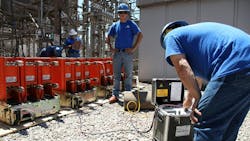
“Condition of maintenance” is a phrase often used in NFPA codes and standards, but do you really understand what it means? If not, take a look at Informative Annex S, “Assessing the Condition of Maintenance,” in the 2024 edition of NFPA 70E, Standard for Electrical Safety in the Workplace.
NFPA 70E Requirements
Where is the condition of maintenance referred to in NFPA 70E? Let’s look at a few relevant Sections.
The general requirements in Sec. 110.3 state that the condition of maintenance must be addressed.
110.3(C) Condition of Maintenance. The electrical safety program shall include elements that consider the condition of maintenance of electrical equipment and systems.
Annex S, Sec. S.3, Electrical Safety Program, clearly states that you must consider the condition of maintenance in your electrical safety program:
… the employer shall implement and document an overall electrical safety program that directs activity appropriate to the risk associated with electrical hazards.
This is further clarified in Sec. 110.5, Host and Contract Employers’ Responsibilities, which also states:
110.5(C) Condition of Maintenance. An electrical safety program must consider the condition of maintenance of the equipment and its component parts.
Now you have a clear requirement in general terms. You also have a specific requirement, if you are a host employer or a contract employer, to consider the condition of maintenance in your electrical safety program, as per Art. 205:
… safe normal operation of equipment is dependent on the condition of maintenance.
What is a condition of maintenance?
Let’s start with the definition of “condition of maintenance,” which is the same in NFPA 70B, Standard for Electrical Equipment Maintenance, and NFPA 70E: The state of the electrical equipment considering the manufacturers’ instructions, manufacturers’ recommendations, and the applicable industry codes, standards, and recommended practices.
Now, let’s dissect the three main parts of the definition to understand its meaning further.
Part 1: The state of the electrical equipment
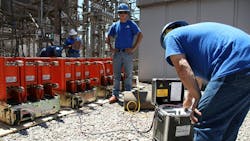
It seems obvious, but don’t overlook the state of electrical equipment. It’s the overall condition of the equipment (Photo 1) as you see it and begin to interact with it. Is it new? Service aged? Clean? Dirty? Good condition? Poor condition? All those factors need to be considered.
Part 2: Considering the manufacturers’ instructions and recommendations
You now need to apply further reasoning and analysis to the overall condition of the electrical equipment. You will want to consider:
- How well has it been cared for?
- What environment does it live in?
- Is the environment suitable?
- Is the equipment rated for your application?
- How did the original manufacturer expect you to use it?
- Has it been installed in an area as intended and designed?
These considerations can affect things greatly if not answered correctly.
Part 3: Considering applicable industry codes, standards, and recommended practices.
Finally, have the previous two components been considered in conjunction with best practices and industry consensus? Are you looking after it properly and maintaining it in accordance with what those in the industry say you should? This is another important aspect of the definition and an important piece of the overall definition.
Additional elements to consider for proper operating condition
Remember: Operating condition and condition of maintenance are two different things. Maintenance is just one part of normal operation. Other elements of operating condition include these seven items:
- The equipment is properly installed.
- The equipment is properly maintained.
- The equipment is rated for the available fault current.
- The equipment is used in accordance with the instructions included in the listing and labeling and with the manufacturer's instructions.
- The equipment doors are closed and secured.
- All equipment covers are in place and secured.
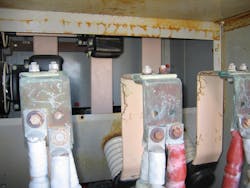
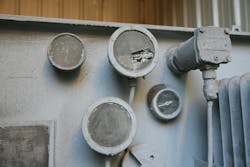
- There is no evidence of impending failure (Photo 2).
Diving into Informative Annex S
Now that we understand what shape the equipment is in, it’s clear that Art. 205 states safe operation is dependent on it. But where can you seek guidance in NFPA 70E for the condition of maintenance? Look to Informative Annex S, Assessing the Condition of Maintenance.
It provides guidance for understanding the condition of maintenance. Here’s an abbreviated summary of the information. For a complete review, study NFPA 70E, Informative Annex S in full.
S.1 Introduction. The objective of these requirements is to emphasize the inherent risk to workers associated with performing tasks on electrical equipment that is not properly rated, installed, and maintained, or otherwise exhibits evidence of an increased risk level for electrical workers or operators.
S.2 Assess the risk. Safe work practices should always be used when gathering information to be used to assess the condition of maintenance of electrical equipment.
S.3 Visual inspection. Visual inspection of equipment (Photo 3) can be used to verify that it is installed professionally and skillfully in accordance with applicable industry codes and standards and the manufacturer’s instructions.
S.4 — Periodic testing and inspection. Periodic testing and detailed inspection methods are used to help workers determine the condition of the equipment at the time of the test.
S.5 — Permanently installed monitoring. Continuous monitoring of specific equipment conditions can be performed using an uninterrupted method of data collection. The use of real-time data is useful when determining the condition of the equipment and is also used to modify (shorten or lengthen) the predetermined maintenance intervals for other inspections and tests.
S.6 — Predictive techniques. These technologies and methods often detect minor items before they propagate into major issues or equipment failure, enabling workers to interact with or operate the equipment while it is still in a normal operating condition as opposed to an abnormal condition.
S.7 — Maintenance history. The maintenance history of electrical equipment is an important factor to consider when assessing if the equipment has been properly maintained in accordance with the manufacturer’s recommendations and applicable industry codes and standards.
- S.7.1 — Labels. Labels, decals, or other markings might be color-coded and placed on the exterior enclosure or surface of the electrical equipment or device to communicate the condition of maintenance as of the last assessment (see Figure).
- S.7.2 — Digital and other electronic methods. Digital technology is used as a method of storing and sharing maintenance-related information.

S.8 — Standard for electrical equipment maintenance. NFPA 70B provides a means to establish and maintain an acceptable condition of maintenance of electrical equipment and systems to address safety and reliability.
Conclusion
If you apply the guidance provided in the ANSI/NETA testing standards to your electrical equipment, you can be assured that the proper visual, mechanical, and electrical tests have been performed on the equipment, which ultimately leads to a safer and more reliable power system.
In summary: Read the standards, and understand the content. You’ll be glad you did.

Electrical Testing Education articles are provided by the InterNational Electrical
Testing Association (NETA), www.NETAworld.org. NETA was formed in 1972 to establish uniform testing procedures for electrical equipment and systems. Today the association accredits electrical testing companies; certifies electrical testing technicians; publishes the ANSI/NETA Standards for Acceptance Testing, Maintenance Testing, Commissioning, and the Certification of Electrical Test Technicians; and provides training through its annual conferences (PowerTest and EPIC — Electrical Power Innovations Conference) and its expansive library of educational resources.
About the Author
 Ron Widup
Ron Widup
Sr. Advisor, Technical Services
Ron Widup has worked in the electrical power testing and maintenance industry for more than 45 years. He serves as Chief Technical Marketing Officer for NETA Accredited Company Vector Power in Plano, Texas. Widup has actively served on several NFPA technical committees, including NFPA 70E, NFPA 70B, NFPA 790/791 (current Chair), and NEC CMP-11. Since 1996, he has served on the InterNational Electrical Testing Association (NETA) Board of Directors and is a senior member of the NETA Standards Review Council. He is also Chairman of IEEE P902, IEEE Recommended Practice for Maintenance and Operational Safety of Electrical Power Distribution Systems in Industrial and Commercial Facilities. Widup currently chairs the Texas State Technical College (TSTC) System Board of Regents. His credentials include NETA Level 4 Certified Senior Test Technician, State of Texas Journeyman Electrician, NFPA Certified Electrical Safety Compliance Professional (CESCP), and Senior Member of IEEE.