How AI Is Rewiring Electrical Operations
Key Takeaways
- Modern resiliency assets can now participate in grid stability and generate revenue, transforming them from insurance policies into strategic assets.
- Operational data from sensors enables predictive maintenance, anomaly detection, and optimized load management, reducing downtime and operational costs.
- Organizations must focus on understanding their vulnerabilities and operational risks to effectively leverage AI for reliability and resilience.
- Connecting siloed systems into a unified platform maximizes AI's potential, leading to smarter power management and a more resilient energy future.
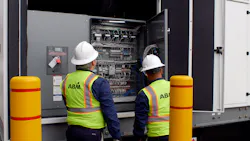
Electrical professionals are facing a convergence of challenges unlike anything the industry has seen in decades. Demand for power is rising, infrastructure is aging, extreme weather events are becoming more frequent, and energy costs are increasingly volatile and difficult to predict. At the same time, industrial processes, data centers, health care facilities, and other critical operations have become far less tolerant of power disruptions and quality issues. What might have been a minor disturbance a decade ago can now result in significant operational, financial, or even safety consequences.
Many organizations view AI primarily as an automation tool. In my experience, its greatest value in electrical operations is helping facilities make better decisions about reliability, resiliency, and energy economics. As sensors become more pervasive and computing power continues to expand, AI is enabling organizations to move beyond reactive maintenance and siloed decision-making toward operations that are more predictive, connected, and resilient.
The new operational reality
One of the primary shifts electrical teams are grappling with is the redefinition of resilient, good quality power. Resiliency used to mean keeping the lights on during an outage with a backup generator. Now, it includes much more, including:
- Maintaining power through more frequent and more severe weather events.
- Managing higher and more volatile loads on aging infrastructure.
- Ensuring stable power quality for sensitive industrial applications, where even small deviations can damage equipment or disrupt production.
The rise of renewable generation on the grid adds another layer of complexity. While renewables are essential to decarbonization, they introduce more variability in frequency and voltage. Grid operators are responding with new balancing assets, including batteries and peaking plants. However, at the facility level, users must manage power quality and reliability to maintain operations.
At the same time, cost pressures are intensifying. Electricity costs are increasing in two ways: the cost of generation and transmission continues to rise, while the gap between off-peak and peak pricing is widening in many markets. This makes the timing of load and the flexibility of on‑site assets more important than ever.
Turning sensor data into actionable intelligence
One of the biggest shifts happening across electrical infrastructure isn’t simply the growth of AI — it's the explosion of available operational data.
Sensors are now embedded throughout facilities—from HVAC equipment to generators, batteries, switchgear, and environmental systems. Falling hardware costs and greater OEM integration have made collecting operational data easier than ever. The challenge is turning that data into actionable intelligence.
Many facilities operate multiple monitoring platforms for generators, HVAC systems, building controls, and other critical assets. Although these systems generate valuable insights, the information often remains isolated, leaving organizations with abundant data but no unified operational view. The real opportunity comes from bringing those disparate data streams together into a single operational picture. When engineers and operators can view assets as an interconnected system rather than a collection of individual devices, AI becomes far more powerful and far more actionable.
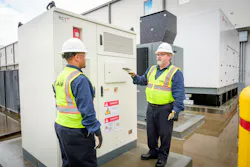
Turning data into better decisions
AI and machine learning deliver the greatest value when they're applied to a unified view of operational data.
Traditionally, many resiliency assets operate using relatively simple logic. A power outage occurs, a generator starts, and systems respond according to predefined rules. AI allows organizations to move beyond that model.
Instead of reacting to a single event, AI-enabled platforms can continuously evaluate real-time data from generators, batteries, switchgear, connected loads, utility pricing signals, demand response events, maintenance histories, and operating patterns. By analyzing these inputs collectively, the system can make more informed decisions about reliability, efficiency, and cost. That means determining not only when a generator should run, but also whether a battery should discharge first, whether certain loads should be shifted, or whether changing utility conditions warrant a different operating strategy altogether.
Perhaps most importantly, AI helps organizations identify risks before they become failures. It can surface anomalies, prioritize maintenance needs, and help operators focus their attention on issues that pose the greatest threat to uptime, safety, or business continuity.
The most successful organizations don't start by asking, "How do we implement AI around power and energy systems?" Instead, they start with:
- What is the cost of downtime?
- Where are our operational vulnerabilities?
- How exposed are we to volatile energy costs?
- What would an hour of lost production mean to the business?
When AI is applied to those questions, it shifts from being a technology investment to a business asset that supports reliability, productivity, and financial performance.
For facility leaders evaluating AI-enabled electrical strategies, it’s about understanding three key things: the cost of energy, the resiliency of existing infrastructure, and the operational risks associated with downtime. Once those fundamentals are understood, AI can help organizations optimize how assets are operated, maintained, and integrated into broader energy strategies.
From insurance policy to strategic asset and goodwill generator
For decades, many organizations viewed generators and other resiliency assets primarily as insurance: equipment that sat idle until an emergency occurred. That mindset is rapidly changing. In many markets today, those same assets can participate economically supporting the utility grid by curtailing load during peak demand, reducing demand charges through on-site generation or even exporting power back to the grid.
This creates possible new revenue streams or cost offsets that can materially change the return on investment for resiliency projects. It also opens the door for large facilities to play a broader community role, helping prevent local blackouts and supporting stability, an increasingly important consideration for energy intensive sites that face community scrutiny.
Turning data into action
The conversation around AI in electrical operations is often framed around technology, but the real story here is about decision-making.
Organizations today have access to more operational data than ever before, yet many still struggle to translate that information into meaningful action. AI helps bridge that gap by turning data into insights, and insights into operational decisions that improve reliability, resiliency, and financial performance. The facilities that will benefit most will be the ones that take a holistic view of their infrastructure, connect previously siloed systems, and align technology investments with business outcomes.
As power systems become more complex and expectations for uptime continue to rise, AI will increasingly become a foundational capability for electrical operations. The result will be more resilient facilities, more predictable operating costs, and a stronger, more reliable energy future for both organizations and the communities they serve. Ultimately, the organizations that gain the greatest advantage won't be those with the most data. They'll be the ones that use AI to make smarter decisions about how power is generated, managed, and optimized across their operations.
About the Author
 Satish Jayaram
Satish Jayaram
Satish Jayaram, Senior Vice President - Electrification & Power Solutions at ABM, where he leads strategy, growth, and innovation for the company’s electric mobility portfolio. A strategic leader with a record of driving corporate start-ups, ventures, and turnarounds across the energy, manufacturing, and industrial sectors, Jayaram is known for identifying untapped markets and building diverse, high-performing teams. Before joining ABM in 2023, he spent nearly two decades at Cummins Inc., most recently as general manager of Innovation for its $4.5 billion Power Systems business, where he led new product, R&D, and business model initiatives. He also held leadership roles in distributed generation, global energy ventures, and operations across the Americas and Africa. Jayaram serves on the board of the Great Plains Institute and holds a degree in accounting and business management from Bharathiar University and a General Management certification from The Wharton School of the University of Pennsylvania.