AI and Predictive Maintenance: Closing the Data Gap
Key Takeaways
- Most facilities already have the monitoring tools needed for predictive maintenance; the key is actively reviewing and interpreting the data.
- Electrical failures often develop gradually through trends like insulation degradation and harmonic distortion, which can be detected early with proper analysis.
- AI enhances the ability to correlate data across multiple devices, revealing hidden patterns that signal developing issues before failures occur.
- Implementing predictive maintenance improves safety by enabling planned repairs, reducing emergency outages, and minimizing personnel exposure to energized equipment.
- Successful adoption requires quality data, integration of systems, and the continued use of traditional maintenance practices alongside new analytics tools.
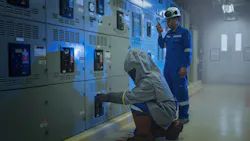
In the course of reviewing microprocessor-based relay and metering data across several hospital and industrial facilities, I kept running into the same situation: the data was there. Voltage disturbances, harmonic trends, power quality anomalies, all of it logged, timestamped, sitting in the device. And, in most cases, nobody had looked at it — not recently, and not ever.
That’s worth sitting with for a moment. These are hospitals. Facilities where power quality directly affects patient care equipment, surgical suites, and life-safety systems. The monitoring infrastructure was doing its job. The gap wasn’t technology; it was process. So if the data is already there, the real question is: Is anyone looking at it? This is the central problem predictive maintenance is designed to solve — not the absence of data, but the failure to act on it.
How electrical failures actually develop
Most electrical failures don’t begin with a fault. They begin with a trend. Insulation that degrades gradually. A connection that loosens over months of thermal cycling. Harmonic distortion that builds slowly as nonlinear loads are added to a system. These conditions rarely trip a breaker or trigger an alarm. They accumulate quietly until something gives.
At one major health care facility, a power cable installed in violation of the manufacturer’s instructions began degrading slowly. The eventual arc flash event was significant enough to cause serious equipment damage and a lengthy outage. It occurred late at night, which fortunately prevented personnel injuries. Had the trending data been reviewed routinely, the gradual insulation degradation may have been visible well before the failure point.
An arc flash event or equipment failure is often the final link in a chain. The earlier links were there. In many cases, they were being recorded. The opportunity predictive maintenance offers is to identify those earlier links before the chain runs out.
NFPA 70B: a standard that reflects this reality
he transition of NFPA 70B from a recommended practice to a standard is a meaningful shift. For decades, electrical maintenance programs were largely time-based: inspect on a schedule, test at fixed intervals, regardless of what the equipment was actually doing between visits. That approach worked reasonably well, right up until it didn’t.
NFPA 70B reinforces condition-based thinking. It asks a direct question of facility owners and engineers: If your equipment can tell you about its health in real time, are you using that information? For most facilities today, the honest answer is not fully.
What's already in the building
The foundation for predictive maintenance is already installed in most facilities. The challenge is using it.
Microprocessor-based protective relays
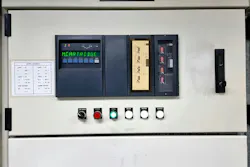
Modern relays are far more than trip devices. They continuously capture fault currents, voltage, and current waveforms, breaker operation timing, and event records (Photo 1). Traditionally, this data is pulled only after something goes wrong. Reviewed as a trend over time, it tells a different story; it shows where the system is heading rather than simply where it has been.
In one case, a customer’s microprocessor-based relay was configured with an alarm threshold for off-normal frequency while the site’s cogeneration unit was running. That alarm flagged an emerging generator loading issue before it developed into a problem, exactly the kind of early warning that relay trend data is designed to provide, but only delivered because the alarm was tied to a mini SCADA system.
Power quality meters
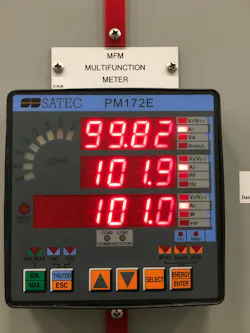
Power quality meters track harmonic distortion, voltage imbalance, transient events, and long-term behavioral trends (Photo 2). The key insight here is that power quality problems are often invisible from a protection standpoint; they don’t trip breakers. Instead, elevated harmonic content quietly increases heating in transformers, conductors, and motors, accelerating insulation aging over months and years. By the time a failure occurs, the contributing conditions are long gone from anyone’s memory. Even standard power quality meters, while not full Class A analyzers, provide enough harmonic and trend data to identify developing issues when reviewed over time.
At one facility, power quality metering identified a 480V dry-type transformer serving VFD-driven HVAC equipment with 35% total harmonic distortion, contributing meaningful non-60 Hz current through the transformer windings. This excess current produces heat, and that heat accelerates insulation aging. Nothing tripped. No alarm sounded. The transformer was simply running hotter than it should have been, every day, until we noticed while collecting data for an arc flash study.
Continuous thermal monitoring
Periodic infrared inspections are valuable but limited to the conditions that exist at the moment of the scan. Permanently installed thermal sensors within switchgear, bus structures, and cable terminations provide ongoing visibility. They catch gradual temperature increases that an annual walkthrough would never see.
At one facility, as part of the thermal monitoring program, IR window inspections of an energized switchgear lineup revealed a cable lug with a gradually rising temperature trend over successive inspection intervals. The lug was loosening. This condition would have been invisible to a single-point annual scan. Because readings were being tracked over time, the deterioration was caught before it became a fault, and the connection was remade under planned, controlled conditions.
Where AI actually fits
With relays, meters, and thermal sensors all generating data, the challenge shifts from collection to interpretation. A trained engineer reviewing relay records manually can identify trends across dozens of devices and months of data. However, that isn’t practical at scale. This is where AI provides genuine value.
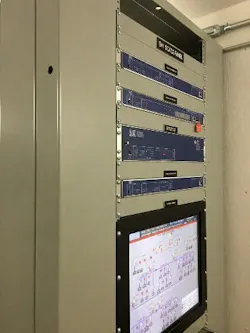
AI systems can correlate data across multiple devices simultaneously. For example, identifying a gradual increase in 5th harmonic distortion following the addition of VFD-driven HVAC equipment, while also recognizing a corresponding rise in transformer temperatures in the same area. Neither condition alone may trigger an alarm, but together they indicate a developing issue. Platforms such as modern EPMS systems, combined with emerging AI-based analytics tools, are increasingly capable of performing this type of cross-system correlation (Photo 3). In practice, this is being implemented through platforms that aggregate data from relays, meters, and sensors into centralized systems where machine learning models can identify patterns across time and across equipment.
AI is not replacing engineering judgment here. It is doing the work that makes engineering judgment possible: surfacing the signal from the noise so that a qualified engineer can evaluate it and decide what action is warranted.
The safety implications are direct
From a safety standpoint, the value of predictive maintenance is straightforward: It converts emergency situations into planned ones. When a developing fault is identified early, maintenance can be scheduled under controlled conditions, with proper PPE, appropriate arc flash work permits, and adequate staffing. Compare that to an emergency response following an unexpected failure, where conditions are uncontrolled, and personnel exposure is highest.
This is the practical safety argument for condition-based maintenance; not just improved reliability, but reduced exposure to energized equipment in unplanned circumstances.
What this actually requires
Predictive maintenance is not a technology deployment. It is a program. The technology is only as useful as the process around it. A few things that matter in practice:
- Data quality matters. Sensors that aren’t calibrated, relays with incorrect CT ratios, or meters with communication gaps produce misleading trends. Garbage in, garbage out applies here as much as anywhere.
- Not every anomaly is actionable. AI systems will flag conditions that require human evaluation to determine significance. Engineering judgment is still the final step, not an optional one.
- Integration is often the hardest part. Data that lives in isolated devices, different software platforms, or systems that were never designed to talk to each other requires deliberate integration work before analytics are possible. Predictive tools complement established maintenance practices; they don’t replace them. Relay testing, insulation resistance measurements, and infrared inspections still have a place in a complete program.
Start with what you already have
The hospitals I mentioned at the start of this piece aren’t unusual. Across industrial and commercial facilities, there is a significant gap between the data that monitoring systems are collecting and the data that maintenance programs are actually using. Closing that gap doesn’t necessarily require new hardware. It requires a decision to start looking at what’s already there.
Modern relays, power quality meters, and thermal monitoring systems are capable of supporting a genuinely predictive maintenance approach. AI makes that practical at scale. NFPA 70B is now reinforcing the expectation that facilities take this seriously.
The tools are in place. The data is being recorded. The question for facility owners and engineers is a simple one: Is anyone looking at it?
About the Author
 Joseph Deane, PE
Joseph Deane, PE
Joseph Deane, a registered Professional Engineer in multiple states, is Vice President of Engineering Solutions for Shermco Industries and former owner of KTR Associates, a consulting firm specializing in power system design and electrical safety. He can be reached at [email protected].