Electrical Contractor M&A Dips in 2025
Key Takeaways
- Electrical contractor M&A activity declined in 2025 but is expected to rebound or grow into 2026, driven by a normalized market environment.
- Private equity firms are increasingly active, focusing on platform companies and add-on acquisitions, especially in high-growth, technical, and fragmented market segments.
- Key growth drivers include data center buildouts, infrastructure modernization, electrification, and the rising need for ongoing electrical services and maintenance.
- Industry consolidation is in early stages, with larger firms acquiring smaller local providers to expand service offerings and market reach.
- The sector presents attractive investment opportunities due to high fragmentation, recurring revenue streams, and demand for specialized, mission-critical electrical services.

Electrical contractor merger and acquisition activity slowed in 2025, according to a recent report, but the outlook for more deals involving both private equity stakes and contractor growth through acquisitions remains strong.
In its analysis of the industry’s M&A landscape as of 2025’s second half, Detroit-based Cascade Partners PowerPoint Presentation, an investment bank specializing in the infrastructure and construction services sector, cited statistics from private equity industry analysts showing the total number of electrical contractor acquisitions for all of 2025 fell to 99 from 140 for all of 2024. Activity in 2024 had rebounded from a sharp 2023 decline that followed two years of growth that surged after 2020. (See graphic below)
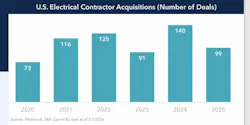
Looking ahead, the report, issued in February, cautions against reading too much into the up-and-down numbers of the last few years. The fall-off in 2025, it says, was more a function of a “more normalized M&A environment which is anticipated to continue or grow into 2026.”
Even in what may be a comparatively less favorable M&A market, Cascade says, electrical contractor dealmaking could be lively in coming years. The reason: firms with the right mix of attractive assets – including exposure to growth markets, diversified revenue streams and strong management – are in high demand from buyers who see growing opportunity to capitalize on surging demand for services those businesses provide.
More of the dealmaking, the report says, could be shifting from “smaller bolt-on acquisitions” (by larger contractors) that have driven recent activity to ever larger strategic-play and private equity acquisitions that were more prevalent in 2025.
Private equity, once put off by the industry’s “project-based nature, working capital constraints, and lack of lender financing” has become more of a force in industry dealmaking the last five years as the mix of ingredients for possible profitable outcomes have come together. Key drivers include growing recognition of the value in now adding more electrical capabilities to earlier HVAC/MEP firm roll-ups that have matured; “forecasted tailwinds (from data center buildouts and grid modernization and more) driving need for electrical contractors”; and more business roll-up opportunity due to still fragmented markets.
Citing numbers from private equity market analyst Pitchbook that buyouts have accounted for around two-thirds of electrical contracting industry acquisitions since 2020, the report notes that “most of the activity has been led by financial buyers pursuing platform companies, followed by add-on acquisitions.” Strategic acquirers, it says “remain active and are seeking accretive opportunities.”
Cascade’s report, and that of another issued in January by FMI Consulting assessing the state of industry M&A Private Equity Sector Brief: Electrical Contracting Services | FMI Corp, focus heavily on the factors driving investment interest in electrical contractors. Targeted at prospective private equity interests and contractors looking to partner, both elaborate on the growing demand for electrical expertise as the electrification trend intensifies, infrastructure build-out continues, datacenters proliferate and the need for ongoing electrical service and maintenance expands.
FMI’s report says the sector presents “a compelling platform investment opportunity due to nondiscretionary demand, strong industry fundamentals and high fragmentation. Consolidation, it says, is still in the early stages and buyer interest is now centered on firms working in “high complexity, mission-critical segments where technical requirements create high barriers to entry.”
Three unique market characteristics “create a landscape primed for investment”: recurring revenue and resilient demand stemming from a client shift from reactive repairs to preventive maintenance; more durable volume growth stemming from the need for more “sophisticated design, installation and lifecycle support”; and multiple pathways to “building scale and defensibility,” such as roll-ups of regional firms, development of additional service offerings like prefab; and expansion into highly technical markets that demand ongoing services.
In assessing the marketplace and investment drivers, Cascade devotes a section to the datacenter-build explosion. That alone, it suggests, could justify investment because “(datacenter) infrastructure buildout represents a sea-change in the demand for electrical contracting and utility infrastructure services,” which could grow have compounded annual growth of 25% for at least the next five years.
Other growth drivers for the industry, Cascade notes, include “critical infrastructure expansion requiring massive investment in power distribution, redundancy systems, busway, switchgear, grounding, and high-capacity electrical systems; electrification and clean energy development; new construction and renovation work supported by possible interest rate easing driving sustained volume and growth; rising electricity demand driving power upgrades and system complexity; and growing demand for recurring service work creating a “defensive service base” cushioning market cycle disruptions.
While both reports see private equity investments driving M&A activity they don’t dismiss the impact of continued expansion of broad-based electrical contractor platforms. Large entities, they suggest, will likely continue to buy up smaller contractors that help fashion a comprehensive “go-to-market” strategy that gives firms a competitive edge.
“Acquisition activity in commercial electrical services is accelerating,” the FMI report notes, “but the sector remains fragmented, with many local providers, particularly in maintenance and compliance-driven work, offering early movers a strategic opportunity to scale.”
About the Author
Tom Zind
Freelance Writer
Zind is a freelance writer based in Lee’s Summit, Mo. He can be reached at [email protected].