Changes to Arc Flash Label Requirements in the 2026 NEC
KeyTakeaways
- The 2026 NEC removes the 1,000A threshold, requiring all service and feeder equipment, except in dwellings, to have arc flash hazard labels.
- Labels must now include the date of the assessment, not just the label application date, ensuring more accurate safety information. Clear labeling helps inspectors verify Code compliance, guides contractors in proper installations, and reminds electricians to use appropriate PPE
- The requirements align closely with NFPA 70E standards, specifying details like system voltage, arc flash boundary, incident energy, and PPE levels. These updates promote safer working conditions by standardizing hazard communication and fostering collaboration among industry professionals.
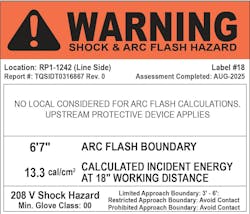
The change
Comparison
- Nominal system voltage
- Arc flash boundary
- At least one of the following:
- Available incident energy and corresponding working distance, or the arc flash PPE category in Table 130.7(C)(15)(a) or Table 130.7(C)(15)(b) for the equipment, but not both
- Minimum arc rating of clothing
- Site-specific level of PPE
- The nominal system voltage
- The arc flash boundary
- The available incident energy or minimum required level of personal protective equipment
- The date the assessment was completed
Impact on the electrical industry
About the Author
 Dean Austin
Dean Austin
Dean Austin is a senior electrical content specialist at the National Fire Protection Association (NFPA). In his current role, he serves as an electrical subject matter expert in the development of products and services that support NFPA documents and stakeholders. Dean has more than 30 years of experience in the electrical industry, holding a master electrician license, an electrical inspector, and an electrical plan reviewer registration in the state of Michigan. He taught electrical apprentices for 10 years in the Associated Builders and Contractors’ electrical apprentice program. For 11 years, he was an electrical inspector for the state of Michigan, and for five years, as the chief of the electrical division within the Bureau of Construction Codes at the state of Michigan. At the state of Michigan, Dean was charged with enforcing the laws, rules, and codes governing electrical installations and licensing within the jurisdictional boundaries of the state of Michigan.