Rewriting the Rules for Medium-Voltage Systems
Key Takeaways
- The NEC 2023 consolidated MV requirements into Art. 235, centralizing information that was previously scattered across multiple low-voltage articles.
- In the NEC 2026 cycle, MV rules were further organized into purpose-specific articles (Arts. 265-270), aligning with actual system design and installation practices.
- This reorganization enhances clarity, reduces misapplication of low-voltage assumptions, and improves enforcement consistency across jurisdictions.
- Art. 315 plays a key role by governing MV cable construction, joints, and personnel qualifications, acting as a bridge across the new MV articles.
- Overall, these changes reflect a deliberate move from consolidation to modularization, providing a clearer, safer, and more enforceable framework for MV electrical systems.
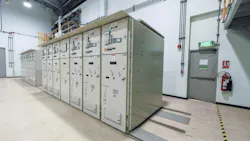
Medium-voltage (MV) electrical systems have long occupied an uncomfortable middle ground in the National Electrical Code (NEC). They are more complex than low-voltage premises wiring, yet they often exist within facilities influenced by utility practices, OSHA regulations, and engineering standards outside the NEC.
The 2023 and 2026 NEC cycles represent a deliberate effort to address this tension. Rather than simply revising technical requirements, the Code-Making Panels fundamentally restructured where and how MV rules are organized within the Code. Understanding that evolution is essential for engineers, inspectors, safety professionals, and facility owners working with systems over 1,000V.
Before NEC 2023: MV requirements were scattered
Before the 2023 NEC, requirements for systems over 1,000VAC or 1,500VDC existed, but they were distributed across multiple low-voltage articles, including:
- Art. 210 — Branch Circuits
- Art. 215 — Feeders
- Art. 225 — Outside Branch Circuits and Feeders
- Art. 230 — Services
While technically correct, this structure created several practical challenges:
- MV requirements were easy to miss.
- Low-voltage concepts were often misapplied to MV systems.
- The placement of MV rules within low-voltage articles made it difficult to distinguish between NEC installation requirements and OSHA work-practice obligations, particularly for outside and utility-adjacent installations.
- Enforcement and interpretation varied widely between authorities having jurisdiction (AHJs).
There was no single location in the Code where a user could reasonably say, “I’m over 1,000V — start here.”
NEC 2023: Art. 235 and the push for centralization
By the early stages of the 2023 NEC development cycle, a consistent concern had emerged among engineers, inspectors, and safety professionals: While requirements for systems over 1,000V clearly existed in the Code, they were difficult to locate, easy to overlook, and often applied inconsistently.
Medium-voltage provisions were embedded within multiple low-voltage articles (branch circuits, feeders, outside circuits, and services), each written primarily with low-voltage premises wiring in mind. As a result, users were required to search across the Code to identify applicable higher-voltage requirements, increasing the risk that critical provisions would be missed or misinterpreted.
The 2023 NEC addressed this issue by creating a new Art. 235 [Branch Circuits, Feeders, and Services Over 1,000VAC, 1,500VDC, Nominal].
Art. 235 consolidated higher-voltage language that previously lived in multiple articles into a single location:
- Part I — General scope and application
- Part II — Branch circuits over 1,000V (from Art. 210)
- Part III — Feeders over 1,000V (from Art. 215)
- Part IV — Outside branch circuits and feeders (from Art. 225)
- Part V — Services over 1,000V (from Art. 230)
From a structural standpoint, Art. 235 achieved its primary goal: centralization. For the first time, designers, installers, and inspectors had a clear starting point for systems operating above 1,000V. However, the new Article also generated discussion during and after adoption. Some viewed it as an unnecessary restructuring driven by a task-group initiative rather than broad public input. Others noted that Art. 235 inherited scenarios from low-voltage articles that are unlikely to be encountered in typical MV installations, such as small utilization branch circuits.
Despite these criticisms, Art. 235 established an important precedent: Systems over 1,000V deserved a dedicated organizational framework within the NEC. That precedent ultimately set the stage for further refinement in the 2026 NEC cycle.
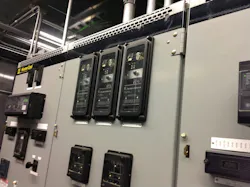
NEC 2026: From consolidation to clarity
By the time the NEC 2026 cycle began, a key realization had emerged: Centralizing MV requirements was helpful, but Art. 235 was too dense to use effectively. Rather than abandoning the concept, the NEC took the next logical step. Article 235 was deleted, and its content was sorted and redistributed into a family of focused, purpose-built MV articles.
New MV Articles in NEC 2026
- Art. 265 — Branch Circuits Over 1,000V
- Art. 266 — Feeders Over 1,000V
- Art. 267 — Outside Branch Circuits and Feeders Over 1,000V
- Art. 268 — Services Over 1,000V
- Art. 270 — Grounding and Bonding of Systems Over 1,000V
This change was not viewed as an overreach in the same way Art. 235 had been. Instead, it was widely understood as a refinement: taking consolidated MV rules and organizing them in a way that aligns with how electrical systems are actually designed, installed, inspected, and evaluated.
Why the new structure matters
The reorganization of MV requirements in the 2026 NEC is more than a renumbering exercise. By separating MV rules into function-specific articles, the Code now aligns more closely with how medium-voltage systems are designed, installed, inspected, and maintained in practice. That alignment has tangible benefits across the industry, including:
Clearer system differentiation. One of the most significant improvements is the clear differentiation between branch circuits, feeders, services, outside installations, and grounding systems. Under the new structure, each of these system elements is governed by its own Article, with requirements tailored to its unique technical and risk characteristics.
This separation reduces the likelihood that rules intended for one system type will be misapplied to another. For example, protection and routing considerations for an MV feeder can now be addressed independently from those of a branch circuit, rather than being interpreted as variations within a single Article. The result is greater technical precision and fewer interpretation disputes.
Improved consistency in enforcement. For inspectors and AHJs, the modular structure provides a clearer enforcement roadmap. Rather than navigating a broad Article covering multiple system types, inspectors can focus on the Article that directly corresponds to the installation under review.
This targeted approach improves consistency across jurisdictions and reduces reliance on local interpretation. It also simplifies plan review and inspection documentation, particularly for complex facilities with multiple MV system components.
Reduced misapplication of low-voltage assumptions. When MV requirements were embedded within low-voltage articles, it was easy for low-voltage assumptions about grounding, protection, and fault behavior to carry over unintentionally. The new structure helps prevent this by placing medium-voltage systems in their own regulatory context.
Engineers and installers are now prompted to consider MV-specific issues, such as grounding philosophy, protection coordination, and fault energy, without filtering them through low-voltage design paradigms. This shift supports safer and more resilient system design.
A more defensible framework. Finally, the NEC 2026 structure provides a clearer framework for post-installation review. When questions arise following an event or audit, stakeholders can more easily determine:
- which Article applied to the system in question,
- whether installation requirements were met, and
- where NEC jurisdiction ended and OSHA jurisdiction began.
That clarity is particularly important in MV environments, where technical complexity and risk intersect.
Where Art. 315 fits
Alongside the reorganization of system Articles, the NEC also elevated the importance of Art. 315 [Medium Voltage Conductors, Cable, Cable Joints, and Cable Terminations]. Article 315 cuts across Arts. 265 through 270 and governs:
- MV cable construction and ampacity.
- Cable joints and splices.
- Cable terminations.
- Listing requirements for MV accessories.
- Qualification requirements for personnel installing MV joints and terminations.
In practice, Art. 315 functions as a bridge because:
- It defines what must be installed and the qualifications required for installation (NEC jurisdiction).
- It stops short of regulating energized work practices, which remain under OSHA 1910.269.
The bigger picture
Taken together, the 2023 and 2026 NEC changes reflect a deliberate evolution:
- NEC 2023: Centralize MV requirements so they can be found.
- NEC 2026: Organize those requirements for clarity, usability, and enforcement.
This two-step approach mirrors how complex standards often mature: consolidate first, then modularize.
Conclusion
The NEC did not simply renumber Articles for MV systems. Between 2023 and 2026, it re-architected its approach to MV installations, clarifying where requirements apply and jurisdictional boundaries exist along with how MV systems should be evaluated over their lifecycle. For engineers, inspectors, and safety professionals, these changes are more than editorial. They provide a clearer roadmap for compliance, safer system design, and more defensible decision-making when it matters most.
About the Author
 Joseph Deane, PE
Joseph Deane, PE
Joseph Deane, a registered Professional Engineer in multiple states, is Vice President of Engineering Solutions for Shermco Industries and former owner of KTR Associates, a consulting firm specializing in power system design and electrical safety. He can be reached at [email protected].