
Maintaining Quality Across Multiple Prefab Shops
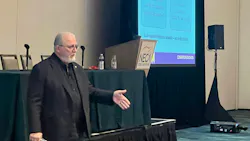
Steve Rose, director of Innovation, Technical, Facilities and Labs at the Los Angeles Electrical National Training Institute, Commerce, CA, calls himself a “lifelong learner” who has spent his career at in the electrical industry as an electrician, electrical inspector and more recently as a trainer for the National Training Institute. During his career, he says he developed a love for applying prefab and packaging process to the electrical market.
According to his bio in the NECA Show course description for his seminar, “Scaling Prefabrication Operations: Maintaining Quality Across Multiple Shops” Rose prefabbed and packaged the very first job he ran in 1986; was Rosendin’s Prefab and Packaging Director from 2015 until late 2022; and is a patented inventor who has developed products that help electrical contractors’ prefab shops and field operations. In his seminar at the 2026 NECA show, Rose offered attendees practical tips to start up or expand prefab operations. Here are some of his top tips electrical contractors can use to expand their prefab operations.
Get “buy-in” from electricians and supervisors in the field. If a company’s field operations fight the use of new preassemblies, packages or processes, as soon as something goes wrong, they often blame the home office. Rose said electrical contractors need to include field workers right from the ground level in the development of any new preassembly processes. Sometimes field workers resist prefab just because it’s new and unfamiliar, and other times they are worried about prefab shops taking work away from electricians. Rose also offered examples of local markets where the use of prefabricated electrical products or systems are not popular or not included in local building codes. The use of rigid conduit in Chicago for virtually any installation is one well-known example.
Record and document these meetings with field workers. As contractors develop their prefab and packaging strategies, Rose said everyone must know exactly what quality standards are acceptable, who is responsible for what and the exact step-by-step assembly and installation procedures. He said a simple way to record and then document these meetings is to use the voice memo feature on smartphones to record the meeting. These recordings can then be automatically transcribed with online software like Otter or in AI.
Emphasize improving the quality of any work performed in the field as the driving force behind any prefab efforts. The assembly of many electrical product systems can usually be performed better under the controlled conditions of a prefab shop than out in the field.
Make sure everyone agrees on what is non-negotiable and what is configurable. Rose suggests that the “non-negotiables” include the use of the same prefab or packaging processes in every location; documented quality standards; and procedures that protect the company’s brand in the marketplace. He says configurables might include issues that develop on the job-site driven by the project or customer.
Clearly define what “done-right” looks like. Rose says contractors need to have everyone in complete agreement about what any prefabrication or package looks like and how it performs in the field. Documentation on this must be readily available to all workers.
Strive toward standardization from Day One. The end goal for any prefabrication or packaging efforts should be to develop a repeatable process that produces quality results in the field. Rose says the process should document how to handle any tolerable exceptions, the development of metrics to measure quality and success and scheduled feedback sessions to check on field progress and adoption.
About the Author
 Jim Lucy
Jim Lucy
Editor-in-Chief, Electrical Wholesaling & Electrical Marketing
Over the past 40-plus years, hundreds of Jim’s articles have been published in Electrical Wholesaling, Electrical Marketing newsletter and Electrical Construction & Maintenance magazine on topics such as electric vehicles, solar and wind development, energy-efficient lighting and local market economics. In addition to his published work, Jim regularly gives presentations on these topics to C-suite executives, industry groups and investment analysts.
He launched a new subscription-based data product for Electrical Marketing that offers electrical sales potential estimates and related market data for more than 300 metropolitan areas. In 1999, he published his first book, “The Electrical Marketer’s Survival Guide” for electrical industry executives looking for an overview of key market trends.
While managing Electrical Wholesaling’s editorial operations, Jim and the publication’s staff won several Jesse H. Neal awards for editorial excellence, the highest honor in the business press, and numerous national and regional awards from the American Society of Business Press Editors. He has a master’s degree in communications and a bachelor’s degree in journalism from Glassboro State College, Glassboro, N.J. (now Rowan University) and studied electrical design at New York University and graphic design at the School for Visual Arts.