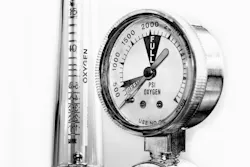
Here’s an example of a new safety threat: Two electricians were working in an energized (480V) cabinet, when one of them smelled gasoline. About 20 feet away, a mechanic was pouring fuel into a portable generator without benefit of a funnel or other means of spill avoidance. And he had spilled plenty. In fact, one of the electricians snarkily asked him if he got any fuel into the generator’s tank.
In this case, the electricians had to stop work and then stop the mechanic. They had to set up forced ventilation to clear the gasoline fumes out of the building, and they did so by using a portable fan and propping a door open.
All of this added half an hour to the job. They had only a few minutes left on their assignment when they smelled the gasoline. Should they have just spent those few minutes wrapping up their work, and then left the area? That’s what the mechanic said. But the reality is the mechanic had converted that area to essentially a Class I, Div 1 hazardous location. That’s a very major safety threat when you’re working in an energized 480V enclosure.
Sometimes a new safety threat is rather minor. An example: An operator opened the purge valve on a compressed air line and left a large puddle on the floor near where an electrician was about halfway through a motor installation job. The puddle was not an immediate threat, so he did not need to stop work because of it. However, it was still a new safety threat, so he made note of it and was careful to take a different route out of his work location.
When working in a confined space, you will have to evaluate any new threat immediately. Does it violate your confined entry permit? If so, leave the confined space immediately.
An example of this: Three electricians were inside a chamber that required X amount of airflow per minute, which was provided by a fan at the entrance. Someone needed the extension cord that supplied power to the fan, so he unplugged the fan, took the cord, and disappeared.
The electricians could have stayed in the chamber until they felt hot or woozy or until their O2 meter showed it was time to leave. But when the fan stopped, they stopped work and began the arduous process of exiting the chamber because they knew their confined entry permit was no longer valid. Before going back into the chamber, they added to the new confined entry permit a requirement for an attendant.
Any time you encounter a new safety threat, pause from what you are doing to determine if is minor enough that you can keep working. If in doubt, get yourself out; then resolve the safety threat before returning to the work location.
About the Author
 Mark Lamendola
Mark is an expert in maintenance management, having racked up an impressive track record during his time working in the field. He also has extensive knowledge of, and practical expertise with, the National Electrical Code (NEC). Through his consulting business, he provides articles and training materials on electrical topics, specializing in making difficult subjects easy to understand and focusing on the practical aspects of electrical work.
Prior to starting his own business, Mark served as the Technical Editor on EC&M for six years, worked three years in nuclear maintenance, six years as a contract project engineer/project manager, three years as a systems engineer, and three years in plant maintenance management.
Mark earned an AAS degree from Rock Valley College, a BSEET from Columbia Pacific University, and an MBA from Lake Erie College. He’s also completed several related certifications over the years and even was formerly licensed as a Master Electrician. He is a Senior Member of the IEEE and past Chairman of the Kansas City Chapters of both the IEEE and the IEEE Computer Society. Mark also served as the program director for, a board member of, and webmaster of, the Midwest Chapter of the 7x24 Exchange. He has also held memberships with the following organizations: NETA, NFPA, International Association of Webmasters, and Institute of Certified Professional Managers.
Related
 Safety Caution Attention Sign
 Dreamstime M 164152948