Key Takeaways
- Electrical safety has transitioned from a compliance requirement to a fundamental part of project planning and execution, involving all team members.
- Strong safety cultures improve project reliability, reduce rework, and can lead to financial benefits such as better insurance rates and competitive pricing.
- Early hazard identification through design meetings and daily ORM briefings helps eliminate risks before work begins, enhancing safety and efficiency.
- Industrialized construction allows for off-site assembly in controlled environments, improving safety, ergonomics, and coordination on-site.
- Workforce engagement, ongoing training, and a culture of care are vital for attracting skilled electricians and fostering continuous safety improvements.
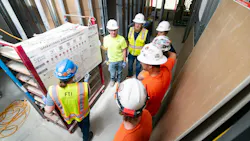
Electrical construction has always involved risk. Crews regularly work around energized systems and in environments where job-site conditions can change quickly. While those realities have not changed, the way electrical contractors approach safety has shifted significantly over the past decade.
Not long ago, safety was often viewed primarily as a compliance requirement or something managed mainly by the safety department. Today, many contractors recognize that safety is closely connected to how well projects are planned and executed. In my experience, the companies that treat safety as a core value tend to plan their work more carefully and deliver more predictable project outcomes. As electrical systems become more complex and project timelines continue to accelerate, safety culture is emerging as a meaningful differentiator across the industry.
Moving beyond compliance
One of the most noticeable shifts in the construction industry has been how the responsibility for safety is shared across project teams. Dedicated safety professionals remain essential, but strong safety programs work best when everyone involved in the work takes ownership.
At Faith Technologies Incorporated (FTI), safety is integrated into the way projects are planned and executed from the beginning. Project managers, foremen, and electricians, for example, are expected to evaluate hazards as part of the planning process so safety becomes part of the production conversation from the very start of the project, rather than
Approaching work this way changes how safety is experienced in the field. Instead of reacting to rules or inspections, crews think through tasks before they start and identify the safest ways to perform the work. The goal is straightforward: making sure everyone goes home safe at the end of the day.
Leadership engagement plays a critical role in making that shift possible. When supervisors and field leaders actively participate in safety planning and discussions, expectations become embedded in the way teams operate. Safety is no longer something introduced by a safety professional; it becomes part of how crews approach their work every day.
Safety and project reliability
Project owners today expect electrical contractors to deliver projects quickly and correctly the first time. Schedules are tight, and electrical systems are becoming increasingly complex, which means disruptions can have significant consequences.
In many cases, safety performance reflects whether a contractor has the discipline needed to manage those challenges. A clean, organized job site is often a sign that the project has been properly planned and coordinated. Material is staged where crews need it, and teams have a clear understanding of what comes next. When crews understand their tasks and the hazards involved, jobs tend to move more efficiently and with fewer unexpected issues.
Many project owners have begun to recognize that connection. Contractors who manage safety well often demonstrate the same level of discipline in other areas of project delivery. The planning and communication that support safe work also support reliable schedules and consistent quality.
There can be financial implications as well. Contractors with strong safety performance often see advantages on the insurance side, which can translate into more competitive project pricing while still maintaining strong safety standards. For electrical contractors, this connection between safety and reliability is becoming increasingly visible during the contractor selection process.
Planning reduces risk
Planning remains one of the most effective ways to reduce risk on electrical construction projects. Hazards addressed early can often be eliminated before crews arrive on site.
At FTI, safety considerations are incorporated into project design and preconstruction activities. Safety design meetings allow teams to identify potential hazards early and explore ways to eliminate or reduce those risks through thoughtful planning.
That planning continues in the field through daily operational risk management (ORM) briefings. Before work begins each day, crews review the scope of work, identify potential hazards, and establish the controls needed to perform the task safely. These conversations create an opportunity for teams to pause, align on the work ahead, and ensure everyone understands the safest approach.
Strong planning also helps reduce rework, which is a common source of exposure in construction. Work that must be redone often occurs under compressed schedules or unfamiliar conditions, increasing the likelihood of mistakes and safety incidents. Addressing potential challenges early helps reduce both risk and inefficiency.
Industrialized construction improves safety
Industrialized construction is also changing the way electrical work is performed on many projects. Off-site assembly allows portions of electrical systems to be built in controlled environments before they are installed on the job site.
At FTI’s Excellerate manufacturing facilities, electrical assemblies are built in environments designed to support both safety and efficiency. Lighting, workstation layout, and tool access can be optimized in ways that are difficult to achieve on active job sites. Crews have reliable access to equipment and materials, allowing them to focus on quality installation rather than adapting to changing site conditions. These controlled environments also support better ergonomics. Soft-tissue injuries and muscle strains remain common across construction. These manufacturing facilities allow workstations to be designed in ways that reduce those risks through improved positioning and material handling.
Industrialized construction can improve coordination as well. When assemblies are completed in advance, fewer trades are working in the same space at the same time. This reduced congestion allows work to progress more efficiently and with fewer conflicts between trades.
Workforce engagement strengthens safety
Safety culture also plays an important role in attracting and retaining skilled electricians, and workers want to know that their employer values their well-being.
Many new team members at FTI say they have not previously worked for companies where safety expectations were communicated as clearly and consistently. They hear about safety during orientation and QuickStart training, but they also see those expectations reinforced in the field every day.
FTI approaches safety through a broader Culture of Care philosophy that includes wellness programs, mental health resources, and accessible leadership support. Training is another key component, and through Faith Technologies University, team members receive ongoing education that supports both trade development and safe work practices. Daily knowledge assessments reinforce important safety concepts and help ensure team members remain aware of hazards and controls as they perform their work, too.
Continuous improvement in the field
Many of the most effective safety improvements originate with field teams who encounter hazards during daily work. When organizations encourage team members to speak up about risks, practical solutions often emerge.
At FTI, the elimination of fixed-blade knives is one example. After identifying a pattern of incidents, the company introduced safer tools and adjusted work practices across the organization, ultimately removing that risk from daily operations.
Fall prevention efforts have followed a similar path. The company’s Ladders Last initiative encourages teams to rethink how work is accessed and to consider alternative solutions whenever possible.
Programs like these reinforce an important point: Many of the most meaningful safety improvements come from the people closest to the work.
Electrical contractors that maintain strong safety cultures rarely consider their programs complete. Continuous improvement remains essential as work evolves and new risks emerge. Companies that integrate safety into planning and daily operations are often better positioned to deliver consistent results while protecting their workforce.
As projects continue to grow in complexity and speed, safety culture is becoming one of the clearest indicators of a contractor’s ability to deliver reliable performance in today’s electrical construction environment.
About the Author
 Kayla Fonseca
Kayla Fonseca
Kayla Fonseca, CSP, CHST, CHSP, CIT, is a safety director at Faith Technologies Incorporated (FTI), where she supports occupational safety and health efforts for construction projects across the Midwest and helps lead safety training initiatives across the organization. She joined FTI in 2010 and has more than 16 years of experience in construction safety management and training. Fonseca holds a bachelor’s degree in Occupational and Environmental Health and Safety from the University of Wisconsin-Whitewater.