Three Ways to Keep Workers Safe When Working in Trenches
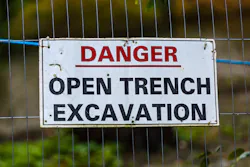
On a job site, construction crews often install wire and cabling in open trenches. As electrical contractors partner with utilities to help modernize the power grid, their electricians may find themselves working in or near a trench.
Excavations, considered as one of the most hazardous operations in the construction industry by the National Utility Contractors Association (NUCA), can present hazards to the field workforce if they don’t take certain safety precautions.
Here are some ways that your company can safeguard your electricians on a job site and protect them from excavation-related hazards, including asphyxiation and inhalation of toxic materials.
- Train Your Field Leaders. To protect workers in different industries, including construction, NUCA offers a two-day crew leader training course. During the training session, NUCA teaches field supervisors how to serve as better communicators and provide clear direction to their crews on utility and excavation projects.
- Participate in a Trench Safety Stand Down. NUCA offers an annual Trench Safety Stand Down to create awareness about trench safety and save lives. For more information about this year’s event, from June 16-19, 2020 , visit the website. You can also download a safety presentation to share with your team of electricians during a toolbox talk on the job site.
- Follow a Daily Excavation Checklist. Electrical workers can download a checklist to ensure they are following these safety procedures: Employees are protected from cave-ins and loose rock/soil that could roll into the excavation; spoils, materials, and equipment are set back at least 2 ft from the edge of the excavation; engineering designs for sheeting and manufacturer's data on trench box capabilities are on site; adequate signs are posted and barricades are provided; and training, such as a toolbox meeting, is conducted with employees prior to entering the excavation.
In addition, workers must also look out for wet conditions by ensuring:
- Precautions are taken to protect employees from water accumulation (continuous dewatering).
- Surface water or runoff is diverted/controlled to prevent accumulation in the excavation.
- Inspection is made after every rain storm or other hazard increasing occurrence.
Finally, they must be cognizant of hazardous atmospheres by evaluating whether:
- Air in the excavation is tested for oxygen deficiency, combustibles and other contaminants.
- Ventilation is used in atmospheres that are oxygen rich/deficient and/or contains hazardous substances.
- Ventilation is provided to keep LEL below 10%.
- Emergency equipment is available where hazardous atmospheres could or do exist.
- Safety harness and lifeline is used.
- Supplied air is necessary.
By following these best practices, electrical contractors can protect their electricians from cave-ins or other trench-related hazards.
Fischbach is a freelance writer based in Overland Park, Kan. She can be reached at [email protected].About the Author
Amy Fischbach
Amy Fischbach is a freelance writer, editor, and host of the Line Life Podcast based in Overland Park, Kan. Contact her at [email protected].