Key Takeaways
- The U.S. projects about 81,000 electrician openings annually through 2034, highlighting a significant workforce gap amid increasing electrification needs.
- Training programs must adapt to new technologies and codes, focusing on diagnostics and system integration.
- Faster installation processes can effectively increase project capacity without additional hiring, supporting industry growth despite workforce constraints.
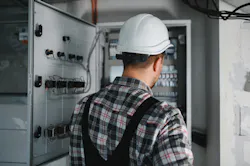
The electrical industry is being squeezed from both sides: demand is rising fast, and the workforce isn’t keeping up. Every National Apprenticeship Week, the conversation focuses on how many people are entering the trades and how to attract the next generation. Those are important, but there’s a more immediate constraint.
The U.S. Bureau of Labor Statistics projects about 81,000 electrician openings per year through 2034, based on the Occupational Outlook Handbook, Electricians Statistics (2025), driven largely by retirements, highlighting that the workforce isn’t keeping pace with demand. Meanwhile, the homes those electricians are wiring are becoming more electrified with EV chargers, heat pumps, solar-ready panels, and battery storage. A standard residential install involves far more decisions than it did a decade ago.
Some of this reflects where the market is heading; some of it shows up in how load is being managed on site.
When load becomes a labor constraint
As electrification accelerates, residential electrical capacity is emerging as a fundamental constraint. The question is no longer just what homeowners want to install, but whether the service and panel can support it — from EV chargers to all‑electric heating.
When the service panel cannot support additional loads, what should be a routine installation becomes a labor‑intensive project. Service upgrades to support heat pumps and EV chargers require additional permitting and utility coordination. Panels requiring complex field wiring demand closer supervision and more time on site. Return visits pull electricians away from their next project.
These cost and timing implications can become significant. A 400A service upgrade can exceed $20,000 and delay project closeout by eight to 12 weeks. And, in some cases, the electric utility will deny the upgrade altogether. This challenge extends well beyond new construction. A majority of U.S. homes still operate with panels rated below 200A, meaning the pressure is already embedded in the existing housing stock.
Labor has been framed as a workforce problem for years, but it’s time we start addressing the product problem.
Design that accounts for labor
We can’t afford to wait for the workforce to catch up. Instead, we need to design systems that install faster, commission more smoothly, and are easier to diagnose and fix when issues arise.
One approach is to remove steps from the installation process altogether. Plug-on-neutral load centers, for example, eliminate the need for manual trimming and stripping by allowing breakers to snap directly onto the neutral bus. The result is faster installations and fewer wiring errors, especially important when apprentices are taking on more hands-on work.
Dynamic load management addresses a related problem. Instead of upsizing to a 400 service, which means longer lead times, utility coordination, and a more complex installation, load management lets a standard 200A service handle a fully electrified home by automatically prioritizing critical loads. It eliminates the need to coordinate with utilities, avoids waiting for equipment, and reduces the risk of being denied service, which can delay closing for months.
Modular metering platforms follow the same principle. Rather than fixed configurations that require full replacement when a building's needs change, modular systems can be reconfigured or expanded in the field. For multi-family and mixed-use projects, that flexibility cuts down significantly on rework — one of the bigger labor costs on any project.
Training for what's actually on site
National Apprenticeship Week is a good time to consider not just how many people are entering the trades, but also what they're being trained to work with. Apprentices starting out today will spend their careers on systems that barely existed ten years ago – panels that monitor circuits in real time, integrate with solar and storage, and respond to grid signals. Codes are shifting too — from basic safety compliance toward active readiness, with EV pre-wiring, battery storage prep and load visibility increasingly mandated.
Training programs need to reflect that. Clear diagnostics, consistent form factors, and intuitive commissioning – these features reduce the level of experience required for a second-year apprentice to confidently handle work on their own.
The efficiency equation
A system that installs in four hours instead of six doesn't just save time on one job. Multiply that across a year of projects, and you've effectively added capacity without adding headcount. That’s the opportunity. The industry must continue to build its workforce. At the same time, it has to rethink system design by creating products that install faster, require less field work, and place fewer demands on electricians.
About the Author
 Adam Mease
Adam Mease
Adam Mease is the Business Line Leader for Energy Distribution NEMA within ABB’s Smart Buildings division, where he focuses on how residential electrical systems must evolve to meet rising demand from electrification, EV charging, and energy-intensive home technologies. With over two decades of experience across ABB and General Electric, Adam has held leadership roles spanning product management, sales, and business operations. He works closely with builders, electricians, and developers to translate emerging energy trends into practical, buildable electrical strategies.