Honoring the Electrical Contractors & Electrical Design Firms Founded in 1901 or Earlier
EC&M magazine has been the trusted technical authority for its audience of electrical professionals since 1901, but it hasn’t been alone. Over the last 125 years, electrical contracting and electrical design engineering firms have come and gone, but some — like EC&M — have weathered the test of time.
At the latest NECA show in Las Vegas, one of the themes that stood out to me was that the strength of the electrical industry lies in its people and the relationships they build. In working on this special anniversary feature and learning about the history of these five long-standing electrical contracting and design engineering firms, I was reminded of the power of our industry’s people more than ever. The companies whose profiles make up the following pages — and who have worked to design, construct, and maintain the electrical equipment that has powered our communities for more than a century — were all started by just one or two founders with a vision and have grown into large companies employing countless electrical professionals over the years.
This feature highlights five companies with histories as rich as EC&M’s: Burns & McDonnell Engineering Company, Inc.; E-J Electric Installation Co.; Hatzel & Buehler, Inc.; The L.E. Myers Co., a subsidiary of MYR Group; and Wiley|Wilson. Each profile (listed in alphabetical order by company name) features a short history of the company, including some of the key projects and milestones that cemented their legacies over the years.
While each company possesses different specialties, they all share respect for their past and continue to prioritize what makes the electrical industry so special — its people. Meanwhile, they all support a wide variety of market segments across local, national, and global communities and elevate safety and innovation. The editors of EC&M look forward to continuing to make history alongside them.
Burns & McDonnell Engineering Company, Inc.
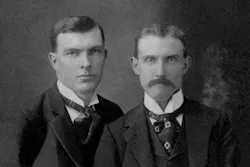
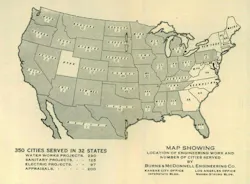
Burns & McDonnell Engineering Company, Inc. (originally called Burns & McDonnell, Consulting Engineers) was founded on April 1, 1898, in Kansas City, Mo., with the shared savings of $1,000 by its co-founders Clinton S. Burns and Robert E. McDonnell. Its original market focus was on municipal waterworks and sewer design in the Midwest. However, after its 1971 acquisition by Armco Steel Corp., it expanded into the aviation, heavy power generation, and environmental systems markets.
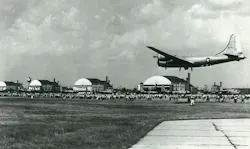
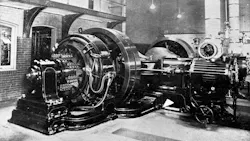
Its first major design project was completed in 1900 in Iola, Kan., which featured a combined water and light plant, followed by a sanitary sewer system report. It was a remarkable project for the time because it featured the first high-speed direct current (DC) engines west of the Mississippi. But the projects didn’t stop there.
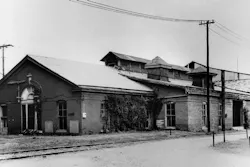
Other notable projects included:
- Colby Municipal Power Plant in Colby, Kan. (1910): Burns & McDonnell designed and managed the construction of this combined water and electric light plant, which successfully energized municipal electric lights across every business and home in the town on Thanksgiving Day.
- Knoxville Electric Distribution System in Knoxville, Tenn. (1934-1938): The company designed the city’s acquisition and municipal integration of its electric distribution system with the Tennessee Valley Authority Norris Dam power grid between 1934 and 1938.
- Gantt Steam Generation Power Station in Andalusia, Ala. (1951): This was the first significant electrical design project for the Rural Electrification Administration.
- Lake of Egypt Power Station in Marion, Ill. (1960-1963): Burns & McDonnell designed and supervised construction of the new coal-fired power station featuring three generating units, requiring engineering of a 3,000-ft earth-filled dam that created the 2,300-acre Lake of Egypt.
- V.Y. Dallman Power Station Unit 1 in Springfield, Ill. (1968): Burns & McDonnell conducted initial feasibility studies, site selection, and complete design and construction management. Expedited execution of this coal-fired power plant project allowed Unit 1 to be placed into commercial operation only 22 months after groundbreaking.
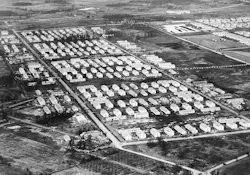
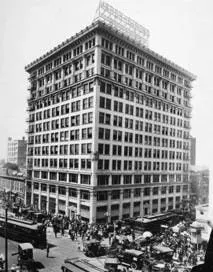
One of the most unique aspects of Burns & McDonnell then and now is its profit-sharing program, which began in 1946. After 15 years as a subsidiary of Armco Steel Corp. (from 1971 to 1986), the employee-owners voted unanimously to purchase the firm back from Armco, completing the buyback in January 1986. To secure the purchase loan, 10 executive officers personally backed 10% of the financing with the Employee Stock Ownership Plan and borrowed the remainder.
On Dec. 31, 1993, the company paid off all outstanding debt from the loan, marking the company’s status debt-free and 100% employee-owned — to celebrate, they burned the physical mortgage papers in January 1994. That milestone was the start of Burns & McDonnell’s success as a 100% employee-owned S-Corporation, celebrated each year with an annual Chili Bowl event.
E-J Electric Installation Co.
E-J Electric Installation Co. is an electrical contracting firm originally founded in 1899 in New York City by Jack Enright and Theodore Joseph. What started as a local electrical contractor serving the New York geographic area has evolved into a nationwide organization with more than 4,600 employees across 33 offices. E-J serves a wide range of markets: mission critical, data centers, rail/transit, office, hospitals, power generation, industrial, and more.
In its 127 years, E-J has been committed to keeping its employees safe while bringing reliable power to its communities and restoring critical infrastructure. Some of its landmark historical projects include:
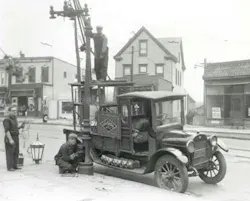
- Street lighting in Yonkers, N.Y. (1912): E-J converted street lamps in the town from gas to electricity.
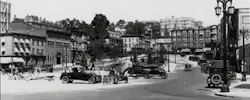
- Paramount Astoria Motion Picture Studio in Astoria, N.Y. (1918): In its earliest days, E-J performed important work in the entertainment industry, including the electrical design and installation for Paramount’s motion picture studio, cementing the company as a leader in the emerging entertainment industry.
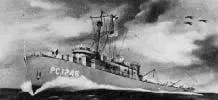
- U.S. Navy shipbuilding programs nationwide (1940-1944): E-J developed innovative ship-wiring methods when it served as a major electrical contractor for Navy shipbuilding, including landing ship tanks and patrol craft, earning it five U.S. Navy “E” Awards for excellence.
- New York World’s Fair in Queens, N.Y. (1964): E-J performed electrical installations for the Hawaiian exhibit and others at this major international event.
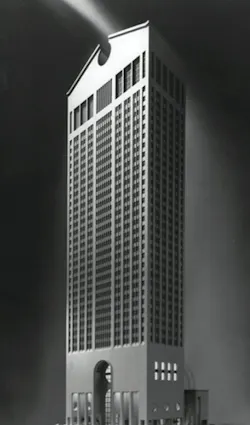
- AT&T World Headquarters in New York (1980s): By providing electrical contracting services for AT&T’s landmark corporate HQ, E-J performed work on one of the era’s most prominent commercial developments.
- USTA National Tennis Center in Flushing, N.Y. (1988): Electrical work for the home of the U.S. Open was performed by E-J during its expansion and redevelopment project.
- LIRR Hillside Car Maintenance Facility in Queens, N.Y. (1990): E-J supported the facility’s critical regional rail infrastructure, including signal work, a train-motion detection system, rail lighting, public address system, and DC/AC power systems.
In the past 25 years, E-J has continued to cement itself as an expert in markets such as aviation/transportation, sports stadiums, mission-critical, LEED certification, roads and infrastructure, power plants, and renewables. Important projects it has contributed to in this timeframe include major electrical work on the JFK International Arrivals Terminal in Queens, N.Y. (2001); Yankee Stadium in Bronx, N.Y. (2009); CPV Valley Energy Center, Wawayanda, N.Y., (2018); and LaGuardia Solar Project, Queens, N.Y. (2022), to name a few. One of E-J’s major recently completed projects is JPMorgan Chase’s new headquarters in New York, a 60-story, 2.5-million-square-foot all-electric project.
Additionally, E-J crews have helped rebuild communities after natural disasters, including emergency transmission and distribution restoration in Puerto Rico following Hurricane Maria and in Florida after Hurricane Irma and Hurricane Milton.
Hatzel & Buehler
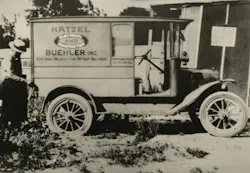
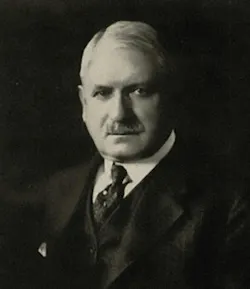
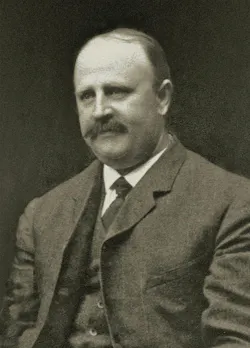
Hatzel & Buehler, Inc., is a full-service company, including electrical design, construction, engineering, integration, and maintenance. It is proud to be the oldest electrical contracting company in the United States, founded in 1884 by John D. Hatzel and Joseph Buehler, who worked beside Thomas Edison in the Electrical Illuminating Society in New York City.
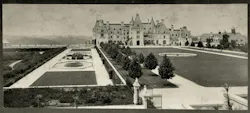
Some of its earliest key projects included wiring several landmark estates for electricity, including The Biltmore Estate in Ashville, N.C., and the Breakers in Newport, R.I., in 1895. A few of its historical projects include:
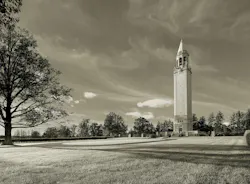
- The Alfred I. duPont Bell Tower in Delaware (1906): Hatzel & Buehler provided electrical installation services inside of the newly constructed tower.
- Lackawanna Train Line (1929): The company built electrical substations for this key transportation center, which connected commuters to New York City from the New York, Pennsylvania, and New Jersey suburbs.
- The Tripler Army Medical Center in Hawaii (1948): Hatzel & Buehler performed electrical installations in this hospital, which remains the largest military hospital in the Asian and Pacific Rim regions.
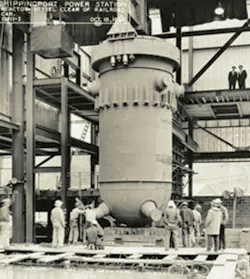
Hatzel & Buehler has performed electrical installations/work on many other major buildings and projects over the course of its history: the newly constructed New York Telephone Company (1924); Chrysler Building in New York City (1931); General Electric Building in New York City (1936); multiple exhibits at the World’s Fair in New York (1939); the first U.S. nuclear power plant (1957); Ford Motor’s corporate headquarters in Dearborn, Mich. (1967); the second phase of electrical work for the Delaware Memorial Bridge (1968); various terminals at John F. Kennedy Airport in New York City (1971-72); and Johnson & Johnson’s World Headquarters in New Jersey (1979).
The L.E. Myers Co., a subsidiary of MYR Group
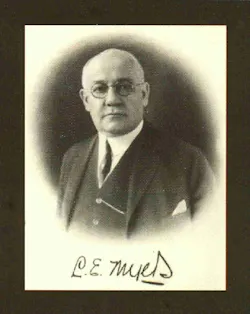
In 1891, The L.E. Myers Co., a subsidiary of MYR Group, was founded in Chicago by Lewis Edward Myers. The company has played a role in the electrical industry since nearly the start of electricity, having worked with Thomas Edison himself in the late 1800s, and continued to support power needs during pivotal moments, including war-related industries in World War I. What started as a single-employee company has grown to more than 1,200 employees and now performs mostly electrical infrastructure construction work, including transmission line, substation, distribution, storm restoration, and clean energy work.
L.E. Myers considers its most significant contribution to the electrical industry to be its construction of the nation’s first 345kV transmission line for the Ohio Valley Electric Corporation in 1953. It also pioneered the use of helicopters to haul and install transmission towers in the 1960s. Some of its other significant historical projects are:
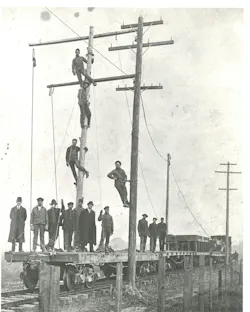
- 220kV Steel Tower Line Pekin to Chicago (1938): L.E. Myers constructed a major portion of this project, which was the first 220kV line in the Midwest.
- Ludington Pumped Storage Facility in Ludington, Mich. (1973): The company built 467 miles of this 345kV tower line emanating from the new pumped storage hydro-electric generating plant on Lake Michigan. It was designed to produce 1.9 million kW of electric power, making it the largest pumped storage facility in the world at the time and the first of its kind to receive the American Society of Civil Engineers’ Outstanding Engineering Achievement Award.
- Commonwealth Edison Company 765kV Transmission Line in Illinois (1974): L.E. Myers constructed 21.7 miles of this line — one of the first of its kind in the U.S. To do so, crews poured more than 3,200 cubic yards of concrete for its foundations, erected more than 3,050 tons of transmission tower steel, and strung four bundled 1585.3 MCM conductors per phase.
In the last 25 years, the company has continued to contribute major work, such as: construction and rebuilding of more than 1,000 structures and 210 miles of 245kV and 115kV transmission lines as part of the Maine Power Reliability Program in 2014; rebuilding 96.4 miles of the Mount Storm to Doubs 500kV transmission line in 2015; and construction of the Venice to Campbell 138kV Mississippi River Crossing project in 2018 to power the north St. Louis metro.
Wiley|Wilson
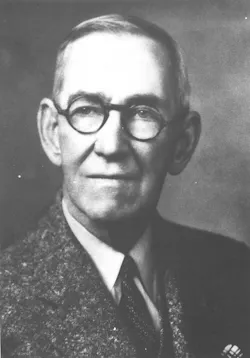
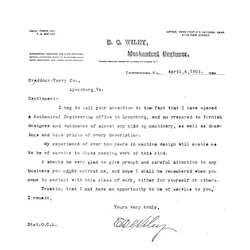
Also celebrating its 125th anniversary this year, Wiley|Wilson is an architecture-engineering firm located in Lynchburg, Va., that focuses mostly on mission-critical and government work at the federal, state, and local levels, along with industrial and higher education. When it was founded in 1901 as a mechanical and electrical engineering practice by Edgar C. Wiley, the company’s geographic reach was merely local, serving the Virginia and North Carolina markets. Today, it has expanded its reach globally.
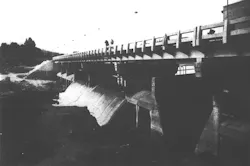
Wiley|Wilson has an extensive project portfolio, but its government work has provided opportunities to expand its design expertise on projects that range in both size and location. For example, the firm has performed comprehensive electrical distribution studies across VA Medical Center campuses nationwide since 2007, looking at medium-voltage distribution, protective coordination, arc flash hazards, short-circuit conditions, load flow, and equipment ratings.Other notable projects that highlight Wiley|Wilson’s education, mission-critical, and government work include:
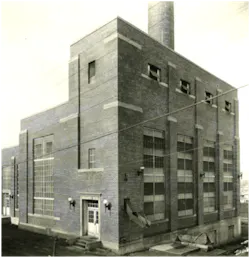
- Steam and electric infrastructure for higher education institutes (as early as 1901): Founder Edgar C. Wiley started designing for colleges and universities early in Wiley|Wilson’s tenure. Locations were local at the time and included Virginia Tech (his alma mater), Virginia Military Institute, and Western Carolina University, Washington & Lee, to name a few. Their partnerships with these institutes remain strong, while their reach in the segment continues to grow.
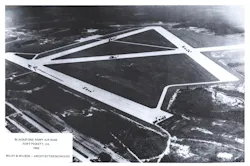
- Fort Lee and Fort Pickett in Virginia during WWII: Wiley|Wilson performed infrastructure work on the forts to support the war effort, demonstrating its first entry into the federal market to address complex, mission-critical needs.
Wiley|Wilson continued to build its federal government portfolio over the next 60 years when the events of 9/11 occurred. With its proven mission-critical experience, the firm was able to offer its services immediately as the need for secure facilities and infrastructure suddenly became an urgent priority.With its construction partner, Clark Construction, the company has continued to support national security missions with urgency and sensitivity. Recently the firm provided engineering design for the new Morrison Center at Fort Meade, Md.