The Rural Data Center Revolution
Key Takeaways
- Most new data centers are being built in rural areas, creating logistical and labor challenges for electrical contractors.
- On-site housing and worker camps are effective strategies to attract and retain electricians for long-term hyperscale projects.
- Leveraging regional and national workforces helps electrcal contractors manage labor shortages and project timelines across multiple locations.
- Prefab and modular construction techniques increase productivity, reduce on-site labor needs, and help meet tight project schedules.
- Emerging power solutions, including distributed generation, co-location with renewable sources, and small modular reactors, are shaping future infrastructure development.
Hyperscale is an IT term for massively ramping up resources to meet soaring demand. It’s also a good way to describe what electrical contractors need to do to be successful in the data center market. But a major new trend makes that harder than ever.
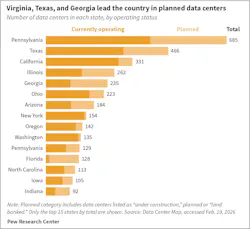
Eighty-seven percent of existing data centers are in urban areas, but 67% of those planned or under construction are in rural areas, according to an April 2026 Pew Research Center analysis. That geographic flip creates a host of challenges for electrical contractors, starting with labor (see the Figure below).
The chronic shortage of electricians is a challenge everywhere, but it’s particularly acute in rural areas because the labor pool is smaller to begin with. Most new data centers are hyperscale, which exacerbates that challenge because these megaprojects require hundreds of electricians on site for a year or more.
“A 10GW data center, they’re building it in 200, 300, 400MW, or maybe even gigawatt stages,” says David Speidelsbach, Wesco’s vice president of sales and strategic initiatives. “These projects could be anywhere from one year to multiple years — even up to eight years of consistent buildout.”
Getting enough electricians to commute an hour or more from the city or suburb where they live is a tough sell, especially when the final few miles are gridlock because two-lane rural roads were never designed to handle thousands of commuters and trucks. “It takes me sometimes
45 minutes to pull out of my driveway,” one Fairfax resident told Iowa’s News Now about the data center under construction nearby.
One solution is for someone — the electrical contractor or general contractor or the data center owner — to provide on-site housing and services. This takes pressure off local roads and hotels and can help attract and retain workers, which is why it’s been done before with wind farms and other megaprojects in rural areas.
“I lived in on-site camps,” Speidelsbach says about his apprenticeship days. And, more recently, at an EV factory construction project, “they had free food services — top-shelf food. Anything the workers needed, that company made it readily available. An electrical company or even an EPC or general contractor, they are thinking beyond just their core competency.”
Ninety percent of data centers are within five miles of another one, Pew says. If an electrical or general contractor can win adjacent projects, that proximity increases the business case for providing housing.
“When I was working at Palo Verde [Generating Station] as an apprentice, we had a man camp in Tonopah, about eight miles from the job site,” says Mike Greenawalt, former Rosendin CEO. “It was a hotel that somebody had built, and after the job was over, they turned it into a Super 8. I really think that the general contractors need to look at either creating parks for the travelers to park their trailers or building man camps. We do it in the oil fields. That is going to help attract people.”
It also can help retain them.
“Right now, the way all of the contractors are attracting people is with higher wages, more overtime, and incentives,” says Greenawalt, who retired from Rosendin to launch the Greenawalt Foundation, which funds apprenticeship programs. “All that’s doing is destroying our industry because it’s burning people out. We’re trying to attract people by saying: ‘This is a viable career. It’s high paying with a good future.’ Then we tell them to go work in the middle of Missouri, and good luck finding a place or driving two hours to work. They’re not going to stay. All of that is at risk right now because of this rapid growth.”
Thinking beyond local labor
Some electrical contractors are leveraging the regional or national workforces they’ve amassed on
other projects.
“Because we started in more urban markets, and we’ve traveled around the country, we have a national traveling major projects group,” says Casey Long, Helix Electric COO. “We’ve been collecting people from all over, and when it’s a good fit, we all just go together to the next location. So we have sort of a critical mass that we bring with us, regardless of where things are being built at this point. I think that’s what allows us to do as much as we’re doing.”
Another trend is specialists. In some cases, a manufacturer trains a team to be experts in its products and offers customers an extended warranty for hiring them.
“You’re starting to get these teams, and all they do is medium-voltage termination or fiber termination,” Speidelsbach says. “They go to all of the job sites for a specific contractor and sometimes sub out.”
Some data center operators are developing teams to ensure that the workforce is there to keep their projects on track. If an operator uses the same basic data center design across the country, using people who have been trained “their way” can be more efficient. These teams also are an example of how data center operators and their investors recognize the chronic skills shortage and are stepping up.
“Meta is training their own low-voltage techs,” Greenawalt says. “Google has invested about $10 million with the IBEW and NECA on training people in South Texas. BlackRock is invested heavily in Texas right now in the apprenticeship programs.”
Leveraging modular construction
Prefab is another way to address the rural labor shortage. For example, it’s easier to find enough people to build modules when they know they’ll be doing it inside a climate-controlled factory and go home to their family every night.
“We’re leaning very heavily into the prefab market,” says Helix’s Long. “A few years ago, we stood up a 120,000-square-foot facility in Arizona, just outside of Phoenix. We’ve already outgrown that, so we’re expanding into other locations. For our medium-voltage work and also our industrial work, we do very, very large underground duct bank assemblies. We also have been doing utility-scale solar work for many years, and each of those sectors that we’ve been in for a while has translated very nicely into the data center world.”
Modular construction is also more productive, which is key for meeting the tight schedules that are common in data center projects, such as to meet safe harbor deadlines for tax credits.
“We’re able to manufacture so much more in our manufacturing innovation shops to be sent to the job,” says Chuck Goodrich, Gaylor Electric CEO. “If you try to stick-build these things, it’d take you five years.”
Prefab also is a way for electrical contractors to target the rural data center market but without the costs and challenges of having people on site.
“A lot of contractors are manufacturing more than they’re actually installing right now,” Goodrich says. “Electrical contractors are building all these third-party assembly contracts for major data center operators, and they ship it to the job. We took a different approach. We do not build anything we don’t install because one of these days, installation is going to be more important than the product itself.”
UL 2755 is evolving as modular construction becomes more common. For example, the 2025 update includes requirements for structural engineering that reflect the increasing size of modules.
“In rural markets, where skilled electrical labor is harder to sustain for year-long hyperscale schedules, UL 2755-Certified Modular Data Centers can move complexity into the factory,” says Chanté Maurio, vice president for data centers in the UL Solutions Global and Strategic Accounts group. “Validate the module as an integrated system before shipment and streamline on-site acceptance to help keep projects on schedule. This program can also be used to streamline on-site acceptance on any project, whether rural, urban, or suburban.”
Data centers are a major reason why lead times for transformers, switchgear, and other major infrastructure are now 18 to 36 months, according to the research firm Wood Mackenzie. Some data center developers and their contractors use multiple suppliers based on who can meet project deadlines for each type of equipment. The catch is that then they have to integrate a multi-vendor environment, whether that’s in a modular factory, on site, or both.
“As long lead times push data center projects toward multi-vendor sourcing, independent testing and evaluation can help teams integrate equipment confidently, reduce commissioning surprises, and keep procurement-driven substitutions from turning into schedule risk,” Maurio says. “UL Solutions helps address these issues through certification for safety, factory, and site acceptance testing, verification of redundant features critical to uptime and evaluation of cybersecurity readiness.”
AI as a tool for designing and recruiting
AI is the primary reason for the current data center building boom. It’s also something electrical contractors and design firms are using to accommodate that boom.
“We’ve completed about 700MW of data centers over the last three years, and we have almost 2,500MW under contract to build,” says Gaylor’s Goodrich. “We’ve seen an explosion of AI in our processes as a contractor, especially in design, manufacturing, and, of course, estimating.”
To the public, “AI” is now synonymous with “data center.” That perception is an opportunity to educate teens and young adults about how electrical is a way to have a career in AI — whether that’s using AI to design data centers or building and maintaining them.
“The exposure has been huge,” Goodrich says. “It’s going to help a lot of folks join the construction industry.”
Generation gap
Rural locations are attractive for hyperscale data centers because land is cheaper than in populated areas. The catch is getting enough power. Even if grid access and capacity are there, the public and politicians are increasingly demanding that data centers build their own generation.
A few operators are collocating their data centers with solar farms, such as Apple. But at least for now, this doesn’t appear to be a major trend that will mean additional opportunities for electrical contractors.
“We’re not actively building with our major projects group and our solar group sort of next to each other on the same campus,” says Helix’s Long. “I think that’s something we would certainly be open to, and we share that message with people. What is happening is a tremendous amount of discussion about distributed generation. The data center developers and owners are asking us what other opportunities are there other than just relying on a local utility grid. I think that kind of thing is coming in a bigger way, but nothing serious actively happening right now, certainly not that we’re part of.”
Proximity to natural gas pipelines often is a major factor in site selection — and not just for generation. Those pipelines often have fiber running alongside, so they can provide connectivity, too. Coal is re-emerging as an option, partly because of the Trump Administration’s June 2026 initiative to support 17 existing and new plants.
“You’re probably going to start seeing co-location with coal plants because they can generate power and guarantee [data center operators] don’t have to worry about anything,” Goodrich says.
In September 2024, Microsoft signed a 20-year contract to buy all of the roughly 837MW from the mothballed Three Mile Island Unit 1 nuclear reactor for its data centers. But if nuclear becomes a major source of power for hyperscale data centers, it could be in the form of small modular reactors (SMRs) because — at least in theory — they’re easier and faster to build. Those are another potential opportunity for electrical contractors and design firms.
“The data centers have enough [money] that they can finance an SMR,” Goodrich says. “The real question is, how are we going to build those faster than what we used to? That’s going to come from building piece by piece in your shops and shipping them to the job. In five years, you’re going to start seeing this huge market in SMR.”
About the Author
Tim Kridel
Freelance Writer
Kridel is an independent analyst and freelance writer with experience in covering technology, telecommunications, and more. He can be reached at [email protected].