Are Switches Considered Wiring Devices?
Key Takeaways
- The 2026 NEC restructures Articles 404 and 406, redefining switches and wiring devices for better clarity and application.
- Switches like snap switches and dimmers are now categorized as wiring devices, reflecting their installation and maintenance practices.
- Structural changes aim to make the NEC more user-friendly, facilitating easier navigation and compliance.
The “2026 NEC Insider Series” is written by Dean Austin, NFPA Technical Services, Senior Electrical Specialist, Master Electrician, and former Chief Electrical Inspector in the state of Michigan. The intent of the series is to help electrical inspectors, electrical contractors, and electricians understand changes to the 2026 National Electrical Code® (NEC®) and how all parties can work together, collectively as a team, to provide the safest electrical installations possible.
Safety remains at the core of the National Electrical Code (NEC), and the 2026 edition introduces important updates to help ensure electrical installations stay safe and reliable as our electrified world continues to evolve. This edition saw several structural changes intended to make it easier for users to find information that will help with the installation or inspection of electrical wiring. Some of the structural modifications were also brought in to help prepare the 2026 NEC to align with the proposed restructuring of the 2029 edition of the NEC.
Part 1 of this series addressed changes to arc flash label requirements in the 2026 NEC, located in Sec. 110.16. It ran in the February 2026 EC&M print issue. Part 2, which appeared in the May 2026 print issue, focused on technical changes around calculations that are based on Sec. 120.41 for dwelling unit, minimum unit load, and the new Sec. 120.13 for dwelling unit-branch-circuit loads. Part 3 examines the restructuring of Articles 404 and 406, explaining why certain switches are now classified as wiring devices and what those changes mean for Code users.
Let’s address some of the changes that occurred in Art. 404 [Switches] and Art. 406, which had been named “Receptacles, Cord Connectors, and Attachment Plugs (Caps),” in the 2023 NEC, and has now been renamed as “Wiring Devices” in the 2026 NEC. The first change seen in Art. 404 is in Sec. 404.1 [Scope], where it has been updated to now cover general-use switches, motor-circuit switches, isolating switches, pullout switches, circuit breakers used as switches and molded-case switches operating at voltages not over 1,000VAC, 1,500VDC. The Section was also divided into a list format, with a few additional switch types being added. What are no longer covered in the scope of Art. 404 are general-use snap switches, which were often addressed as wiring devices and therefore have now been relocated to Art. 406.
Definitions
Understanding NEC requirements relies heavily on understanding the definitions found in Art. 100. Here are a few key definitions that help tie into the Code changes being discussed here:
- Wiring device — an electrical device with a yoke or used with flexible cord or cable that serves as either a connection point to facilitate the flow of current or as a control device in general distribution and branch circuits.
- General-use switch — a switch intended for use in general distribution and branch circuits. It is rated in amperes, and it is capable of interrupting its rated current at its rated voltage.
- General use-snap switch — a form of general-use switch constructed so that it can be installed in device boxes or on box covers or otherwise used in conjunction with wiring systems recognized by this Code.
Having a good understanding of these definitions is a necessary baseline for looking at what constitutes a wiring device, to help determine what should fall within Art. 404 and what applies to Art. 406.
Wiring device considerations
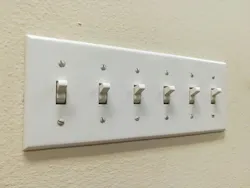
In previous editions of the NEC, general-use snap switches, pendant switches, surface switches, dimmers, electronic control switches, and lighting control switches were all considered types of switches that mount on a yoke or a strap and are typically installed in device boxes. These are often the switches found near the doorways of bedrooms, living rooms, and similar habitable rooms.
Previously, all of these were grouped together in Art. 404, along with general use switches, which are also referred to as disconnecting means or knife switches, which are typically surface mounted and used for services, motors, and other electrical equipment.
Circuit breakers used as switches, which must also be marked SWD, were also included in this grouping as well. The two groupings in the scope of previous editions of the NEC, found in Art. 404, worked for years without much concern.
However, through numerous public inputs in the 2026 NEC through the NFPA standards development process, the Code-Making Panels (CMPs) reviewed those public inputs and agreed that general-use snap switches, dimmer switches, and similar devices are more accurately described as wiring devices rather than general-use switches, based on those definitions.
Since general-use snap switches and dimmers are terminated in a similar manner to receptacles, which are also mounted on a yoke or strap, it was a logical move to relocate those Code sections into Art. 406 with the other wiring device requirements.
Correlation of standards
Separating general-use snap switches from general-use switches aligns with the structure of NFPA 70B, Standard for Electrical Equipment Maintenance. Specifically, Chapter 17 of NFPA 70B addresses enclosed dead-front (safety) switches, which correspond to the general-use switches covered in Art. 404 of the 2026 NEC for general distribution and branch circuits.
Chapter 17 in NFPA 70B requires maintenance to be done to these switches according to Table 9.3.2 and visually according to Table 17.3.1. While Chapter 24 covers wiring devices that now include general-use snap switches, which now parallels Art. 406 of the 2026 NEC, it does require maintenance on wiring devices.
According to Sec. 24.2, maintenance shall be performed in accordance with Sec. 24.3 and Table 9.3.2. Visual inspection is found in Table 24.3.1 where you check for worn, cracked, or distorted housings; contacts and terminations also need to be checked for corrosion. I realize most people don’t do maintenance on wiring devices, but that doesn’t mean you shouldn’t.
Changes to Art. 406
Part I and Part III of Art. 406 received the pertinent Code sections related to general-use snap switches, dimmers, and electronic control switches that were previously found in Art. 404. As stated earlier, the name of Art. 406 was also changed from “Receptacles, Cord Connectors, and Attachment Plugs (CAPs)” to an all-encompassing title, “Wiring Devices.”
The relocation of sections from Art. 404 to Art. 406 resulted in renumbering and other structural changes within Art. 406. For example, Sec. 406.9 [Wiring Devices in Damp or Wet Locations] contains a new second level subdivision (2) to the first level subdivision (A) for switches installed in damp locations. Considerations like this were factored in when merging these sections into Art. 406, further assisting the NEC in usability and clarity by making the requirements easier to find for engineers, electricians, inspectors, and other users.
Conclusion
These changes should help make the NEC more user friendly by putting similar requirements in the same Article. For experienced NEC users, these changes may take a little getting used to, but they are important to the overall restructuring of the NEC. Furthermore, an NEC that makes requirements easier to find and is structured in a more logical format might just make for a safer installation overall. Plus, it will give this old “NEC geek” something new to try and memorize.
The 2026 edition of the NEC is now available in both print publication as well as in digital format within NFPA LiNK®.
Important Notice: Any opinion expressed in this column (blog, article) is the personal opinion of the author and does not necessarily represent the official position of NFPA or its Technical Committees. In addition, this piece is neither intended, nor should it be relied upon, to provide professional consultation or services.
About the Author
 Dean Austin
Dean Austin
Dean Austin is a senior electrical content specialist at the National Fire Protection Association (NFPA). In his current role, he serves as an electrical subject matter expert in the development of products and services that support NFPA documents and stakeholders. Dean has more than 30 years of experience in the electrical industry, holding a master electrician license, an electrical inspector, and an electrical plan reviewer registration in the state of Michigan. He taught electrical apprentices for 10 years in the Associated Builders and Contractors’ electrical apprentice program. For 11 years, he was an electrical inspector for the state of Michigan, and for five years, as the chief of the electrical division within the Bureau of Construction Codes at the state of Michigan. At the state of Michigan, Dean was charged with enforcing the laws, rules, and codes governing electrical installations and licensing within the jurisdictional boundaries of the state of Michigan.