Effective Strategies for Smooth Electrical Inspections and Quality Control
Key Highlights
- A clean installation communicates control, planning, and workmanship, making it easier for inspectors to evaluate the work.
- Proper documentation, including plans, revisions, and product info, is crucial for inspection readiness and should be readily available on-site.
- Internal quality control, through practical checklists and training, helps prevent common issues and reduces failed inspections.
- Handling disagreements with tact and professionalism fosters better communication between electricians and inspectors, leading to more efficient inspections.
- Preparation before the inspector arrives—such as site cleanup, documentation review, and addressing known issues—ensures a smoother, less dramatic inspection process.
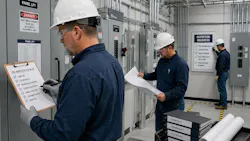
Many electrical contractors focus on whether an installation complies with the NEC, but inspection success often depends on much more than Code compliance alone. The overall condition of the installation, the availability of documentation, and the professionalism of everyone involved can significantly influence how smoothly an inspection proceeds.
Once a contractor decides a project is ready for inspection, the next challenge is making sure it is presented in a way that allows the AHJ to evaluate the work efficiently — which goes beyond completing the installation. It also means preparing the site, organizing documentation, and being ready to answer legitimate questions (see the Figure below).
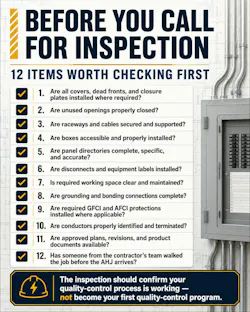
A clean installation is not just about looking good
Many people misunderstand what inspectors mean when they say a job is “clean.” A clean installation is not merely an attractive installation; it is an installation that communicates control, planning, and workmanship.
An electrical room with properly arranged raceways, accessible equipment, complete labeling, and clear working space tells a story. It shows the inspector that someone was paying attention. It does not guarantee there are no Code issues, but it does suggest that the contractor has control of the work.
The opposite also tells a story. When an inspector walks into an electrical room and sees materials stacked in front of switchgear, missing panel schedules, covers leaning against the wall, unidentified conductors, incomplete warning labels, and open boxes, the inspection becomes harder.
The inspector now must determine whether the visible lack of completion is isolated or whether it reflects a larger problem throughout the installation. This is not where a contractor wants an inspection to begin. A clean job does not prove compliance, but a sloppy job invites questions.
This is where contractors sometimes get frustrated. They may say, “We were going to fix that,” “We already knew about that,” or “That was on our list.” The natural response is simple: If it was already known, why did you call for an inspection?
If an item was already on the punch list, it should have been corrected before the inspection. If the work was not complete enough for inspection, the request should have waited until the inspector could evaluate the installation properly.
There will always be project-specific realities. There may be phased or partial inspections, temporary approvals, or specific areas released while other areas remain under construction. Those situations can be completely reasonable, but they need to be clearly communicated.
The inspector should know what is being requested, what area is ready, and what work is not part of that inspection. Ambiguity creates problems, while clarity helps everyone involved.
Documentation is part of inspection readiness
Inspection readiness is not limited to what is physically installed. Documentation matters, and, in some installations, it can be just as important as the equipment on the wall.
Approved plans should be available. Revisions should be identified. Equipment cut sheets may be necessary. Product listing information may be needed for unusual applications. Manufacturer installation instructions may be important where equipment has specific requirements. Firestop systems, selective coordination documentation, available fault current markings, short-circuit current ratings, and other project-specific documents may all come into play depending on the installation.
Too often, the field team treats documentation as someone else’s problem. The installer assumes the office has it. The project manager assumes the foreman has it. The foreman assumes the engineer handled it. The inspector arrives, asks a reasonable question, and nobody on site can provide the answer. This type of delay is preventable, and it is one of the reasons documentation should be treated as part of inspection readiness instead of an afterthought.
If the installation depends on an approved detail, an engineered design, a manufacturer’s instruction, or a product listing limitation, the documentation should be available when the inspection occurs. Inspectors are not required to accept verbal assurances when the installation raises a legitimate question.
A contractor who can quickly produce the approved plans, relevant instructions, or product information is in a much better position than one who says, “I think it is okay,” or “That is how we did it on the last job.” The last job is not documentation.
Internal quality control protects the contractor
Some contractors look at quality control as an added burden. I see it differently. Internal quality control protects the contractor by reducing failed inspections, rework, return trips, and embarrassing conversations with owners and general contractors. It helps train younger electricians and assists foremen with identifying patterns before they become company-wide habits. It also creates a more professional relationship with the AHJ because the contractor demonstrates that inspection readiness is being taken seriously.
A simple internal checklist can make a significant difference. It does not need to be complicated, and, in fact, if it is too complicated, nobody will use it. The best checklists are practical, job specific, and focused on the items most likely to cause inspection problems.
For example, a rough-in checklist may focus on box fill, cable and raceway support, protection from physical damage, bored holes, nail plates, equipment locations, bonding paths, and coordination with other trades. A final inspection checklist may focus on covers, labels, directories, working space, GFCI and AFCI protection, disconnect identification, unused openings, equipment access, grounding and bonding completion, and required documentation.
The point of a checklist is not to replace knowledge of the Code. It is to build a process that forces someone to slow down and verify the basics before the inspector is called.
That process also helps identify training needs. If the same correction appears on multiple jobs, that is not merely an inspection issue; it is a training issue. Contractors should track repeated corrections and use them to improve their internal education. Inspectors see patterns. Contractors should see them too.
When the electrician may be right
There is another side of this discussion that should not be ignored. Sometimes the electrician or contractor may be correct, and the inspector may be mistaken or apply a poor interpretation to the installation. Inspectors are human. Electricians are human. Designers are human. The Code can be complex, product listings can be specific, and field conditions can create questions that are not always answered by memory or habit.
The problem is not that disagreements happen. The problem is how those disagreements are handled. A professional Code discussion should not turn into a contest of personalities. The goal is not for the electrician to embarrass the inspector or for the inspector to prove authority over the electrician. The goal is to get the installation completed safely, correctly, and on time.
This is where tact matters. An electrician who believes the installation is compliant should be prepared to explain the position respectfully with the adopted Code language, approved plans, product listing, manufacturer’s instructions, or other applicable documentation available.
There is a big difference between saying, “You are wrong,” and saying, “Can we look at the Code Section together so I can understand how it is being applied?” One approach creates conflict. The other keeps the conversation professional.
The same is true for inspectors. A good inspector should be willing to explain the basis for a correction and identify the requirement being applied. This does not mean the inspector gives up authority, and it does not mean every field disagreement becomes a debate. It simply means that inspection decisions should be grounded in Code, approved documents, listing information, and sound interpretation rather than personal preference or “that is how I have always called it.”
Anyone who has spent enough time in this industry learns that tact is a skill (see Photo below). Sometimes it is learned the hard way. A young electrician may be technically correct but communicate it poorly. An inspector may have the right concern but explain it in a way that sounds dismissive. A foreman under schedule pressure may push too hard. A project manager may be more focused on the date than the details. These moments are where cooler heads need to prevail.
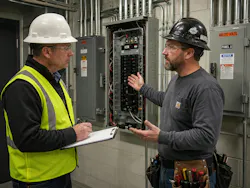
When a disagreement is handled properly, it can improve the inspection process. The electrician learns how the AHJ views the installation. The inspector may gain additional information that changes the interpretation. The contractor avoids unnecessary escalation. The owner benefits from a safer and more efficient project. That is the outcome everyone should want.
The best inspection is usually the least dramatic one
A good inspection should not feel like a courtroom battle or guessing game. It should not require the inspector to uncover a long list of basic unfinished items before the real inspection can even begin.
The best inspections are usually the least dramatic ones. The inspector arrives, the correct area is ready, the foreman or responsible person understands the installation, the approved plans are available, the work is accessible, the equipment is labeled, and the obvious completion items are done. Questions are answered professionally, and, if a legitimate issue is identified, it is discussed clearly and corrected properly.
This is how the process should work. Electrical inspectors have an important job, but so do electricians, contractors, engineers, and facility personnel. The inspection process works best when each party understands its role. The contractor installs and verifies the work. The designer provides the design. The installer follows the Code, approved plans, product listings, and manufacturer instructions. The inspector verifies compliance for the AHJ. When the inspector becomes the first person performing meaningful quality control, that process has already broken down.
The solution is not complicated — but it does require discipline. Walk the job before the inspector does. Look for the obvious. Verify the documentation. Correct known issues before the inspection request. Train crews based on repeated corrections. Treat inspection readiness as part of the installation — not as an afterthought.
The inspection should not be your first quality-control program — it should be confirmation that your quality-control program is already working.
About the Author
 Paul Abernathy
Paul Abernathy
Paul Abernathy is the Director of Technical Services at Prysmian, and the CEO, president, and chairman of Electrical Code Academy, Inc., and serves as executive director and founding member of the Certified Master Electrical Code Professional® (CMECP®) program. Since entering the electrical industry in 1986, Paul has served as a licensed electrician, electrical contractor, electrical inspector, electrical plans examiner, electrical engineer, code consultant, and educator. He has served on NFPA 70 National Electrical Code Code-Making Panels 5 and 17 and has extensive experience in code development, enforcement, and technical education. Paul’s public-sector experience includes serving as Electrical Engineer II for the City of Richmond, Virginia, overseeing electrical inspectors and inspection operations, and as Manager of Codes for the City of Alexandria, Virginia. He also served as a Southern Field Expert for the National Electrical Manufacturers Association (NEMA). Paul previously owned and operated electrical contracting and electrical design/code consulting firms, including Abernathy Electrical Services in McKinney, Texas, which he closed in 2021. Today, he continues to support the electrical industry through technical leadership, NEC education, professional certification, and training for electricians, inspectors, engineers, contractors, and code professionals."