Key Takeaways
- Shortcuts erode safe, repeatable work habits and can increase personal risk, rework, and operational downtime.
- Document steps that appear unnecessary and submit them for review rather than changing procedures in the field.
- Safety procedure amendments require review against the company safety program and applicable OSHA requirements.
- Enforce approved procedures consistently to protect employees and customers.
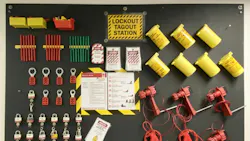
In this example, Allen has done lockout/tagout on Motor 73B hundreds of times (actually only 14 times), so he doesn’t need to verify the absence of voltage — or so he thinks. And maybe for Motor 73B that is actually true, especially since he locks it out at the local disconnect.
But what happened here is an erosion of procedure. When does Allen next take this shortcut? Perhaps with the breaker for the controls for Line 3? He’s locked and tagged it out dozens of times (actually, only eight times) so why verify the absence of voltage? And maybe nothing will happen — until it does. And it probably will because he started developing the habit of not verifying the absence of voltage instead of always performing that verification.
Perhaps Allen will get lucky and always guess right. Perhaps he is just that good. Perhaps he is never tired or distracted, and perhaps he has memorized the relationship between every piece of utilization equipment and its supply breaker or disconnecting device. And perhaps he will win the Grand Lotto Jackpot without even buying a ticket.
Marlene does lockout/tagout the same way, every time. Regardless of the equipment or how many times she has worked on it. She never takes a shortcut. You might suppose there’s a cost to this, and in the short-term, there usually is.
But there’s also a cost to how Allen works. Those safety shortcuts are erosions of procedure, and Allen has stopped working in a predictable, methodical, and repeatable manner. He has become less efficient — not more efficient — because he misses things that various steps of the procedures are intended to catch. Skip those steps, and you skip the prevention or diagnosis they bring. Allen isn’t saving the company time or money. He’s causing rework and increasing the risk of downtime. He’s also increasing his personal risk and the risk to others.
The sloppy way he does lockout/tagout has become the sloppy way he does everything in order to save time.
We’ve all seen procedures that are bloated with unnecessary steps. Just because a step seems unnecessary to a person in the field doesn’t mean he should skip it. What he should do, instead, is make a note of the unnecessary step and provide input to have the procedure amended. If it’s not a safety procedure (e.g., lockout/tagout), amendments often can easily be made. For example, it can be a new note in the procedure that step B applies only under condition X or does not apply under condition Y. These kinds of amendments can usually be done without much hassle. The system engineer may have to approve it, or perhaps a supervisor can approve it based on the manufacturer's documentation.
But if it’s a safety procedure, there will (and should) be hassle. Specifically, you have to go back to the company’s safety program. Will it permit this change? And if this change is made, does everyone need to be retrained? (Often the answer is yes). If the safety program won’t permit this change, can you just change the safety program? That’s not so easily done, as you must reference it against the relevant OSHA requirements. For example, if you want to permit skipping the verification of the absence of voltage for lockout/tagout, even under specific conditions, you will need to review 29CFR.1910.147. You’ll also need management to assess the risks this would entail and whether any perceived gain is worth those risks.
What do you do about people who bypass the correct revision process and DIY that on the fly in the field? That depends on what your safety program requires for enforcement, and whether that part of your Safety Program complies with OSHA’s requirement to impose compliance [29CFR.1910.9(B)]. And it also depends on your company’s tolerance for sloppy work and dangerous work habits when you have customers to satisfy and employees to protect.
About the Author
 Mark Lamendola
Mark is an expert in maintenance management, having racked up an impressive track record during his time working in the field. He also has extensive knowledge of, and practical expertise with, the National Electrical Code (NEC). Through his consulting business, he provides articles and training materials on electrical topics, specializing in making difficult subjects easy to understand and focusing on the practical aspects of electrical work.
Prior to starting his own business, Mark served as the Technical Editor on EC&M for six years, worked three years in nuclear maintenance, six years as a contract project engineer/project manager, three years as a systems engineer, and three years in plant maintenance management.
Mark earned an AAS degree from Rock Valley College, a BSEET from Columbia Pacific University, and an MBA from Lake Erie College. He’s also completed several related certifications over the years and even was formerly licensed as a Master Electrician. He is a Senior Member of the IEEE and past Chairman of the Kansas City Chapters of both the IEEE and the IEEE Computer Society. Mark also served as the program director for, a board member of, and webmaster of, the Midwest Chapter of the 7x24 Exchange. He has also held memberships with the following organizations: NETA, NFPA, International Association of Webmasters, and Institute of Certified Professional Managers.
Related
 Dreamstime M 76659788
 Dreamstime M 37439411

