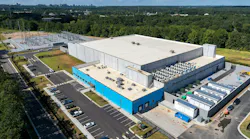
The telegraphing – that many people are worried, for many reasons, about the proliferation of the sprawling, power devouring structures – now seems clearer. Far less certain, however, is whether a resultant meaningful slowdown in data center construction is in store.
The uncertainty spawned by the election is keeping many watchers of the AI infrastructure phenomenon busy. If there’s any consensus, it seems to be that a speed bump is the most likely outcome, with moratoriums, extended reviews, and more conditions on development joining a host of additional, mostly economics-related factors affecting the fate of data center projects.
One assessment drawing attention comes from the investment bank Bernstein. As detailed in a recent Biggo Finance post, Bernstein’s post-election analysis predicts that moratoriums, new regulations and other elements of “political risk” will have a comparatively minor impact on the fate of planned datacenter projects.
Of 387GW of North American data center capacity now in the planning stage that Bernstein predicts will never be built – 66% of the 586GW total now on the drawing board – the smallest, at just 28GW, will be attributable to “state political risk.” More impactful, it says, will be likely abandonment due to extended groundbreaking delays that signal problems, insufficient tenant credit, and inadequate developer strength/track record.
However, some of the 199GW balance likely to be built does face some regulatory risk, it says, because two-thirds of it are in 13 states that carry high regulatory risk. That could translate to groundbreaking delays due to moratoriums or similar roadblocks.
“Bernstein's estimates,” the Biggo post notes, “remind the market that while political risk is real, in a vast planning pool of 586GW, fundamental factors such as development stage, tenant credit, and developer qualifications are the bigger variables determining whether projects get built.”
Other investment firms that study the AI infrastructure build-out have different takes on the election’s impact. Among firm projections the Biggo Finance post highlights, Goldman Sachs sees state moratoriums affecting 45% of planned capacity; Morgan Stanley sees about 5% of projects shifting from 2028 to 2029; and J.P. Morgan estimates 55% of 96GW planned for 2028 facing new restrictions.